




Fast fashion refers to the swift manufacturing of affordable, lower-quality apparel that frequently imitates the designs of luxury houses, mainstream brands, and independent creators. This business model has transformed the clothing market by creating quick supply chains that deliver trendy pieces almost instantly. Defined by its responsiveness to shifting consumer tastes, it transforms runway trends into affordable retail collections in just a few short weeks.
By prioritizing cheap costs and rapid revenue, fast fashion rapidly floods the market with new designs, yet it imposes a significant impact on both the planet and the people who manufacture clothes.
What Is Fast Fashion?
Fast fashion represents a modern approach to design, manufacturing, and marketing that specializes in speed and volume above all else. This model is built to supply massive quantities of clothing in record time. By that, it guarantees that consumers have constant access to the latest trends at affordable prices.
The production process relies heavily on replicating high-fashion looks and transforming them into mass-market versions, often using inexpensive and lower-quality materials such as synthetic fabrics.
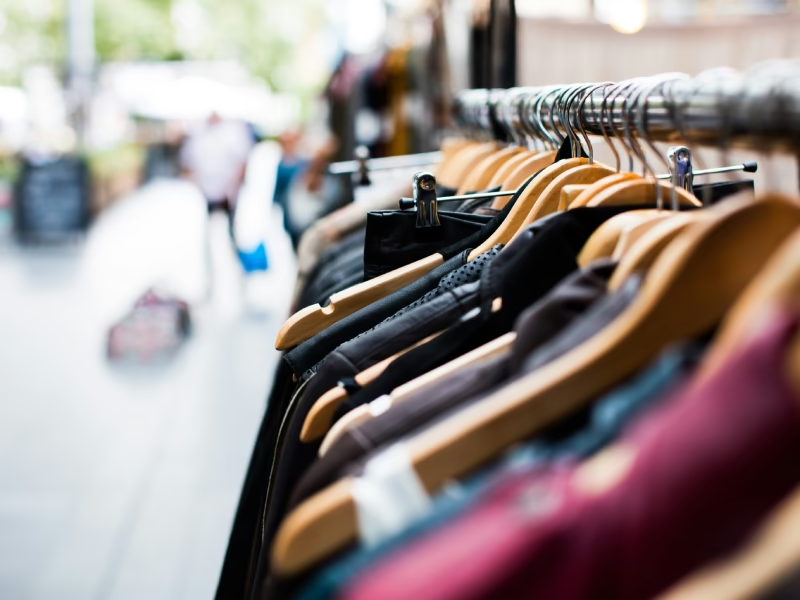
By optimizing production networks and compressing supply cycles, fast fashion brands are able to move styles from the runway to retail shelves in short order. While this efficiency makes fashion more accessible to a wider audience, it also raises concerns about eco-responsibility and the long-term impact of promoting a culture where clothing is viewed as disposable.
The success of fast fashion is not solely in its speed of production but equally in its budget-friendliness and the shopping experience it offers. Consumers are drawn by the perception of obtaining substantial value at minimal cost, along with the excitement of discovering new styles.
What Is Fast Fashion History?
Fast fashion is a business model that was developed in the late 20th century, built on duplicating high-fashion designs and mass-producing them at low cost to meet demand while it’s at its peak. In the earlier days, designers mapped out collections months in advance, forecasting the looks they thought consumers should expect.
The phrase “fast fashion” first appeared in a 1990 article by the New York Times. The story spotlighted a new retailer whose mission was to compress the entire design-to-retail process by taking a garment from a designer’s concept to store shelves in just 15 days.
In the mid-1990s, the rise of online shopping boosted an already rapid pace of textile consumption. Unexpectedly, the world became a boutique and a spot to purchase a preferred look online, with a click, it was bought, and within days it was waiting at the doorstep. Convenience, speed, and endless choice made fast fashion shopping not just easier, but irresistible.
Read more: What is Gen Z fashion style?
What Is Fast Fashion Industry?
The fast fashion industry refers to the global sector of clothing production and retail that focuses on rapidly creating inexpensive, trend-focused garments inspired by fashion shows, popular icon culture, or social media. With fast fashion, brands are manufacturing 840 million pieces annually to supply 6,000 global outlets.
Its defining feature is speed, including designs that move from concept to stores or online platforms within days, allowing consumers to constantly access new styles at low prices. This method grants the franchise to fashion by making it widely affordable and available, but it also relies on mass production, cheap materials, and overseas manufacturing.
Who Is the Father of Fast Fashion?
The father of fast fashion is often linked to Amancio Ortega, the founder of Zara, whose revolutionary model in the 1990s transformed the industry by compressing the design-to-store cycle to just two weeks.
The New York Times first used the term “fast fashion” in reference to Zara’s ability to move a garment from concept to retail racks in record time, laying the foundation for today’s rapid, trendy production. While Charles Frederick Worth is historically considered the father of haute couture, Ortega’s Zara is widely credited with pioneering the fast fashion business model that dominates global retail today.
What Exactly Defines Fast Fashion?
In earlier decades, purchasing clothing was neither frequent nor routine. It typically occurred only a few times each year, coinciding with seasonal changes or adjustments in size. Approximately two decades ago, however, this pattern shifted dramatically. Garments became more affordable, trends accelerated, and shopping itself evolved into a leisure activity.
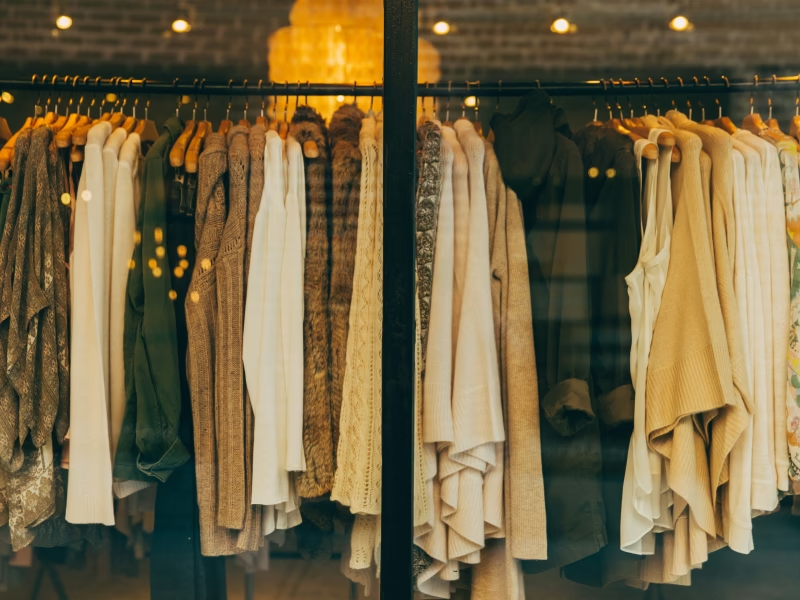
This transformation gave rise to fast fashion, a relatively recent phenomenon within the industry, characterized by inexpensive, market-led apparel that draws inspiration from runway collections and celebrity culture.
The fast fashion designs are rapidly reproduced and delivered to high street retailers at exceptional speed to satisfy consumer needs. The underlying objective is to place the latest styles on the market as quickly as possible, enabling shoppers to purchase them with ease; though, regrettably, many of these items are discarded after only a few wears.
Advantages of Fast Fashion
Fast fashion offers several advantages that explain its global popularity. It delivers affordability by producing inexpensive clothing, accessibility by making trends influenced by runways available to many consumers, and speed by swiftly moving designs from concept to store shelves.
Shoppers benefit from constant variety, with new styles released weekly, and convenience through online platforms that allow purchases from anywhere in the world. This approach democratizes fashion, enabling people across income levels to participate in trends, turning shopping into both a hobby and a form of self-expression.
How to Know If a Brand Is Fast Fashion?
Spotting fast fashion online or in-store comes down to a few simple signs. Brands pushing rapid production often drop new styles every week, while trend replication shows up in cheaply made versions of runway looks.

Low-quality materials are another giveaway, such as synthetic fabrics and defective construction, designed to last only a handful of wears. Paying attention to where manufacturing happens, as production is frequently based in regions where workers earn below living wages.
And finally, competitive pricing is a sign of concern, with fresh stock appearing every few days and steep discounts applied when items don’t sell.
What Is Fast Fashion Brands?
Brands like Zara, H&M, Shein, Forever 21, and Temu are fast fashion examples offering dozens of collections per year instead of the traditional four seasonal releases. This constant flux encourages consumers to refresh their wardrobes frequently, regularly disposing of garments after minimal use.
In the fast fashion industry, from raw materials to finished products, items like apparel and footwear move through a complex chain of suppliers. For instance, Shein, a leading fast fashion giant, relies on over 5,000 contractors to generate its inventory. Zara’s parent company, Inditex, engages 1,790 suppliers who utilize 8,756 factories, and H&M manufactures its apparel through more than 1,000 factories worldwide.
This retail model resonates particularly with younger demographics, who derive satisfaction from the abundance of available choices and for whom visiting such stores constitutes a meaningful aspect of their social engagement.
What Is the Biggest Fast Fashion Brand?
Shein is currently the world’s largest fast fashion brand, holding about half of the U.S. market share and far outpacing rivals like Zara at 13% and H&M with a smaller share. Its dominance comes from ultra-fast production cycles, AI-guided trend prediction, and a global e-commerce model that bypasses physical stores, allowing it to deliver new styles in days at extremely low prices.
While this strategy stimulates growth and appeals to Gen Z fashion shoppers, it also raises concerns over environmental damage, workplace standards, and garment quality.
Why Is Fast Fashion a Problem?
Fast fashion depends on affordability and convenience, but this comes at a steep cost to both people and the planet. Built on the notion that repeating outfits can be considered a faulty fashion, it still fuels the pressure to constantly wear the latest trends as they are released into the market.
Yet behind the benefits of instant access and trendy design lies a series of pressing social, economic, and environmental concerns, as well as the reinforcement of a disposable mindset toward fashion.
Fast fashion environmental impact
This relentless cycle of overproduction and overconsumption has turned the fashion industry into one of the world’s leading polluters, raising urgent concerns about its environmental burden and long-term sustainability.
While fast fashion has made the clothing sector more accessible and affordable, it has also brought forth overconsumption, textile waste, and exploitative labor methods. The industry is now a major source of global carbon emissions, water usage, and pollution, raising urgent questions about eco-friendliness and morals in modern fashion.
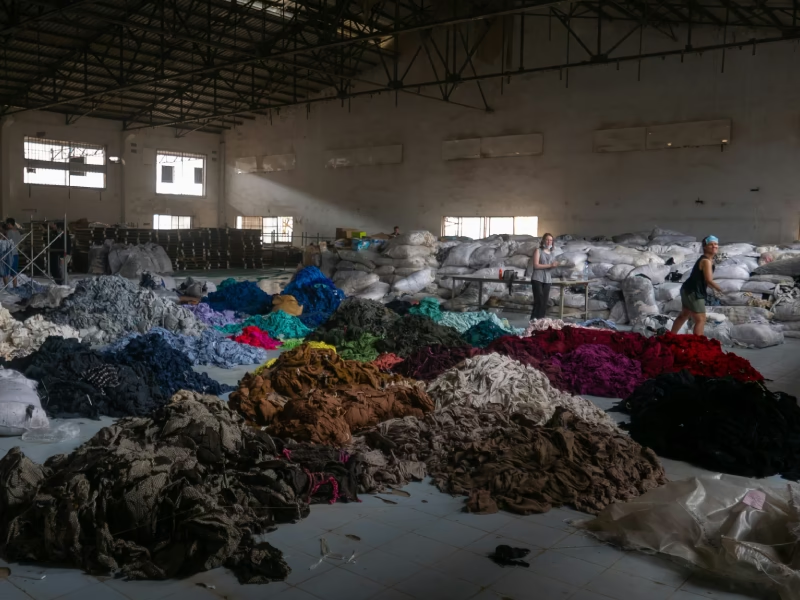
Take Temu and Gymshark, for instance, brands under fire for toxic chemicals, hazardous dyes, and synthetic fabrics that leach into water systems. In the U.S. alone, 11 million tons of clothing are discarded every year. Packed with lead, pesticides, and a combination of other harmful substances. These garments don’t decompose; they linger in landfills, releasing toxins into the atmosphere. The climate impact of fast fashion rivals that of industries as giant as air travel and oil.
Conclusion
Fast fashion has profoundly changed the global fashion industry by producing stylish clothing that is widely obtainable at economical rates. Yet this availability carries extensive consequences for labor conditions, environmental responsibility, and clothing quality. As awareness of these underlying costs grows, momentum is building toward more responsible and ethical models, such as slow fashion. By recognizing the full impact of fast fashion and assessing our own consumption habits, we can make more deliberate choices and advocate for practices that foster a more sustainable, equitable, and resilient fashion ecosystem.











