




When the name “Toyota” is mentioned globally, most minds immediately jump to the automotive industry. However, the historic reality is that this industrial giant actually began its journey in 1922 with the invention and manufacturing of textile machinery. Today, the textile machinery division remains a highly successful and pioneering force in the global market.
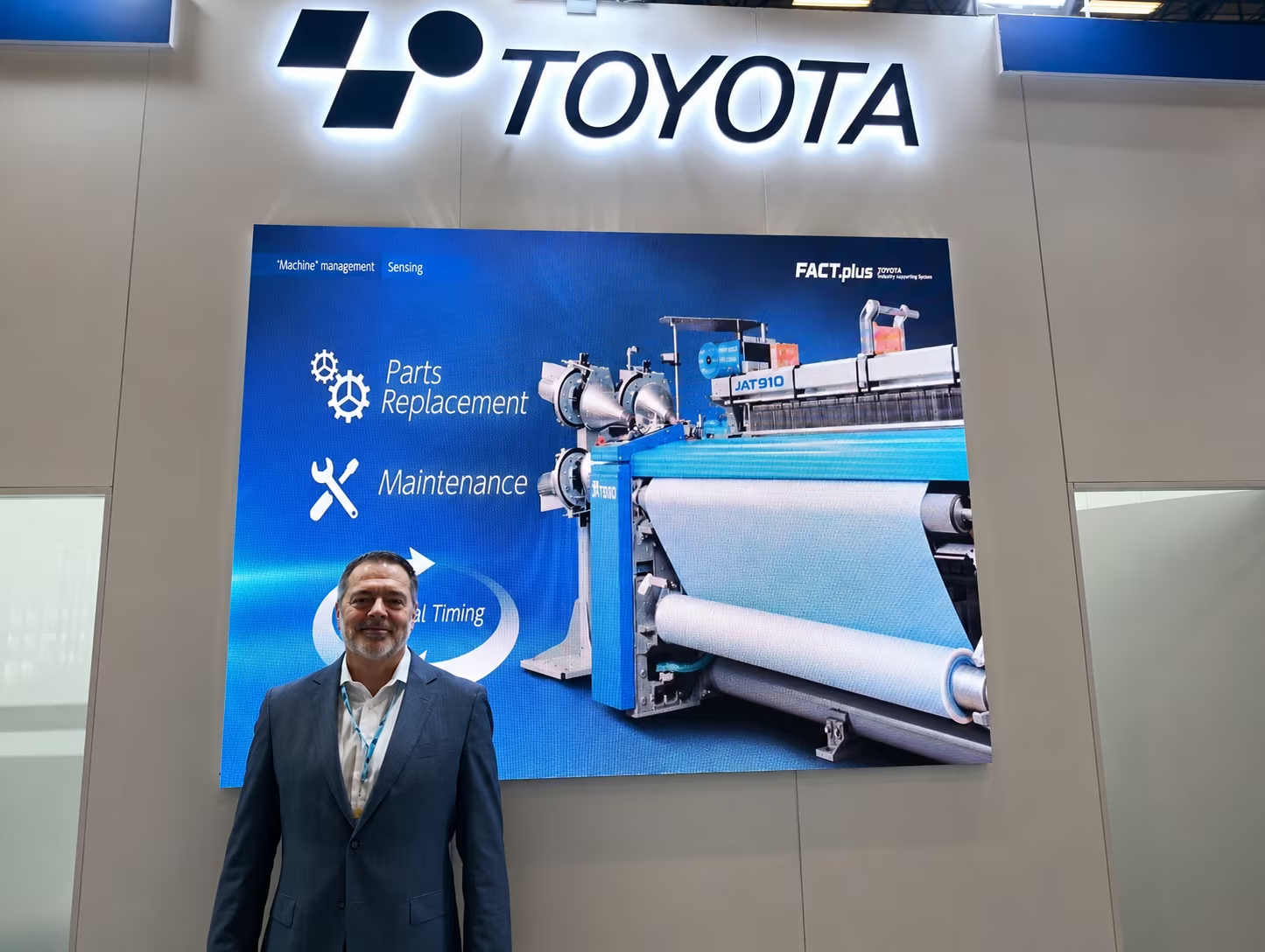
On the sidelines of the exhibition, Kohan Textile Journal sat down for an exclusive interview with Mr. Markus Lichtenstein, Chief Operating Officer (COO) of TOYOTA TEXTILE MACHINERY EUROPE AG, to discuss their global strategies, the vital role of the Turkish market, and the future of the industry.
Toyota Textile Machinery: More Than a Century of Innovation
Kohan Textile Journal: Could you please introduce your company, its history, and your core field of expertise?
Mr. Markus Lichtenstein: Yes, the company is Toyota Textile Machinery. Toyota, of course, is a very famous name that everybody knows from the car business. But what few people know is that Toyota actually started with textile machines back in 1922. We are still in this business today. Of course, the textile machinery business is very small now compared to the car business and logistics, but we are still here and we are very successful at the moment.
Kohan Textile Journal: What technologies and products are you showcasing and offering to the market these days?
Mr. Markus Lichtenstein: What we offer these days is air-jet technology for weaving machines, a sector where we are the global leader. Right now, we are producing more or less 9,000 air-jet weaving machines per year. Beside that, we are also technological leaders in spinning machines—specifically ring spinning machines—plus preparation machinery. These are the main focus areas we have in our textile machinery business.
Kohan Textile Journal: Why did you decide to enter the Turkish market, and how important is it to your global operations?
Mr. Markus Lichtenstein: We have been in the Turkish market for quite a long time because it is a very important, vital market. Turkey is highly central to this entire region, serving as a key hub for the European market. Right now, Turkey is admittedly in a difficult political and economic situation, but that doesn’t mean it will last forever. At the moment, it requires a little bit of patience, but I think if the whole situation stabilizes a bit, Turkey will remain a very important area for the European market.
Kohan Textile Journal: How do you foresee the future of the textile industry in general?
Mr. Markus Lichtenstein: The textile industry is still a very big industry because it is directly related to the global population. If the world population goes up, the textile business goes up—it’s very easy. There is no major innovation on the horizon that can completely substitute textiles; we are not going to start walking around in plastic bags. Therefore, textiles will always be there, meaning there is no substitution for them, and we will always need machinery. I don’t see any change in this reality.
Kohan Textile Journal: What is your opinion regarding the potential of the textile industry in the Middle East and Africa, particularly with the recent focus on markets like Egypt?
Mr. Markus Lichtenstein: Egypt certainly has a huge potential, but the problem is that it is not yet as efficient as Turkey. In Turkey, we have a lot of very smart business people who deeply know textiles—it’s truly in their blood. In Egypt, there is a different business culture, making it a bit more complicated to do business due to historical and cultural factors.
Africa is even more challenging because they do not have an established textile culture. While many companies there have intentions to invest in textiles, they lack the foundational knowledge and experience, so building up the industry takes a lot more time. This is why I still see Turkey as the main manufacturing powerhouse of the region, though we must see the economic and political situations stabilize.
Read more: Buy Textile Machinery: A Comprehensive Guide for Buyers
Kohan Textile Journal: How much importance do you give to sustainable manufacturing within your own company?
Mr. Markus Lichtenstein: Sustainable manufacturing is absolutely critical—everybody has to do it, and it is not a matter of choice. If we are not sustainable, we will simply disappear. We are constantly trying to improve our manufacturing processes, and environmental laws are continuously requiring it. We have very strict environmental rules in Japan that we must follow, and this aligns perfectly with the core Toyota philosophy. Concerning our customers, they also have to think in ecological terms regarding their operations, so this is a continuous process that will naturally develop.
Kohan Textile Journal: Thank you very much for your time and sharing these valuable insights.
Mr. Markus Lichtenstein: It was my pleasure.











