




By Behnam Ghasemi, Editor-in-Chief
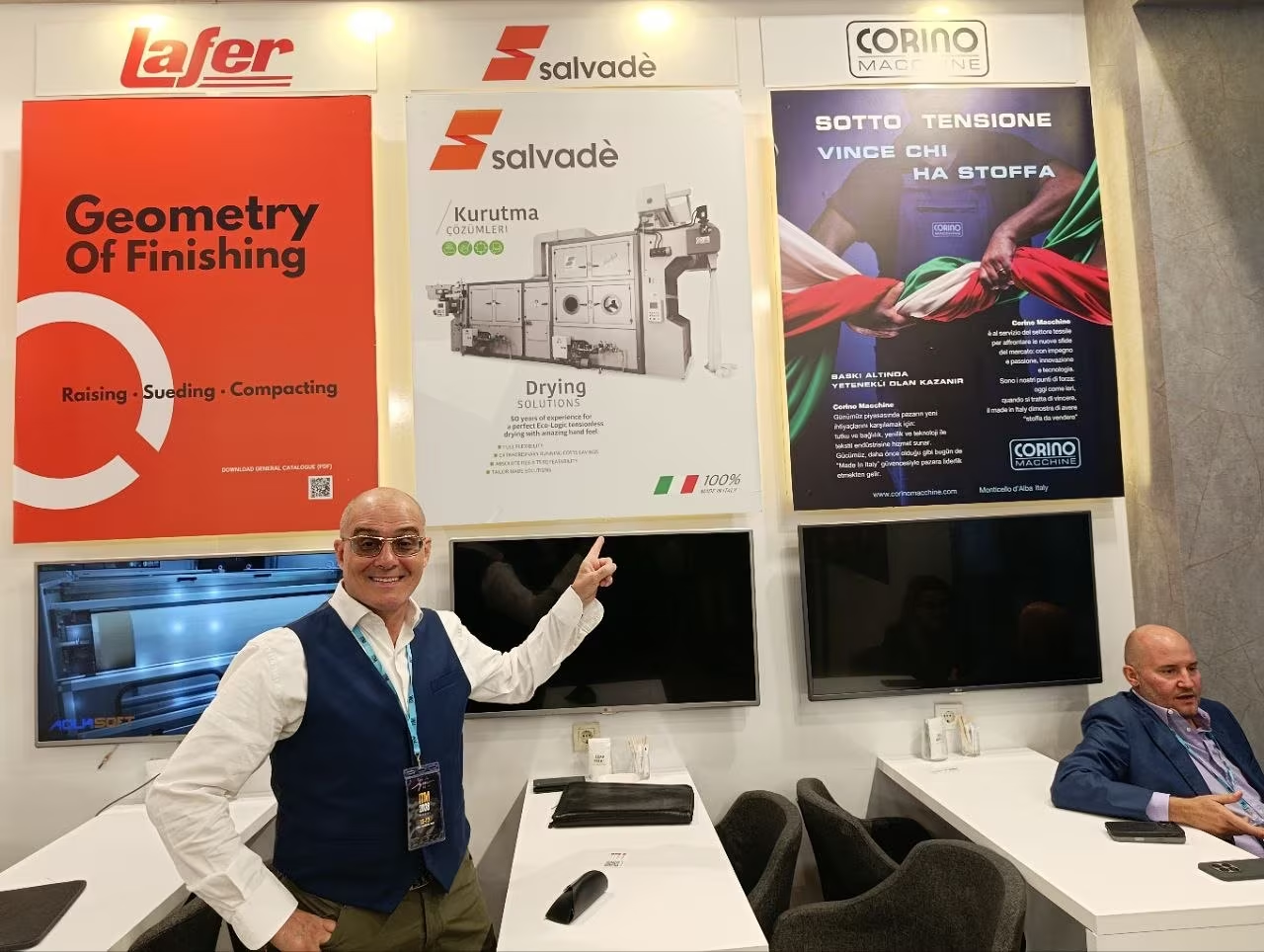
ISTANBUL — Kohan Textile Journal: The textile finishing sector is facing unprecedented pressure to cut energy consumption and adapt to sweeping geopolitical shifts. At the ITM 2026 exhibition in Istanbul, Kohan Textile Journal sat down for an exclusive interview with Ing. Mario Bruno, Sales Director at Salvadè S.r.l. (and its specialized branch KMT).
Founded in 1967 and based in Como, Italy, Salvadè has established itself as a global leader in after-printing steamers and drying solutions. In this candid conversation, Mario Bruno shares insight into their patented energy-saving technologies, the reality of competing with a rising China, and why the Middle East and Africa represent the ultimate frontier for textile machinery.
Kohan Textile Journal (Behnam Ghasemi): To kick things off, could you please introduce your company, your history, and your core field of expertise?
Ing. Mario Bruno: Certainly. Salvadè was founded in 1967. We are based in the north of Italy, specifically in Como, very close to Milan. Today, we operate across three distinct product lines. Our core business revolves around after-printing steamers—a sector where we are incredibly strong, particularly here in Turkey, where we have more than 100 steamers running in factories every single day.
Historically, we were born making drying solutions. This includes relax dryers and tumbler dryers, which we offer for both woven and knitted fabrics. We also specialize in combining different drying solutions tailored to specific needs. Our third product line focuses on fancy fabrics. About 15 years ago, we merged with a company called KMT, which specialized in machines like felt calendars, crushing machines, and pleating machines, integrating their expertise directly into our catalog.
Read more: The Address for Environmentally Friendly Dyeing and Finishing Systems: ITM 2026
Kohan Textile Journal (Behnam Ghasemi): What specific technologies or product innovations have you brought to this edition of the ITM exhibition?
Ing. Mario Bruno: To be realistic, we aren’t launching a brand-new machine at this exact booth; our latest major patent was launched a couple of years ago at the ITMA exhibition. However, that patent is highly relevant right now because the entire industry’s focus is currently oriented toward resource-saving.
Our patented technology enables our after-printing steamers to save about 40% of steam. At the end of the day, a 40% reduction in steam translates directly to saving 40% of whatever heating source you use to generate that steam. In a country like Italy, where we rely heavily on gas and cannot burn wood or coal, energy efficiency is paramount. Given the current geopolitical situation, gas prices have gone crazy. Our customers deeply appreciate this technology because it dramatically lowers their utility bills. The same goes for our dryers, which feature exceptionally low gas consumption compared to traditional options on the market.
Kohan Textile Journal (Behnam Ghasemi): How do you foresee the future of the textile industry, both here in Turkey and on a global scale?
Ing. Mario Bruno: I am generally known as a very positive guy, but this time I have to be completely realistic, especially speaking from the perspective of Italian machinery builders. I believe Italian manufacturers must do what our industries have always done historically: occupy the top-tier niche markets. Italy thrives in the niche—whether it’s automotive, motorbikes, furniture, garments, shoes, or textile machinery. We operate at a very high, premium level. We cannot chase massive mass-market volume.
The reality is that China has become too strong. We can no longer claim that Chinese machinery is bad; that argument might have worked 6 or 10 years ago, but today their machines have become highly reliable and incredibly cheap. Therefore, European builders must target the market segments where customers are genuinely willing to pay a premium for superior European engineering and reliability. For many companies, this will mean reviewing their business models, shrinking factory sizes, and moving away from high-volume production targets.
Kohan Textile Journal (Behnam Ghasemi): What is your take on the rapid growth of the textile industry across the Middle East and Africa?
Ing. Mario Bruno: If you look strictly at demographic numbers, it is the most interesting region in the world. When evaluating whether a market has long-term potential, you must look at the younger generation.
Europe has unfortunately become a continent of old people. Our birth rate is around 0.8 kids per family, which means our domestic markets are actively shrinking. Young generations are the ones who buy, consume, and build families. When people get older, their wardrobes are full and they don’t change their blankets or curtains anymore. In Africa and the Middle East, families still have 3 to 6 children on average, creating a continuous cycle of consumption. While these regions still need to develop their infrastructure and organized industrial capabilities, the baseline demographic potential is massive. Asia will likely continue to dominate the low-margin mass market, but the MENA region represents a vital growth frontier.











