Researchers at South Ural State University (SUSU), in collaboration with scientists from Serbia, have developed a flow electrochemical reactor capable of removing Reactive Black 5, one of the most widely used dyes in textile dyeing, from contaminated wastewater.
Reactive Black 5 is valued in textile production for its strong bonding with fibers, but the same characteristic makes it difficult to remove once it enters wastewater streams. The dye can persist in the environment, reduce light penetration in water bodies, and negatively affect aquatic ecosystems.
Reactor Removes Reactive Black 5 in 90 Minutes
Unlike conventional treatment methods such as filtration, sorbents, ozonation, or membrane systems—which often require costly consumables, high energy consumption, or complex maintenance—the new reactor uses electric current to degrade dye molecules directly.
Read More:Iranian Researchers Develop Advanced EC Reactor to Treat Textile Dye Wastewater
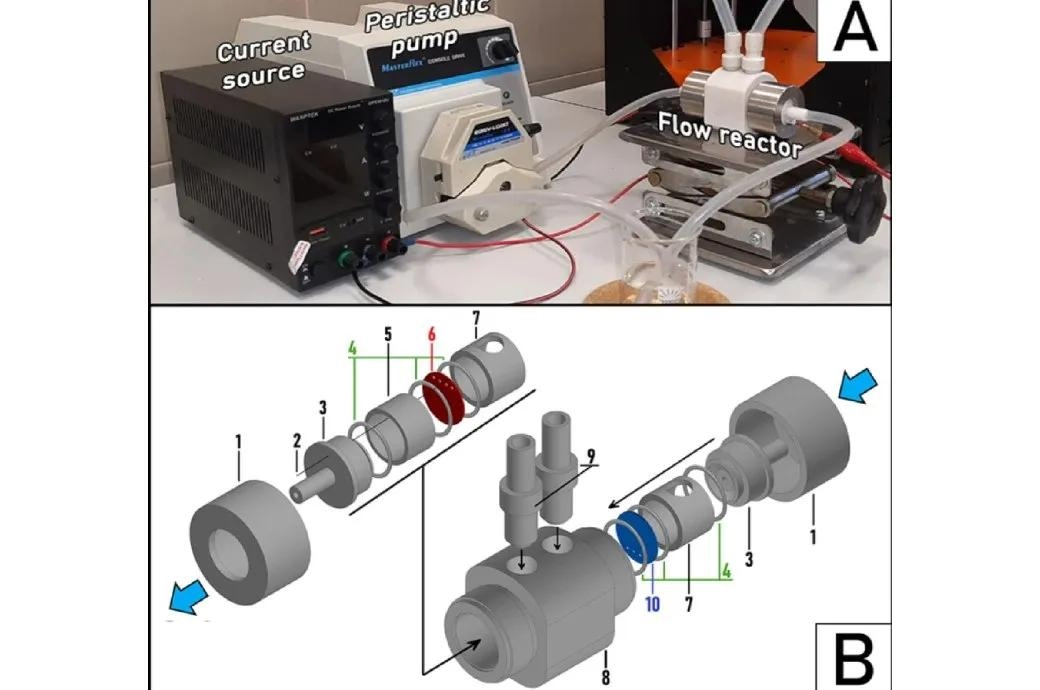
The system works by passing contaminated water through a flow reactor where active particles generated on the surface of a specially designed multilayer electrode break down the dye. The researchers enhanced one layer of the electrode with holmium, a rare-earth element that improves cleaning efficiency while maintaining long-term electrode performance.
Laboratory tests showed that a Reactive Black 5 solution became completely colorless within 90 minutes. Even after 15 consecutive treatment cycles, the reactor maintained nearly the same level of efficiency, demonstrating excellent durability.
The research team believes the technology could lead to compact and efficient systems for removing persistent organic pollutants from industrial wastewater. Future work will focus on testing the reactor with real textile wastewater and further optimizing its design for industrial applications.