




In the highly competitive global spinning industry, the uninterrupted operation of textile mills depends heavily on the precision, availability, and durability of high-quality replacement parts. As operational overhead rises across legacy manufacturing hubs, finding the right balance between robust domestic production and expanding international market demands has become a critical milestone for survival.
Operating at the absolute center of this technical sector, Asil Makina San. ve Tic. Ltd. Şti. has spent decades solidifying its position as a trusted vertical manufacturer, producing thousands of specialized components entirely in-house.
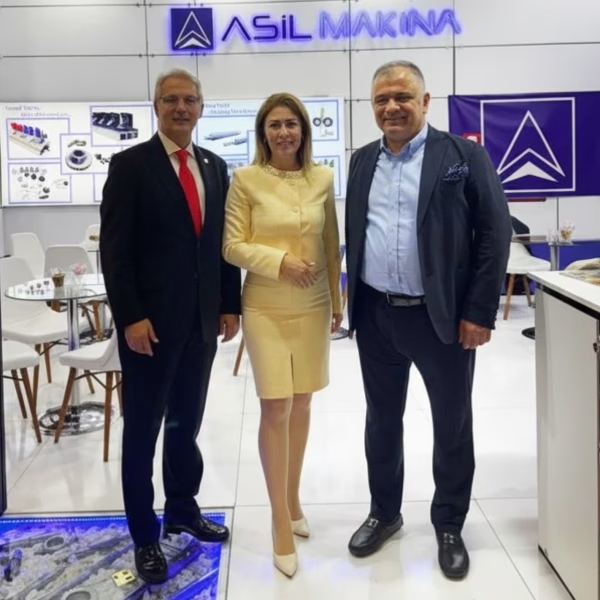
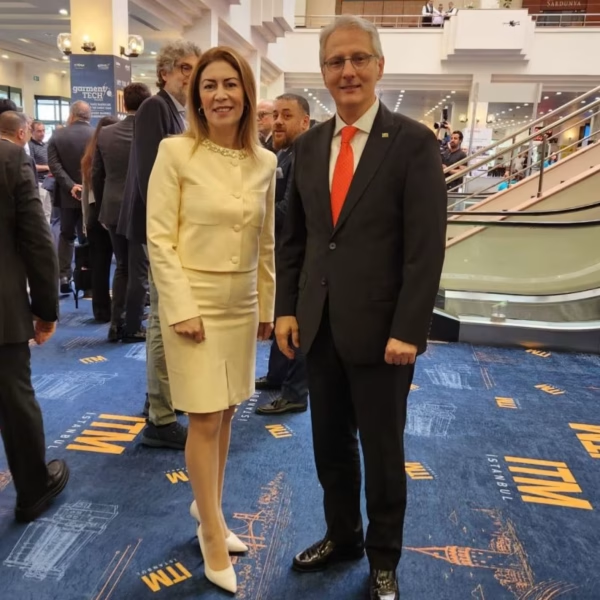
On the sidelines of the international textile exhibition, Behnam Ghasemi, Editor-in-Chief of Kohan Textile Journal, sat down for an exclusive editorial interview with Sevda Kılıçkıran, Managing Director of Asil Makina. In this comprehensive Q&A, she breaks down the company’s 40-year legacy, their highly agile manufacturing model, and her strategic outlook on the changing geopolitical lifecycle of the global textile ecosystem.
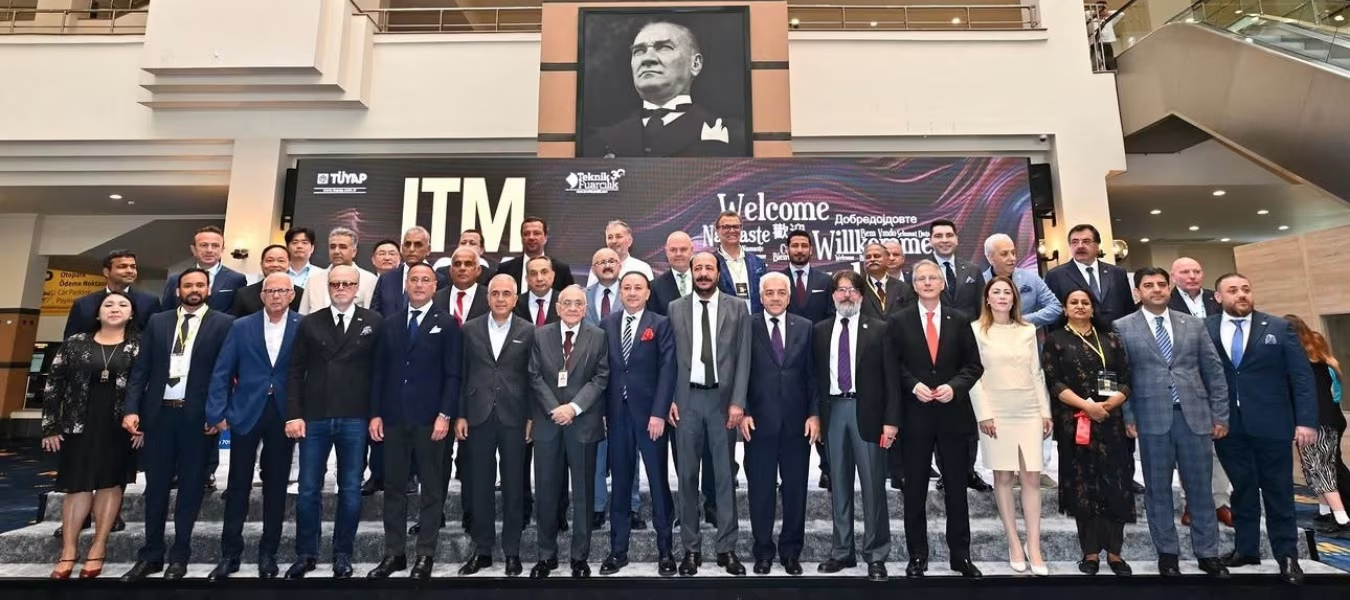
Exclusive Editorial Interview
Q: Ms. Kılıçkıran, it is an absolute pleasure to speak with you. To begin our conversation, could you please introduce Asil Makina, your heritage, and your foundational core competencies?
Sevda Kılıçkıran: Thank you, it is a pleasure to welcome you. Asil Makina is built on a 40-year industrial legacy in the textile sector. We specialize specifically in manufacturing high-precision replacement parts for industrial spinning and yarn machinery. The company has officially operated under the name Asil Makina Sanayi ve Ticaret Limited Şirketi since 1997.
The firm was originally established by my father, Hasan Kılıçkıran, and I am incredibly proud to lead the business today as the second generation of management. Our core operational advantage lies in our absolute vertical independence—our entire production line and manufacturing processes belong entirely to us.
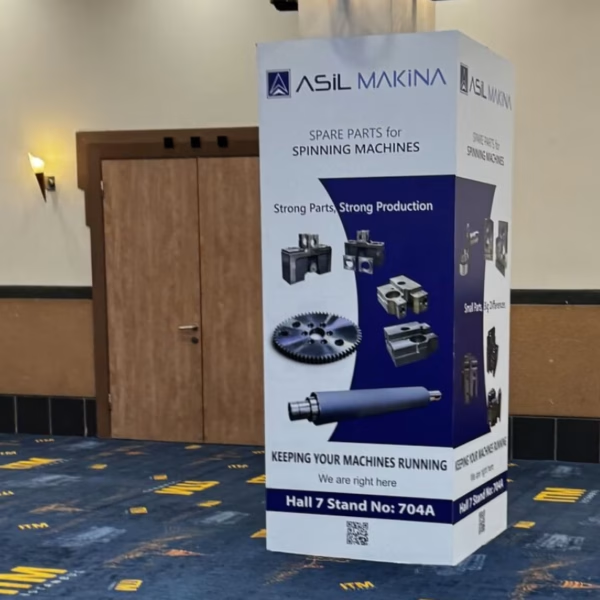
Today, we maintain a vast, stock-ready inventory containing over 3,000 distinct product types to ensure immediate availability for our global client base.
The Demand-Driven Product Expansion Model
Q: Having over 3,000 components in stock is a major logistical feat. How do you approach product innovation and hardware expansion for this exhibition?
Sevda Kılıçkıran: Our approach as an original manufacturer is highly fluid and continuous. Rather than launching stagnant product lines, we introduce new components and parts practically every single day. Because we control our own manufacturing facilities, our product development is directly shaped and accelerated by our customers’ explicit needs, feedback, and technical machinery requirements.
Our expansion model works very efficiently: when a client requests a specialized component for their specific spinning machinery layout, we don’t just execute a single custom order.
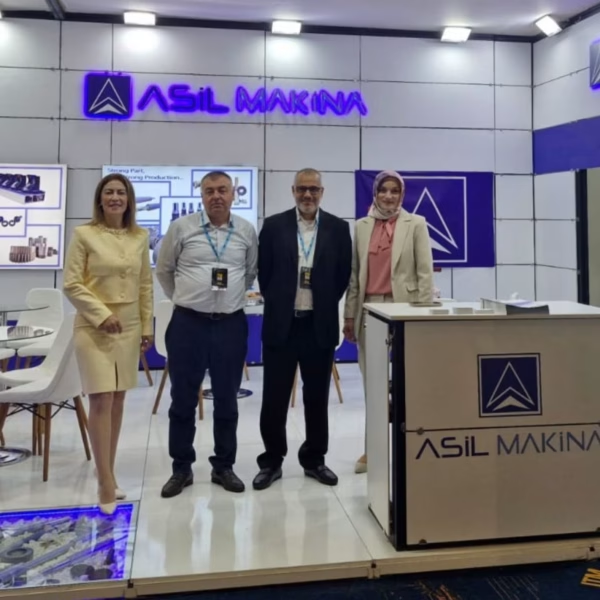
If we recognize that the same machinery model is being utilized by alternative textile mills across the industry, we immediately manufacture that component in higher volume batches and permanently integrate it into our active commercial product portfolio. This agile process ensures we bring at least 10 to 15 brand-new technical products to every single trade exhibition we attend.
Navigating Rising Industrial Costs and Global Relocation Trends
Q: Looking closely at macro trends, how do you see the future of the textile sector evolving, particularly regarding shifting manufacturing hubs?
Sevda Kılıçkıran: The global textile industry is currently grappling with severe structural changes. As an emerging economy develops, it naturally faces a major increase in domestic manufacturing overhead. We are experiencing this reality very clearly right now in Türkiye, where labor rates, industrial energy tariffs, and raw material procurement costs have risen sharply, inevitably impacting final product pricing.
Historically, textile manufacturing follows a strict geopolitical lifecycle. We saw this manufacturing base start heavily in Europe, before migrating to Türkiye as a major production powerhouse, and it is now gradually shifting further toward lower-cost regions. While certain labor-intensive garment and fabric segments are moving toward countries with lower wages, I remain deeply optimistic and confident about Türkiye’s long-term position.
Read more: Turkey Textile Exports 2025: How It Dominates the Middle East and Africa Market
Türkiye’s Deep Structural Advantages in Textile Machinery
Q: What keeps you optimistic about Türkiye’s position despite these rising domestic overhead pressures?
Sevda Kılıçkıran: Spinning and textile production are deeply embedded in the cultural identity and technical expertise of the Turkish workforce. This isn’t just a business for us; it is a sector we know inside and out. Our labor force is recognized globally for its extreme meticulousness, high engineering standards, and ability to deliver premium-grade industrial finishes.
Furthermore, Türkiye’s domestic textile machinery and replacement parts sector has achieved a highly advanced level of maturity. This localized engineering ecosystem provides immense structural strength to our entire textile landscape.
While we expect emerging markets across the Middle East and surrounding regions to expand their market share steadily year over year, I believe this transition will take at least another decade to fully mature and shift. Türkiye’s established engineering infrastructure will ensure we remain a dominant force for years to come.











