




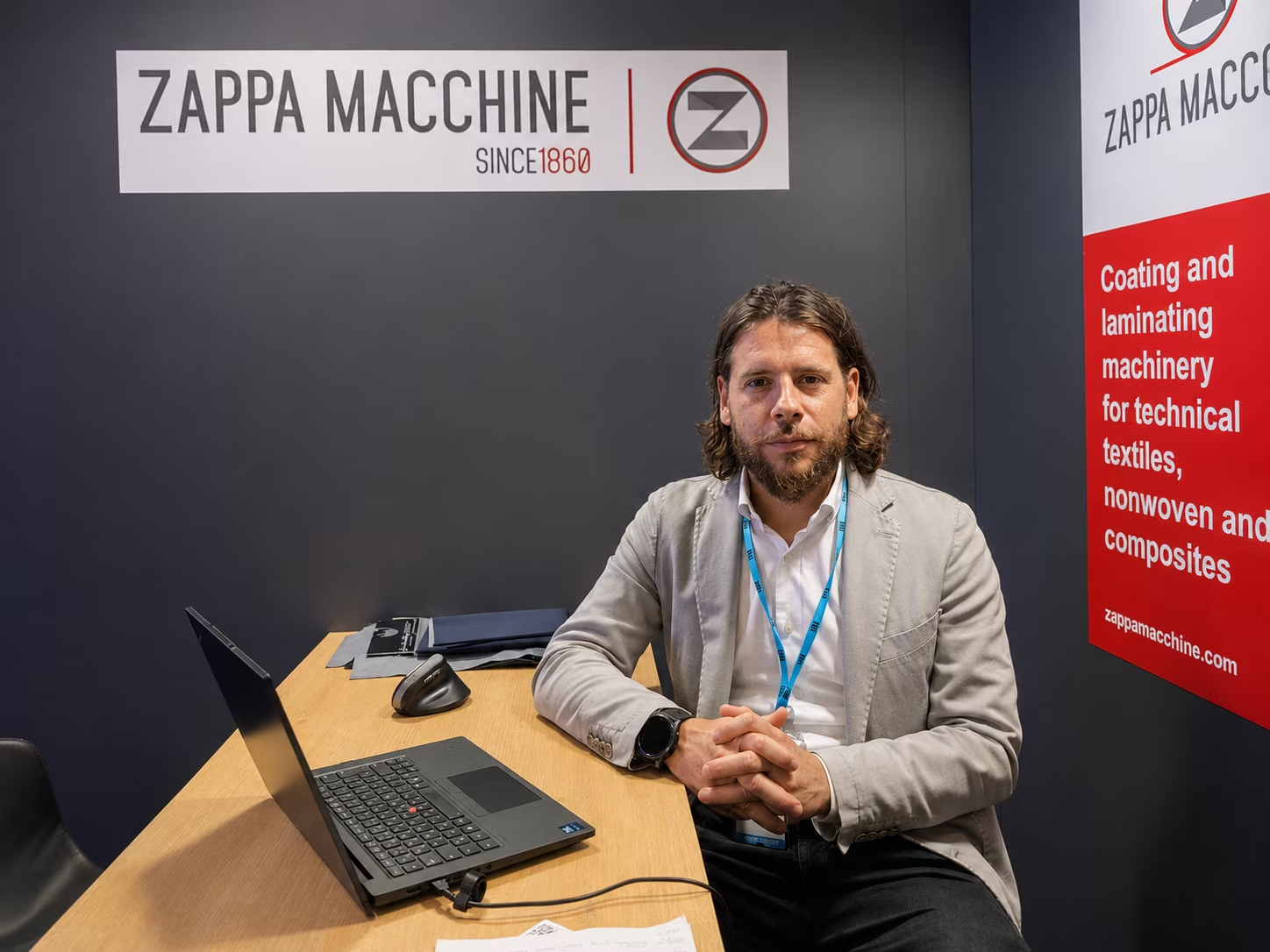
At ITM 2026 in Istanbul, Behnam Ghasemi, Editor-in-Chief of Kohan Textile Journal, spoke with Mr. Francesco Boris, Technical Sales Manager of ZAPPA MACCHINE. In this exclusive interview, he discusses the company’s long history in coating and laminating technologies, its strategy for expanding in Türkiye and North Africa, and the growing importance of sustainable, solvent-free lamination solutions.
A Heritage of Innovation in Coating and Laminating Technologies
Q: Could you please introduce ZAPPA MACCHINE and its business?
Francesco Boris: ZAPPA MACCHINE is based in northern Italy, near Como. The company was founded in 1860, so we have more than 160 years of history. We are a relatively small company with around 20 employees, but we specialize in a very specific niche of the textile machinery market.
Our core business is the design and manufacture of coating and laminating machinery. We produce coating machines, flocking machines, and, most importantly, hot-melt laminating machines, which have become our primary area of expertise.
Although we are a small company, we are well recognized throughout Europe for our technical know-how and customized solutions.
Q: Why did you decide to participate in the Turkish market?
Francesco Boris: We have been working in Türkiye for several years and already have a number of customers here.
About five years ago, one of our main objectives was to find a reliable local representative, and we established a partnership with Spot International Textile. Since then, they have supported us by preparing quotations, visiting customers, and developing the market.
At the moment, the Turkish textile market is relatively quiet compared with the past. Nevertheless, we continue to promote our technologies and strengthen our presence because we believe the market will recover.
Q: What makes ZAPPA MACCHINE different from larger competitors?
Francesco Boris: Our greatest advantage is flexibility. Large machinery manufacturers often provide standardized solutions, while we begin every project by understanding the customer’s specific production requirements.
We develop customized machines designed to solve complex processing challenges. Customers choose us because they need tailor-made solutions combined with high-quality engineering. Our machines offer high technical standards while remaining competitively priced, making them attractive for customers looking for specialized equipment.
Q: How do you see opportunities in the Middle East and Africa?
Francesco Boris: ITM is an important exhibition because it attracts visitors from both the Middle East and Africa.
One of our main objectives this year is to expand our commercial network in North Africa. We have already started discussions with a potential partner in Egypt, and we are looking for additional agents throughout the region.
In the Middle East, our presence is still limited, so our immediate priority is to strengthen our position in North Africa before expanding further.
Q: Sustainability has become increasingly important in textile manufacturing. How is ZAPPA MACCHINE contributing?
Francesco Boris: Sustainability is extremely important for us. Years ago, traditional lamination processes often relied on flame lamination, solvents, and chemical varnishes, which had a greater environmental impact.
Today we have shifted our focus toward hot-melt lamination technologies, which operate without solvents and without water.
This is one of our biggest strengths because we are not only manufacturing sustainable machinery—we are also helping customers adopt more environmentally friendly production processes by eliminating solvent-based chemicals from the lamination process.
For us, sustainability is not only about machine efficiency but also about improving the entire manufacturing process from an environmental perspective.
Editor’s Insight
While many textile machinery manufacturers compete through production capacity, ZAPPA MACCHINE has built its reputation on customization and engineering flexibility. Its transition from conventional lamination technologies toward solvent-free hot-melt systems reflects one of the textile industry’s most important trends: replacing chemical-intensive processes with cleaner, more sustainable production methods.
As regulations surrounding chemicals and emissions continue to tighten worldwide, demand for solvent-free coating and laminating technologies is expected to grow, particularly in technical textiles, automotive interiors, medical textiles, and advanced industrial applications.
Read more: UK Showcases Technical Textile Strength at Techtextil and Texprocess 2026











