In the heavy industrial weaving sector, mechanical agility is increasingly defined by three pillars: total cost optimization, cloud-driven artificial intelligence, and uncompromised structural flexibility. As global weaving mills face escalating energy tariffs, sharp inflation, and macroeconomic barriers, the conventional race for raw production speed has shifted toward sustainable output efficiency.
Modern weavers no longer judge a loom exclusively by its maximum picks per minute, but by its capacity to run delicate or coarse yarn counts seamlessly while significantly lowering electrical and compressed air footprints.
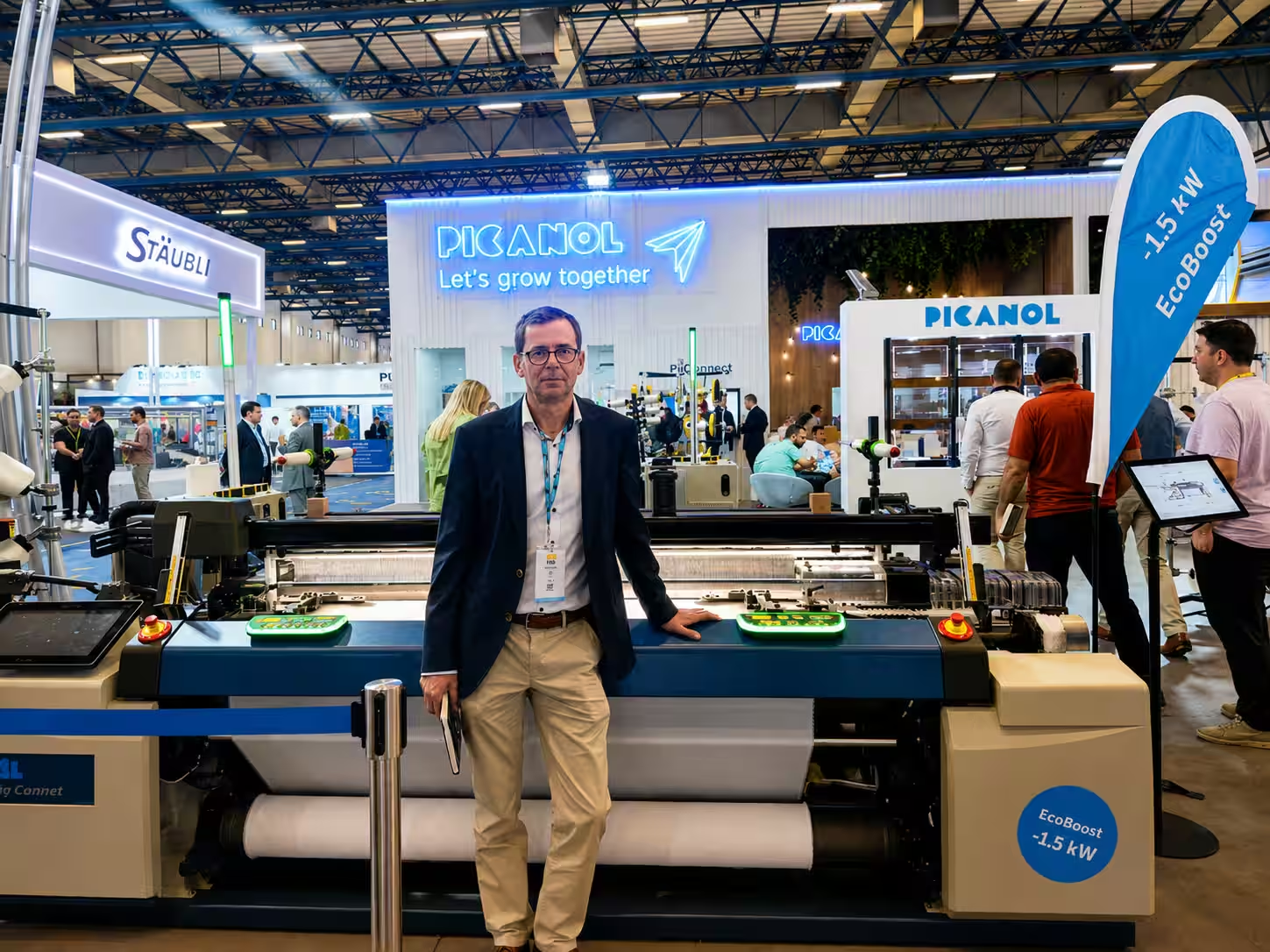
At the International Textile Machinery Exhibition (ITM 2026) in Istanbul, Behnam Ghasemi, Editor-in-Chief of Kohan Textile Journal, conducted an exclusive technical session with Mr. Lieven Beke, Marketing and Product Manager at Picanol. In this comprehensive Q&A editorial feature, the Picanol executive team outlines their newest Ultimax rapier architectures, breaks down the fluid mechanics behind their EcoBoost air-jet platforms, and delivers a candid assessment of the geopolitical factors relocating textile capital into North African and Central Asian trade corridors.
Weaving Benchmark: 90 Years of Belgian Innovation
To provide our international readers with a clear starting point, could you outline Picanol’s manufacturing background and corporate evolution?
Mr. Lieven Beke: Picanol is a highly specialized engineering company dedicated entirely to the development and production of high-performance weaving machines. While our global corporate and R&D headquarters are firmly anchored in Belgium, we have systematically expanded our manufacturing footprint to include state-of-the-art production plants in other key industrial regions of the world.
Our engineering journey started almost 90 years ago. Over nearly a century of continuous development, Picanol has successfully evolved from a local machine workshop into a global market pioneer that sets the absolute benchmark and defines the technological trends for the entire international weaving industry. All of our platforms are engineered to solve real-world mill challenges by balancing raw mechanical productivity with deep digital control.
OmniPlus i Connect: Saving 40% Energy with EcoBoost
High efficiency and smart automation are dominating this edition of the show. What specific hardware systems and loom configurations is Picanol highlighting at ITM 2026?
Mr. Lieven Beke: The machinery setups, digital platforms, and technical innovations we have selected for our exhibition stand have been carefully chosen to demonstrate three core principles: Productivity, Sustainability, and Digitization.
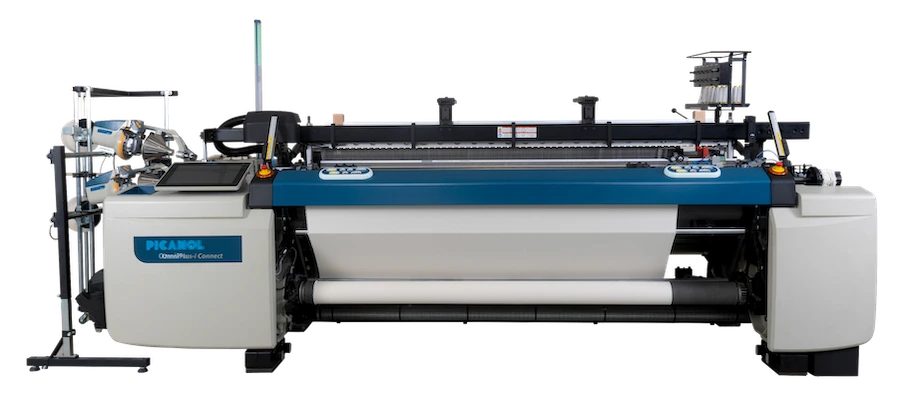
On the air-jet weaving side, we are showcasing our latest generation OmniPlus i Connect machine. This advanced air-jet loom is equipped with our trendsetting EcoBoost system. In traditional air-jet weaving, the generation of compressed air and electrical power consumption represent massive overhead costs. The EcoBoost platform acts as an active mechanical regulator, delivering a massive 30% to 40% reduction in electrical energy consumption during continuous operation. This represents a monumental financial saving for high-capacity mills facing rising utility tariffs.
Ultimax Rapier: Versatility from Heavy Denim to Delicate Curtains
Rapier technology is vital for fashion and home textiles. How are you demonstrating your rapier flexibility to local Turkish weavers on the stand?
Mr. Lieven Beke: Next to our air-jet setup, we have installed two of our latest-generation Ultimax rapier machines. To directly demonstrate the extreme operational flexibility of the Ultimax platform, we have set up the first machine to weave heavy, high-density denim at incredibly high mechanical speeds. Simultaneously, the second Ultimax loom is running a highly delicate, fine-count curtain fabric.
Through this specific application pairing, we want to prove to textile manufacturers that the exact same machine possesses the fluid versatility to transition smoothly between rugged, high-speed industrial fabrics and sensitive, premium home textiles while continuously guaranteeing an absolute premium fabric quality
PicConnect Platform: Integrating AI into Weaving Big Data
Digitization is no longer just about monitoring data; it is about predictive control. How is Picanol leveraging Artificial Intelligence (AI) to optimize factory workflows?
Mr. Lieven Beke: This is a vital part of our roadmap. A few years ago, we introduced our centralized, cloud-based digital network known as PicConnect. This platform is engineered to instantly harvest, aggregate, and analyze every technical data point emanating directly from the microprocessor boards of our active weaving machines.
Recently, we achieved a significant breakthrough by introducing an advanced AI functionality directly into the PicConnect architecture. This cloud intelligence processes massive sets of machine data in a highly autonomous, intelligent way—predicting mechanical wear, optimizing yarn insertion, and automatically adjusting settings to prevent warp or weft stops. This cloud-guided automation is the definitive path forward for industrial weaving, and our clients can expect an expanding pipeline of smart AI tools launching within PicConnect soon.
Read more: Picanol’s Innovations in Sustainability, Digitalization, and AI at ITM 2024
Turkish Market: Replacing Older Machinery Amid High Inflation
The local Turkish market is currently navigating severe economic adjustments. How do you assess current investment trends in Türkiye?
Mr. Lieven Beke: The Turkish textile sector is undoubtedly enduring a highly complex, difficult phase right now, heavily impacted by domestic inflation, tightening credit loops, and regional geopolitical tensions. Our local customers are going through a genuinely tough operational cycle.
However, we are optimistic that the market has reached its structural bottom and that we will slowly and steadily see a return to capital investments. At this stage, regional spending may not immediately focus on massive factory expansions, but rather on the strategic replacement of older, energy-inefficient machinery with our connected looms to combat high power costs. We have secured several excellent, high-value project negotiations during this show, and our long-term outlook for Türkiye remains very strong and positive.
MEA Dynamics: Tariffs Driving Capital Shifts to Egypt and Uzbekistan
We are tracking a major realignment of textile production globally. Are you noticing a rise in buyers traveling to Istanbul from the Middle East and Africa (MEA)?
Mr. Lieven Beke: Yes, we are registering a tremendous amount of localized trade activity from international buyers right here at ITM. We are hosting a high volume of purchasing delegations traveling out of Egypt.
What our macro data shows is that massive textile investments are actively relocating away from traditional manufacturing territories and moving into newly developed regional zones. Driven partly by global trade tensions, shifting international tariffs, and duty-free export quotas, manufacturers are modifying their supply chains. Within the Middle East, Central Asia, and Africa, we are seeing exceptionally aggressive machinery investments and setup activities concentrated specifically in Egypt and Uzbekistan.
Total Cost of Ownership: AirStream and Sumo Motor Efficiency
To conclude, how is Picanol redefining the economic concept of sustainable manufacturing for modern weaving managers?
Mr. Lieven Beke: If we look at sustainability from a practical financial perspective, we see that leading textile mill owners are no longer focusing exclusively on reaching the absolute highest production speed. Instead, they are evaluating the Total Cost of Ownership (TCO) of the woven product. Total cost involves many operational variables, and running a machine at extreme, forced velocities often triggers exponentially higher energy costs and yarn breakages. Progressive mills now choose a highly productive, optimized speed that can be easily and safely maintained over long periods, maximizing efficiency while keeping power costs low.
In air-jet setups, energy cost is driven by two main parameters: electrical power and compressed air consumption. This is why we engineered our new AirStream insertion concept for the latest OmniPlus i Connect. AirStream completely remodels the valve and main nozzle fluid dynamics to dramatically reduce the volume of compressed air required per pick.Finally, every Picanol loom features our legendary, patented Sumo direct-drive motor.
We have been utilizing this internal drive architecture for decades, and because it is so deeply embedded in our engineering DNA, we sometimes forget to mention it. However, the Sumo motor remains the absolute most energy-efficient direct drive for a weaving machine ever engineered, eliminating mechanical belt friction and delivering unmatched power savings.