PET Waste to High-Quality Fibers
Located in the centre of Korea´s fiber manufacturing region, the „Korea Textile Development Institute“ KTDI near to Daegu, Korea was originally founded over 30 years ago, to provide central research and development for fiber manufacturers. Originally, it was largely government-funded however today KTDI´s funding comes primarily from providing research and development, as well as testing and training facilities for the fiber industry, with support from the Korean Ministry of Trade, Industry and Energy and from the City of Daegu.
KTDI has a large technical centre which is open to the public and for general use. It is especially attractive to small and medium enterprises as they can run trials on the equipment at the KTDI technical centre, without having to invest in the equipment themselves.
With the increasing emphasis on sustainability, more and more fiber manufacturers are looking for ways of using recycled material for making fibers, whether it be recycling post-consumer PET bottle flake to high-quality yarn, or recycling PET fiber waste from fiber production.
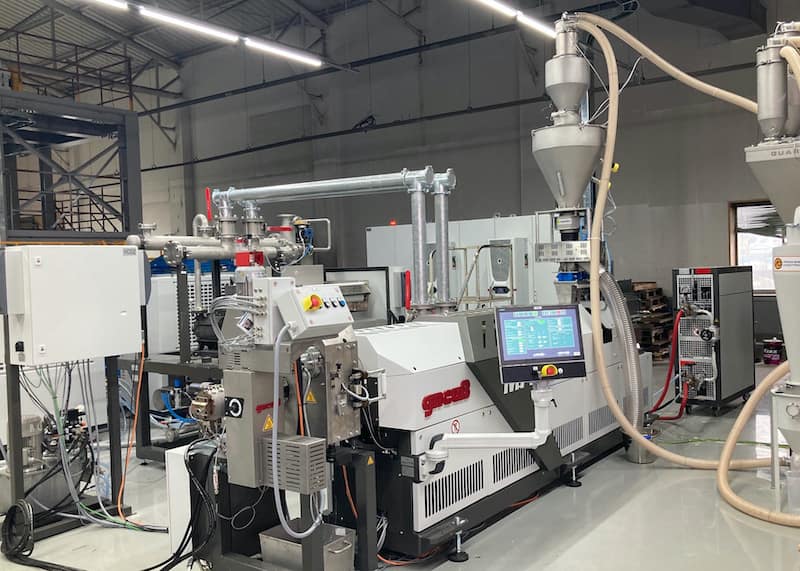
Fig. 1. Recycling line at KTDI technical center with Gneuss MRS Extrusion System, Rotary Filtration System RSFgenius, Online Viscometer VIS
For use in its technical centre, KTDI decided to buy a Gneuss MRS 70 Extruder, with dosing feeders, a vacuum system, automatic Melt Filtration System and Online Viscometer for processing PET waste to pellets, with fiber spinning in mind. With the MRS extruder, it is possible to process PET waste directly to fibers but for a pilot line, the intermediate stage of processing to pellets/chip gives more flexibility.
KTDI were attracted to the Gneuss MRS extrusion system for several reasons:
When processing post-consumer PET bottle flake to pellets (chip) for yarn manufacture, the MRS extruder offers the opportunity to adjust the viscosity of the PET by means of the vacuum. The MRS extruder can be fed with undried PET bottle flake and the moisture is extracted under vacuum in the multi-rotation section of the extruder. The depth of the vacuum determines how much moisture is removed and how much effect hydrolysis has on the viscosity of the PET melt as it comes from the extruder.
Using the reading from the Online Viscometer, KTDI can adjust the vacuum level to give exactly the required IV which can vary considerably depending on the application of the fibers (textile or technical grades). The automatic viscosity control can even automatically vary the vacuum depth in order to maintain the set viscosity. A consistent viscosity is important when high-quality fibers are manufactured. The Gneuss Online Viscometer VIS provides accurate, reliable and repeatable real time measurement of the dynamic viscosity.
Another feature which influenced KTDI´s decision in favour of the Gneuss MRS extruder was the ability to process PET post-industrial fiber waste, which has both a high residual moisture level and is coated with spin finish oils. This fiber waste is notoriously difficult to recycle.
Already in 2011, Mogilev Khimvolokno in Belarus pioneered the processing of agglomerated wet, spin finish oil treated PET industrial fiber waste with the MRS extruder. This very successful application of the MRS extruder showed how both the moisture and the spin finish oils could be efficiently and reliably extracted under vacuum in the multi-rotation de-volatilising section of the extruder. This reference was also of great interest for KTDI.
KTDI saw it as bonus, that the devolatilization performance of the MRS extruder also equates to good decontamination performance. Post-consumer PET bottle flake can be recycled for food contact applications to FDA / EFSA standards. Consequently, the pellets/chip made on the extruder can be used for food contact applications.
To round off the package, KTDI also specified the Gneuss RSFgenius Melt Filtration System. This system is self-cleaning and offers the possibility of very fine filtration even with the relatively high contamination loads which are encountered when processing post-consumer PET bottle flake. The emphasis at KTDI is on manufacturing pellet/chip for high-quality fibers, which require fine filtration. The Gneuss RSFgenius Melt Filtration System offers this possibility without causing disturbances in the process and with long intervals between filter element changes.
The Gneuss line for recycling PET to fiber grade quality at KTDI attracted such interest that it was shown on Korean television.
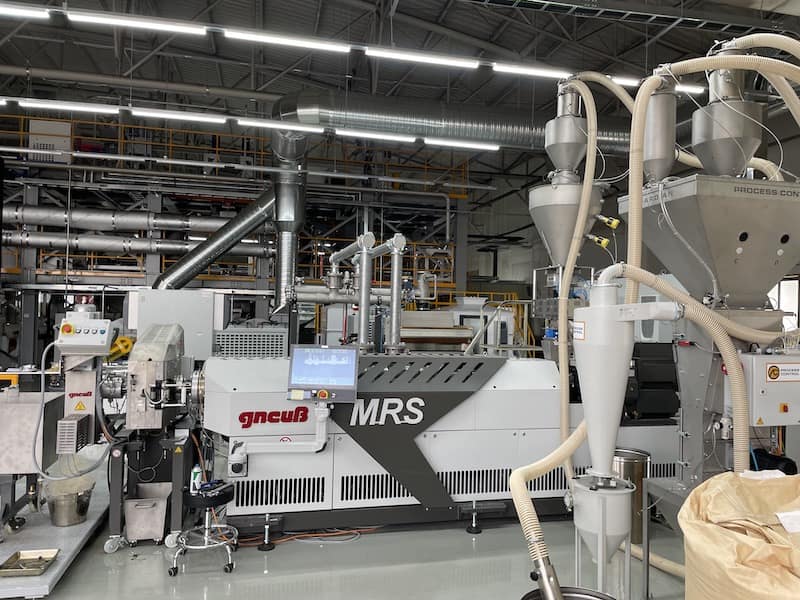
Fig. 2. Gneuss MRS Extrusion System, Rotary Filtration System RSFgenius and Online viscometer VIS in KTDI lab line