




East Africa’s textile industry has considerable untapped potential to reduce manufacturing waste, improve resource efficiency and create new commercial opportunities through circular production.
Factories across the region generate fabric offcuts, yarn residues, rejected materials and other production leftovers that are frequently sold at low value, downcycled or discarded. Yet a significant share of this material could be transformed into new garments and textile products before entering the waste-management system.
Kenya offers a practical example of this opportunity. At Rivatex East Africa, one of the country’s largest vertically integrated textile and garment manufacturers, production activities generate approximately 600 tonnes of textile waste annually.
Around 20% of this material—equivalent to roughly 120 tonnes per year—could potentially be used directly in new textile products without requiring major technological upgrades or additional capital investment.
This indicates that circularity does not always have to begin with expensive recycling machinery. In many cases, factories can achieve meaningful results by improving waste measurement, material separation, product design and coordination between production departments.
Read More: Kenya Advances Circular Textile Innovation as Rivatex Achieves UPMADE Certification
Industrial Upcycling Could Reduce Environmental Impacts
Industrial upcycling preserves the value already embedded in manufactured fabric.
Before fabric reaches the cutting floor, substantial quantities of fibre, water, energy, chemicals and labour have already been used in spinning, weaving, knitting, dyeing and finishing. Discarding this material means losing both the fabric and the resources consumed during its production.
By converting suitable leftovers directly into new products, manufacturers can avoid several resource-intensive stages associated with virgin textile production.
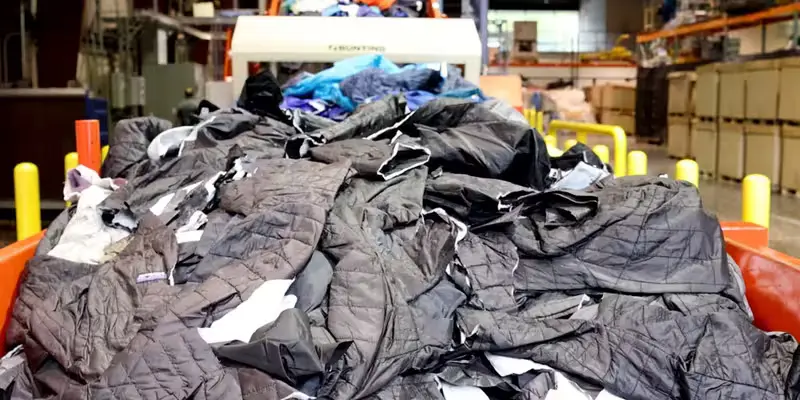
Tests involving jackets manufactured from production waste showed potential reductions in climate-related environmental impacts of between 78% and 93% compared with a conventionally produced jacket made from virgin cotton fabric.
Fossil-energy use was also reduced by between 70% and 93%, while even greater savings were identified in water and land use.
These figures demonstrate why direct material reuse should be considered before lower-value options such as shredding, downcycling, incineration or disposal.
Not every waste stream will be suitable for producing new garments. However, materials that cannot be used in apparel may still have applications in accessories, interior textiles, filling products, insulation, nonwovens or mechanically recycled fibres.
The Main Barriers Are Not Limited to Machinery
The transition towards circular textile production is often associated with investment in advanced recycling technologies. However, technology is only one part of the challenge.
Many East African textile factories lack detailed information about the quantities, compositions and locations of the waste generated across their production processes.
Without an effective waste-mapping system, potentially valuable materials can become mixed, contaminated or damaged before designers and manufacturers have an opportunity to reuse them.
Other barriers include limited upcycling expertise, insufficient collaboration between designers and production teams, inadequate storage systems and the absence of clearly defined commercial markets for circular products.
Factories therefore need to treat textile waste as a material inventory rather than simply as a disposal problem.
This requires identifying waste at its source, separating materials according to fibre composition and quality, recording available quantities and developing products that can be manufactured consistently from these streams.
Digital product simulations can also help designers evaluate how available offcuts could be incorporated into garments before physical production begins.

Second-Hand Clothing Adds Another Layer to the Challenge
Industrial waste is only one part of East Africa’s textile circularity challenge. The region is also a major destination for imported second-hand clothing, commonly known as mitumba in Kenya.
This trade provides affordable clothing for consumers and supports traders, repair businesses, transport operators and other forms of employment. However, the arrival of low-quality or unusable garments can also increase pressure on local waste-management systems.
The challenge is therefore not simply to restrict or encourage second-hand clothing imports. Countries need systems capable of distinguishing reusable garments from textile waste while protecting livelihoods and preventing unsuitable materials from being dumped in local markets.
UNEP is working in Kenya and several other countries to examine used-textile trade and support policies that differentiate reusable clothing from waste.
This distinction will become increasingly important as synthetic and blended-fibre garments account for a growing share of global clothing waste. Such materials are often more difficult to recycle using existing local infrastructure.
Kenya’s Waste Regulations Increase Pressure on Producers
Kenya’s Extended Producer Responsibility framework is also changing how manufacturers and importers approach the end-of-life management of products.
The regulations extend producer responsibility across the product life cycle and require relevant businesses to participate in systems for collecting, recovering and managing post-consumer waste.
For textile and apparel companies, this regulatory direction reinforces the commercial importance of designing products for durability, repair, reuse and eventual recycling.
However, regulation alone will not establish an effective circular textile economy. Collection infrastructure, fibre identification, sorting capacity, recycling technology and markets for recovered materials must develop together.
Cooperation will also be required among textile factories, clothing manufacturers, designers, waste collectors, recyclers, universities and government institutions.
Turning Textile Waste into a Regional Business Opportunity
Circular textile production could create new opportunities for East African manufacturers beyond reducing environmental impacts.
Consistent industrial waste streams could support specialised upcycling businesses, designer collaborations and new product categories for domestic and export markets.
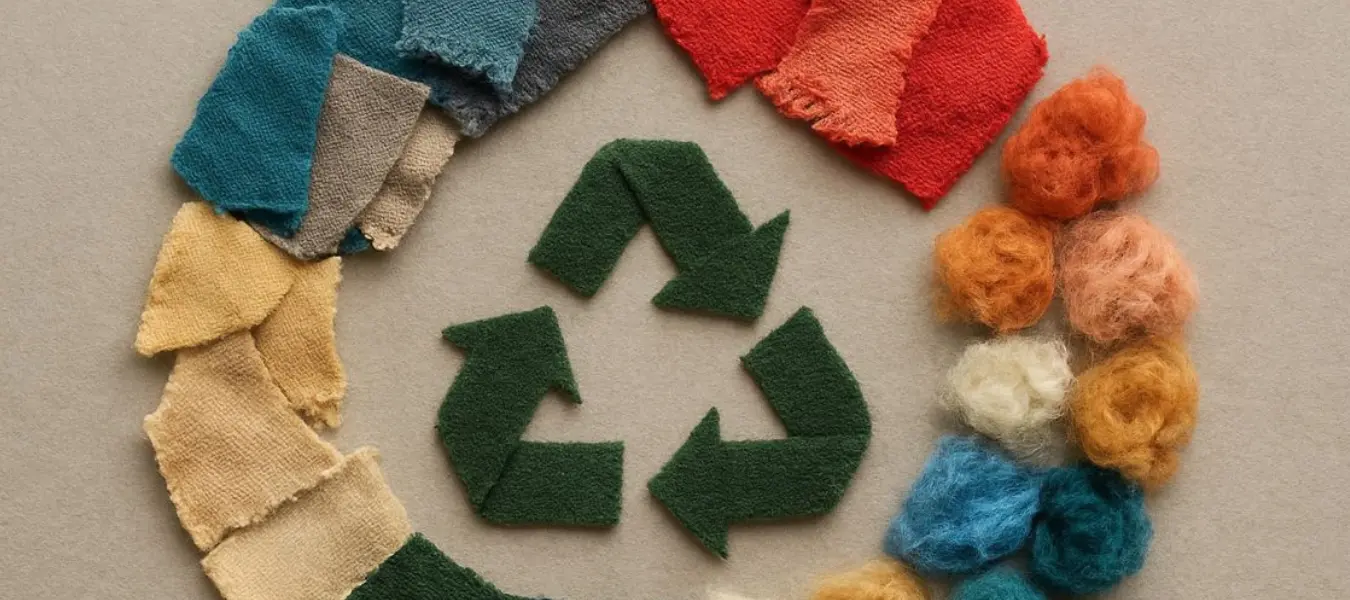
Fabric offcuts could be transformed into garments, bags, accessories, household textiles and decorative products. Yarn and fibre waste may be suitable for nonwoven materials, insulation, fillings or regenerated fibre applications, depending on composition and quality.
The strongest opportunities are likely to emerge where waste is clean, consistently available and separated at the point of production.
For regional manufacturers, the immediate priority should be to understand what materials they are discarding and why. A factory-level waste audit can reveal which materials can be prevented, reused internally, sold to other manufacturers or directed towards recycling.
Read More: Textile Waste in Africa: A Deep Dive into Morocco and Tunisia’s Circular Future
East Africa’s transition towards textile circularity will require investment, technical knowledge and supportive policy. But a meaningful part of that transition can begin inside existing factories.
By treating production leftovers as valuable industrial resources, the region could reduce its dependence on virgin materials, lower environmental impacts and create new businesses around textile recovery, redesign and manufacturing.











