




By Behnam Ghasemi, Editor-in-Chief
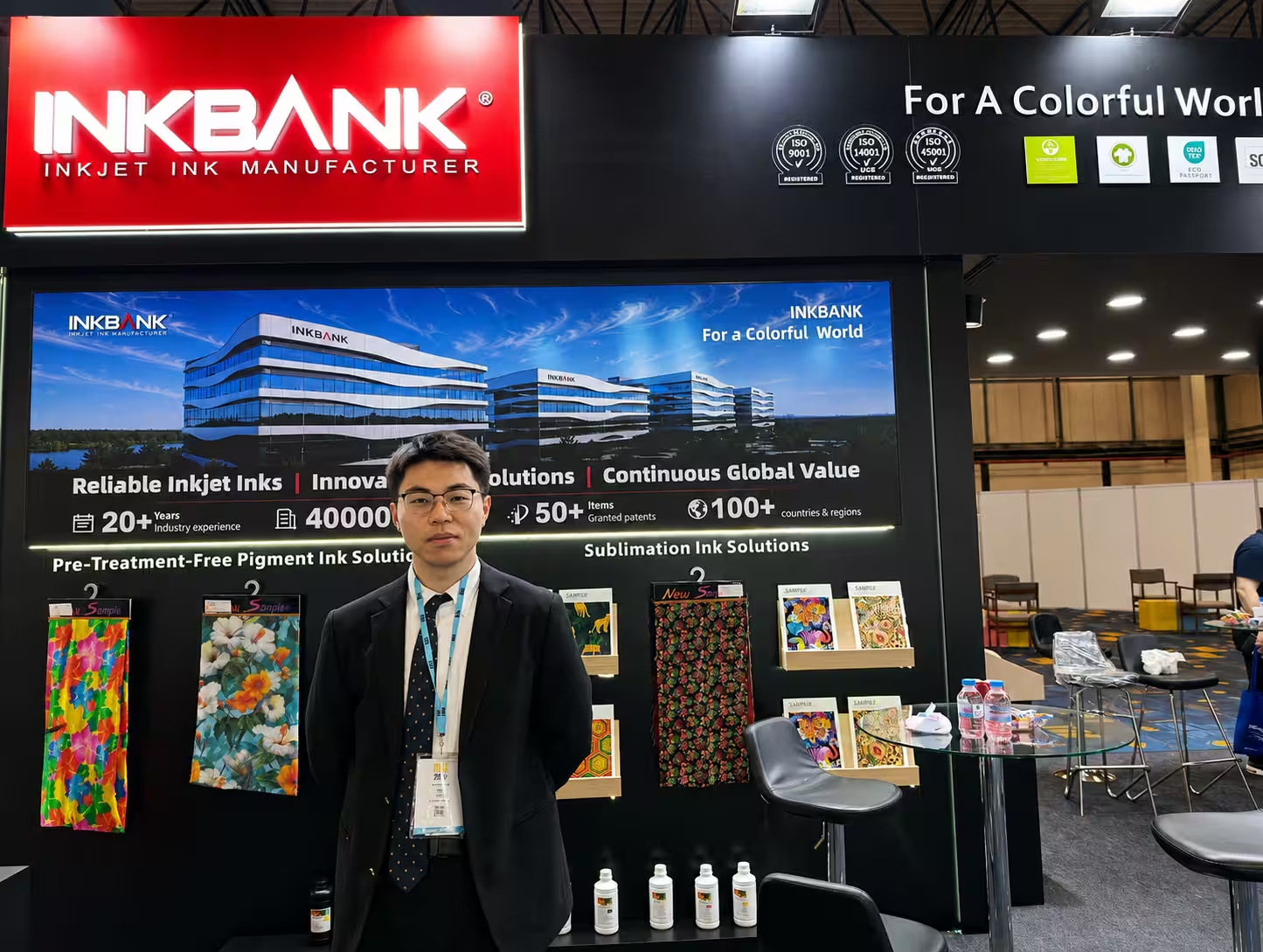
Digital textile printing continues to reshape the global textile landscape, driven heavily by urgent industrial demands for both sustainability and operational cost reduction. At the ITM 2026 exhibition in Istanbul, Kohan Textile Journal caught up with Alex, Sales Representative at Zhuhai Inkbank New Material Co., Ltd., a leading digital ink manufacturer boasting over 20 years of research expertise and an impressive global annual output of 40,000 tons.
In this exclusive interview, Alex breaks down Inkbank’s newest market-ready product innovations, their strategic view of the resilient Turkish hub, and why the future of global textile printing belongs squarely to green chemistry.
Innovating Textile Printing Through Sustainable Digital Ink Solutions
Kohan Textile Journal: Let’s start from the beginning. Could you please introduce your company, its background, and your core fields of production?Alex: We are Inkbank, a leading digital ink manufacturer based in China. We have been in this specialized industry for more than 20 years, and our current yearly output reaches about 40,000 tons. We develop and produce all major types of digital textile inks, including UV, DTF, sublimation, pigment, reactive, and acid inks.
Kohan Textile Journal: Speaking of development, could you tell us about your products and any new tech solutions that you have specifically brought to this edition of ITM?
Alex: Yes! This time around, we brought two very specific new technology inks to showcase to our customers. The first is a pre-treatment-free pigment ink. It completely eliminates the traditional chemical preparation steps required on fabrics, which allows digital printers to save a massive amount of chemical processing costs and valuable time during production.
The second major release is our wash-free disperse ink. As you know well, traditional textile manufacturing consumes and pollutes huge volumes of water. By introducing our wash-free disperse ink, printing factories can entirely bypass the post-print fabric washing stage. It saves immense quantities of wastewater, delivering a highly eco-friendly option.
Kohan Textile Journal: That brings me to market expansion. Why did you decide to enter the Turkish market, and what are your main goals here?
Alex: Because Turkey is a deeply traditional textile country. Beyond its local footprint, it wields an incredibly great geopolitical influence across the Middle East, North Africa, and the European side. Whether you consider the strategic geographic location of Turkey or its internal country market, it remains an absolutely great hub for our industry.
Read more: INKBANK Showcases Breakthrough DTF and Textile Printing Solutions at ITCPE 2025
Kohan Textile Journal: True, but nowadays the macroeconomic situation in Turkey is going through a tough period. Don’t you think that could be a negative factor for expanding operations here?
Alex: We look at it globally. Right now, the economic slowdown is a worldwide issue, not just unique to Turkey. Despite the pressure, we believe Turkey still holds excellent long-term development potential. Our current operational goal at ITM is clear: we want to ensure local distributors and large-scale textile end-users get to know the Inkbank brand and trust our quality firsthand.
Kohan Textile Journal: Looking beyond Turkey, how do you see the current growth and potential of the textile industry across the broader Middle East and African markets?
Alex: We think the MENA region holds a tremendous future. If you look back historically, many Chinese textile operations shifted their factories over to Vietnam. However, Vietnam is currently facing its own severe hurdles regarding infrastructure, electricity grid stability, and changing tax regulations.
Because of this, the Middle East and Africa regions possess a major opportunity. For mills working out of these locations, exporting textiles directly into Europe and North America provides a much smoother trade path and better tariff advantages than trying to export directly from China. We plan to expand into these markets further, supported by detailed regional surveys.
Kohan Textile Journal: Lastly, how much importance does Inkbank place on sustainable, green manufacturing?
Alex: Environmental protection is incredibly important to our brand identity. In fact, if you look at any type of ink we manufacture, you will find our certified green credentials. Our entire ink catalog is fully compliant with ZDHC, GOTS, and Oeko-Tex certifications. Everything we produce is certifiably “green” because we know the future of the textile sector must become increasingly eco-friendly to survive.











