




GUANGZHOU, CHINA – The modern digital textile landscape is no longer driven by hardware alone, but by the complete physical and chemical synchronization between machinery mechanics and ink fluids. When print operators attempt to deploy high-speed printheads without matching, chemically balanced ink formulations, they face persistent jetting failures, costly nozzle deflections, and excessive material waste. In today’s highly competitive apparel market, achieving true efficiency requires textile suppliers to deliver fully integrated, pre-tested turnkey ecosystems.
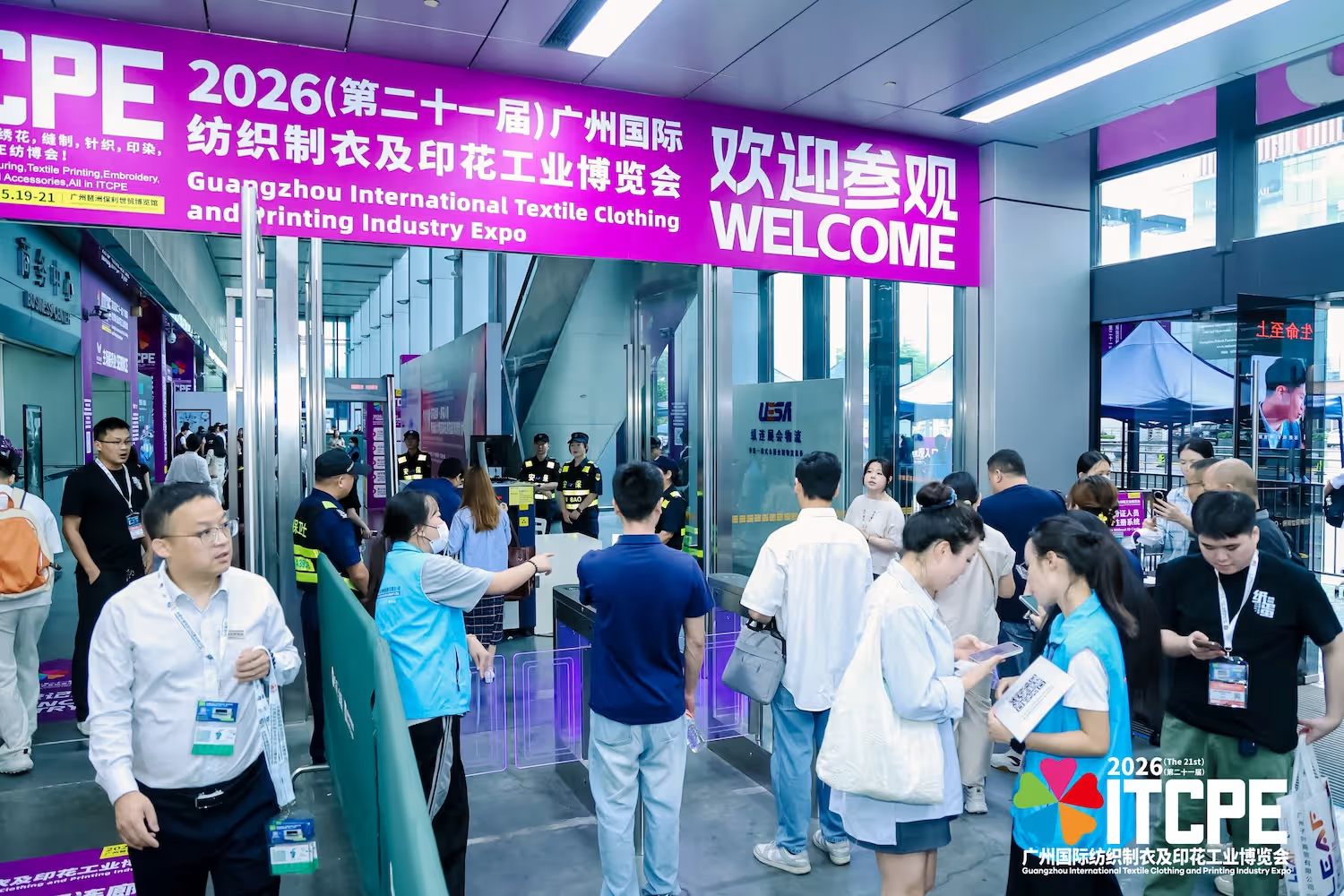
At the Guangzhou International Textile, Clothing, and Printing Industry Expo (ITCPE 2026), Behnam Ghasemi, Editor-in-Chief of Kohan Textile Journal, met with Mr. Paul, Foreign Trade Manager at Guangzhou Leaf Trading Co., Ltd., to analyze how Leaf is eliminating operational testing costs for global manufacturers, the accelerating digital migration within major manufacturing hubs like Bangladesh, and the logistical importance of deep-tier localized support across the Middle East and Africa (MEA).
Corporate Core Competences and Turnkey Solutions
Kohan Textile Journal:
Q:Welcome, Mr. Paul. To kick off our conversation, could you introduce Guangzhou Leaf Trading and explain your core product focus at this exhibition?
Mr. Paul:
A: Hello. Guangzhou Leaf Trading Co., Ltd. is primarily an industrial supplier of digital textile printing machinery, sublimation hardware, and direct-to-fabric printing equipment.
Our current commercial approach centers on delivering complete, turnkey integration packages. We don’t just supply hardware; we provide fully matched, mature combinations of digital printers and matching consumables. By handing clients a chemically and mechanically optimized, ready-to-run setup, we eliminate the costly trial-and-error phase, significantly reducing both their testing overhead and time-to-market costs.
Analyzing Bangladesh: The Shift to Digital Printing
Kohan Textile Journal:
Q: Bangladesh is a vital engine for global apparel. How do you view the market dynamics and digital printing potential in that region?
Mr. Paul:
A: The Bangladeshi market deserves intense global attention. It is a mature manufacturing ecosystem backed by a highly developed infrastructure for traditional dyeing and industrial screen printing, including reactive direct-to-fabric and acid ink lines.
Major international fashion houses—such as Adidas, Nike, Levi’s, and Zara—rely heavily on large-scale vertical apparel plants in Bangladesh to fulfill their global order pipelines. Because these brands are shifting toward agility, fast fashion, and localized customization, factories in Bangladesh are going through a deep digital transformation. Moving from legacy analog configurations to digital textile printing presents a massive growth frontier.
Overcoming Market Consolidation: Custom Waveform Customization
Kohan Textile Journal:
Q: The digital textile printing market is highly consolidated and intensely competitive. How is your company differentiating its hardware to stand out from alternative suppliers?
Mr. Paul:
A: The current digital print landscape is deeply competitive. To sharpen our competitive edge, we have spent the past two years developing custom, targeted technical integrations alongside specialized ink and material factories.
Specifically, we execute dedicated printhead waveform adjustments that are mathematically aligned with our customized ink formulations. When the machine’s pulse waveform perfectly matches the fluid properties of the material, drop-on-demand firing is highly stable. This level of integration heavily reduces production waste and material loss for print operators while maximizing day-to-day machine stability.

Exhibition Footprint and Target Visitor Profile
Kohan Textile Journal:
Q: How has your commercial experience been at the ITCPE 2026 Exhibition this week?
Mr. Paul:
A: The trade show results have been highly successful. A significant number of industrial buyers have visited our booth seeking highly dependable suppliers and next-generation technical breakthroughs. The raw foot traffic has been excellent, and more importantly, the visitor profile is remarkably precise. We are interacting directly with targeted decision-makers, making this event highly recommended for industrial machinery networking.
Regional Strategy: Deep-Tier Infrastructure in MEA Markets
Kohan Textile Journal:
Q: When evaluating target markets across the Middle East and Africa (MEA), Turkey, or Egypt, what is your localized setup strategy?
Mr. Paul:
A: Across emerging textile hubs like Africa, Turkey, and Egypt, our priority is helping local clients open up production lines rapidly. To maximize field service velocity and local parts availability, we deploy localized overseas hubs and domestic warehouses.
By setting up native technical support teams and local sales offices directly in these markets, we guarantee immediate access to consumables, machinery parts, and on-site engineering maintenance. This ground-level presence ensures maximum operational uptime and directly drives high customer satisfaction with our brand.
The Future of Printing: Environmental and Custom Demands
Kohan Textile Journal:
Q: To close our session, what is your long-term outlook for global textile printing trends over the next decade?
Mr. Paul:
A: The future of textile printing is moving quickly toward strict environmental compliance, extreme customization, material diversity, and optimized per-print costs.
As global consumers expect richer lifestyles, their design demands are becoming highly diverse and hyper-individualized. Legacy analog screen print configurations cannot handle short runs or customized batches cost-effectively. Digital inkjet systems are perfectly engineered to satisfy these multi-color, short-run needs seamlessly. Consequently, digital printing market share will continue expanding rapidly compared to traditional analog methods.
If you are looking for a reliable, highly transparent, and premium digital textile printing partner, Guangzhou Leaf is ready to support your plant operations. While some buyers may not have operated our machines yet, we welcome you to start a step-by-step collaborative partnership with us to experience our build quality and fluid consistency firsthand.
Kohan Textile Journal: Thank you, Mr. Paul, for your deep technical insights.











