




By: Behnam Ghasemi
🎧 Listen to the Podcast Version
The textile printing industry is undergoing a structural transformation. Over the past decade, digital technologies have redefined how garments are designed, produced, and delivered to market. Yet for many businesses, the transition from small-scale production to industrial-level efficiency remains a major challenge.
How industrial DTF is transforming modern apparel manufacturing
This is particularly evident in Direct-to-Film (DTF) printing. While entry-level systems have enabled thousands of businesses to enter the market, they often become a bottleneck as demand grows. Limited speed, inconsistent output, and frequent maintenance issues prevent companies from scaling efficiently.
Industrial DTF printing addresses these limitations by introducing a new production model—one built around automation, consistency, and high-volume output. It is not simply a larger version of desktop printing; it represents a shift in how textile production is structured.
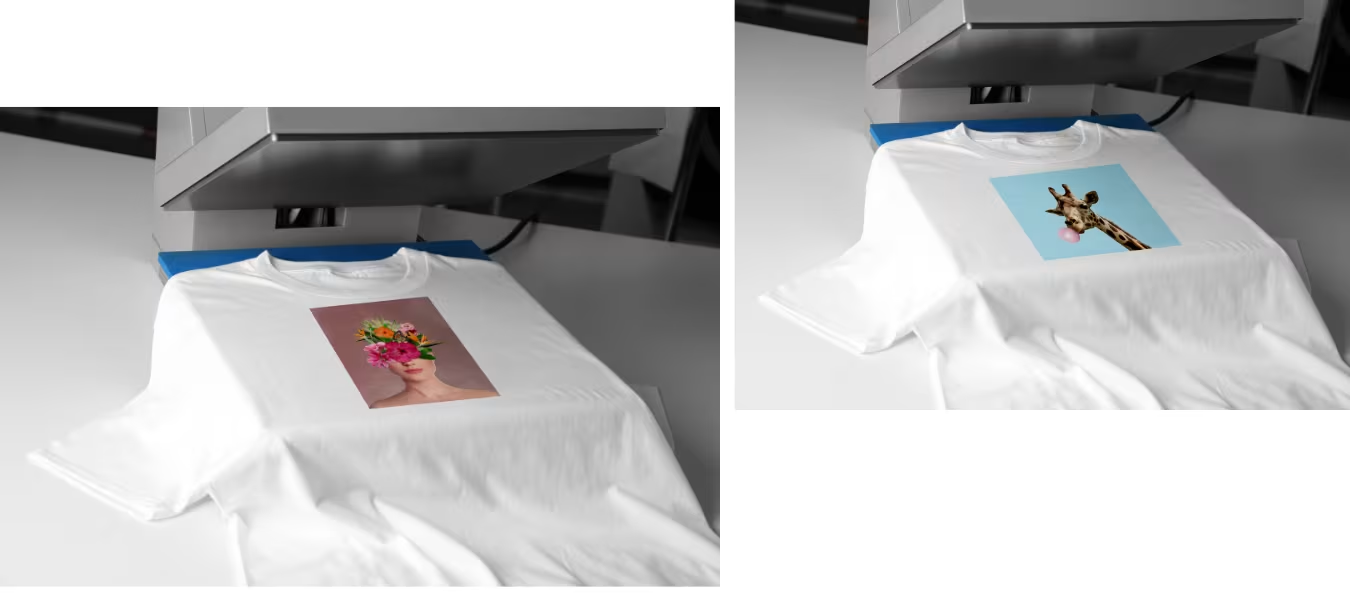
Understanding Industrial DTF Printing Beyond the Basics
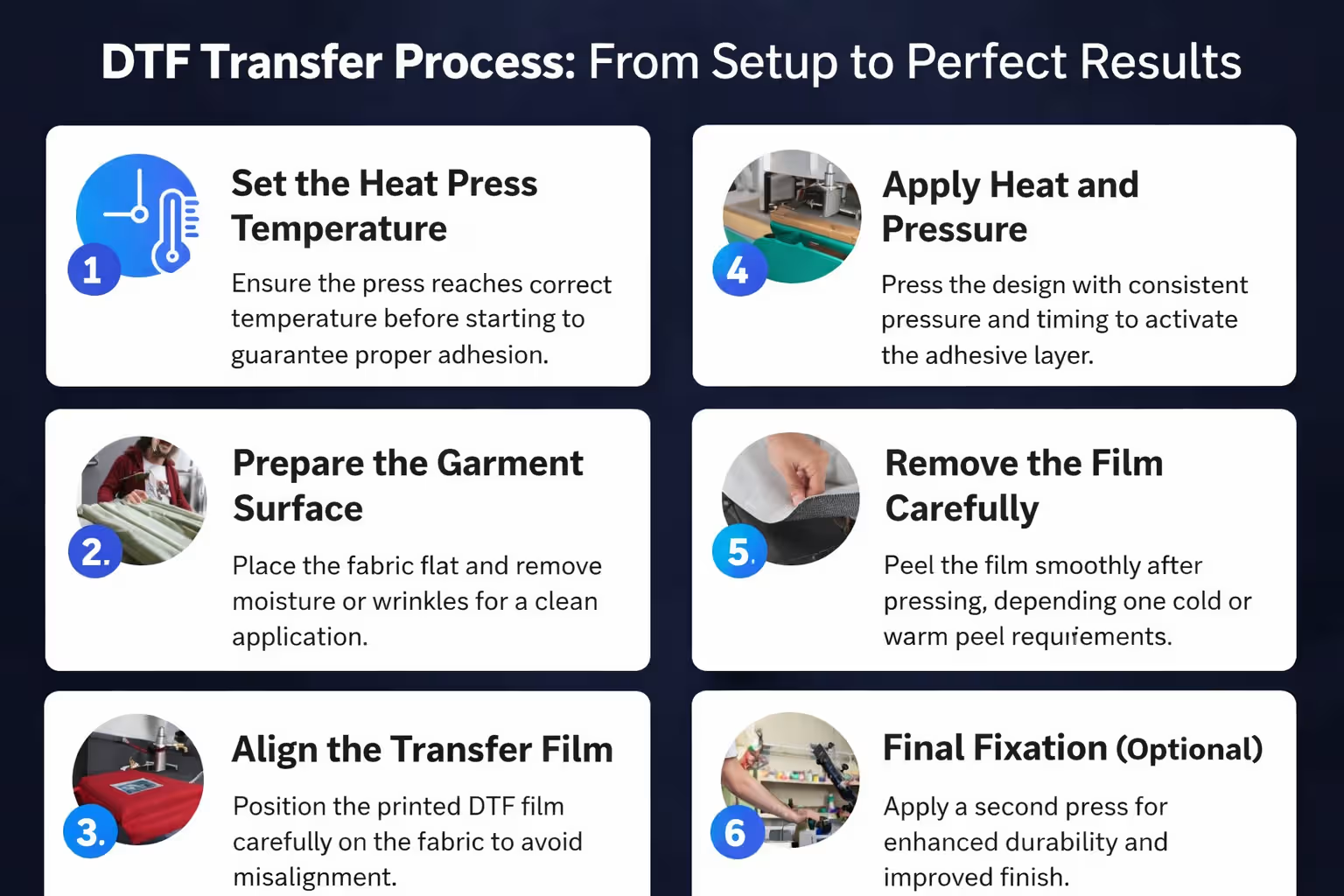
At a fundamental level, DTF printing involves transferring a design from a film onto fabric using adhesive powder and heat. However, the industrial version of this process introduces a level of engineering sophistication that fundamentally changes its capabilities.
Industrial systems operate on a continuous production basis, often using roll-to-roll workflows that allow uninterrupted printing. Instead of single printhead setups, these systems rely on multi-head configurations, enabling higher speeds and improved color consistency. Automated powder application and curing units eliminate the variability associated with manual processes.
The result is a workflow that is not only faster but also significantly more predictable. This predictability is what allows manufacturers to move from reactive production to structured, scalable operations.
Why Small-Scale DTF Systems Fail at Scale
The limitations of small-format DTF systems become increasingly visible as production volumes grow. What initially appears to be a flexible and affordable solution gradually reveals structural weaknesses.
One of the most critical challenges is maintenance, particularly related to white ink. Unlike standard inks, white ink contains dense particles that tend to settle over time. When printers are idle or environmental conditions are not properly controlled, this leads to clogging, inconsistent output, and frequent cleaning cycles.
These issues are manageable in low-volume environments but become disruptive in industrial settings. Downtime increases, production schedules become unpredictable, and overall efficiency declines.
Industrial systems are designed to address these challenges proactively. Built-in ink circulation mechanisms, controlled environments, and automated maintenance routines reduce the likelihood of failure. Instead of reacting to problems, the system maintains stability as part of its design.
DTF vs Other Printing Technologies: A Strategic Comparison
To understand the role of industrial DTF, it is essential to position it within the broader landscape of textile printing technologies.
Direct-to-Garment (DTG) printing offers high-quality output on cotton fabrics but requires pre-treatment and is limited in speed. It is well suited for small batch production but struggles in high-volume environments.
Sublimation printing provides excellent results on polyester materials but is restricted to light-colored fabrics. Its material limitations make it unsuitable for many applications where flexibility is required.
Screen printing remains the dominant solution for very large production runs due to its low cost per unit at scale. However, it lacks flexibility and requires significant setup time, making it less suitable for short runs or customized production.
Industrial DTF occupies a unique position. It combines flexibility with scalability, allowing manufacturers to print on a wide range of fabrics while maintaining high productivity. This balance makes it particularly attractive in a market where customization and speed are increasingly important.
| Technology | Best Application | Key Advantages | Limitations | Scalability |
|---|---|---|---|---|
| DTF (Direct-to-Film) | Multi-fabric apparel printing | High flexibility, no pre-treatment, works on all fabrics | White ink maintenance required | High (industrial systems) |
| DTG (Direct-to-Garment) | Cotton garments, small batches | High detail, soft feel | Slow speed, limited to cotton | Low |
| Sublimation | Polyester & light fabrics | Vibrant colors, long-lasting prints | Not suitable for dark fabrics | Medium |
| Screen Printing | Mass production | Low cost at large volumes | High setup time, low flexibility | Very High |
The Economics of Industrial DTF: Beyond Initial Investment
One of the most common misconceptions about industrial DTF is that it is defined by its equipment cost. In reality, its true value lies in how it transforms the cost structure of production.
In small-scale setups, cost-per-print is often influenced by inefficiencies such as material waste, reprints, and labor-intensive processes. As production volumes increase, these inefficiencies become more pronounced.
Industrial systems address this by optimizing every stage of production. Automated workflows reduce labor requirements, consistent output minimizes reprints, and efficient material usage lowers overall costs. While the initial investment may be higher, the long-term cost per unit decreases significantly.
More importantly, industrial DTF enables businesses to accept larger and more complex orders. This capability opens new revenue streams, particularly in B2B markets where reliability and speed are critical.

Workflow Optimization: The Core of Industrial Efficiency
The success of industrial DTF is not determined solely by hardware. Workflow optimization plays a central role in achieving consistent results.
Software systems are responsible for managing color accuracy, ink distribution, and production efficiency. Proper calibration ensures that output remains consistent across different runs, which is essential for maintaining brand standards.
At the same time, environmental conditions must be carefully controlled. Factors such as humidity and temperature directly affect ink behavior, particularly for white ink. Maintaining stable conditions reduces the risk of clogging and ensures smooth operation.
These elements work together to create a production environment where variability is minimized and efficiency is maximized. In this context, industrial DTF becomes not just a printing method, but a fully integrated production system.
Maintenance and Reliability in Industrial DTF Systems
Reliability is one of the defining characteristics of industrial production. Achieving it requires a proactive approach to maintenance.
White ink management remains one of the most critical aspects. Due to its composition, it is prone to sedimentation and drying, which can affect printhead performance. Industrial systems mitigate this through continuous circulation and automated cleaning cycles.
Regular monitoring of system components, including ink lines and filters, is essential to prevent unexpected failures. Environmental control also plays a role, as low humidity can accelerate ink drying and increase the risk of clogging.
By integrating maintenance into the workflow, industrial DTF systems reduce downtime and ensure consistent performance. This level of reliability is essential for meeting the demands of high-volume production.
Applications Driving the Growth of Industrial DTF
The versatility of DTF printing has expanded its applications across multiple segments of the textile industry. From custom apparel to large-scale promotional products, the ability to print on various materials without complex preparation processes offers a significant advantage.
In fashion, DTF enables rapid prototyping and short production cycles, allowing brands to respond quickly to market trends. In sportswear and workwear, its durability and flexibility make it suitable for high-performance applications.
This adaptability is one of the key factors driving the adoption of industrial DTF. As market demands become more diverse, technologies that offer flexibility without compromising efficiency are increasingly valuable.
Sustainability and the Future of DTF Printing
Sustainability is becoming a central concern in textile manufacturing. As regulations tighten and consumer expectations evolve, companies are under pressure to adopt more environmentally responsible practices.
DTF printing offers several advantages in this area, including reduced water usage and efficient material consumption. However, the industry is also exploring new developments, such as powderless processes and improved ink formulations, to further reduce environmental impact.
Compliance with international standards is becoming increasingly important, particularly for companies operating in global markets. As a result, sustainability is no longer an optional consideration—it is an integral part of future growth.
Industrial DTF as a Strategic Transition
For many businesses, the move to industrial DTF represents a strategic transition rather than a simple upgrade. It requires a shift in mindset, from reactive production to structured operations.
This transition involves not only investment in equipment but also the development of new workflows, skills, and management practices. Companies that successfully navigate this process position themselves for long-term growth in a competitive market.
The ability to scale production while maintaining quality and efficiency is a key differentiator. Industrial DTF provides the tools to achieve this, but its success ultimately depends on how effectively it is integrated into the broader production strategy.
Final Thoughts: The Future of Textile Printing
The textile printing industry is entering a phase where efficiency, flexibility, and sustainability define success. Industrial DTF sits at the intersection of these trends, offering a solution that aligns with the evolving needs of the market.
For companies looking to move beyond the limitations of small-scale production, the adoption of industrial DTF is not just an opportunity—it is a necessity. As competition intensifies and customer expectations rise, the ability to deliver consistent, high-quality output at scale will determine long-term success.












Really interesting article! We work with DTF here in Brazil 🇧🇷 and we can already see how much this technology is growing and changing the market. There’s still a lot to evolve, but the possibilities are huge. Greetings from Brazil!
Thank you for sharing your experience from Brazil! 🇧🇷 It’s great to hear this perspective directly from a company working with DTF technology. The market is certainly evolving very quickly. From your experience, what do you see as the biggest opportunity — or challenge — for DTF printing in Brazil over the next few years?