




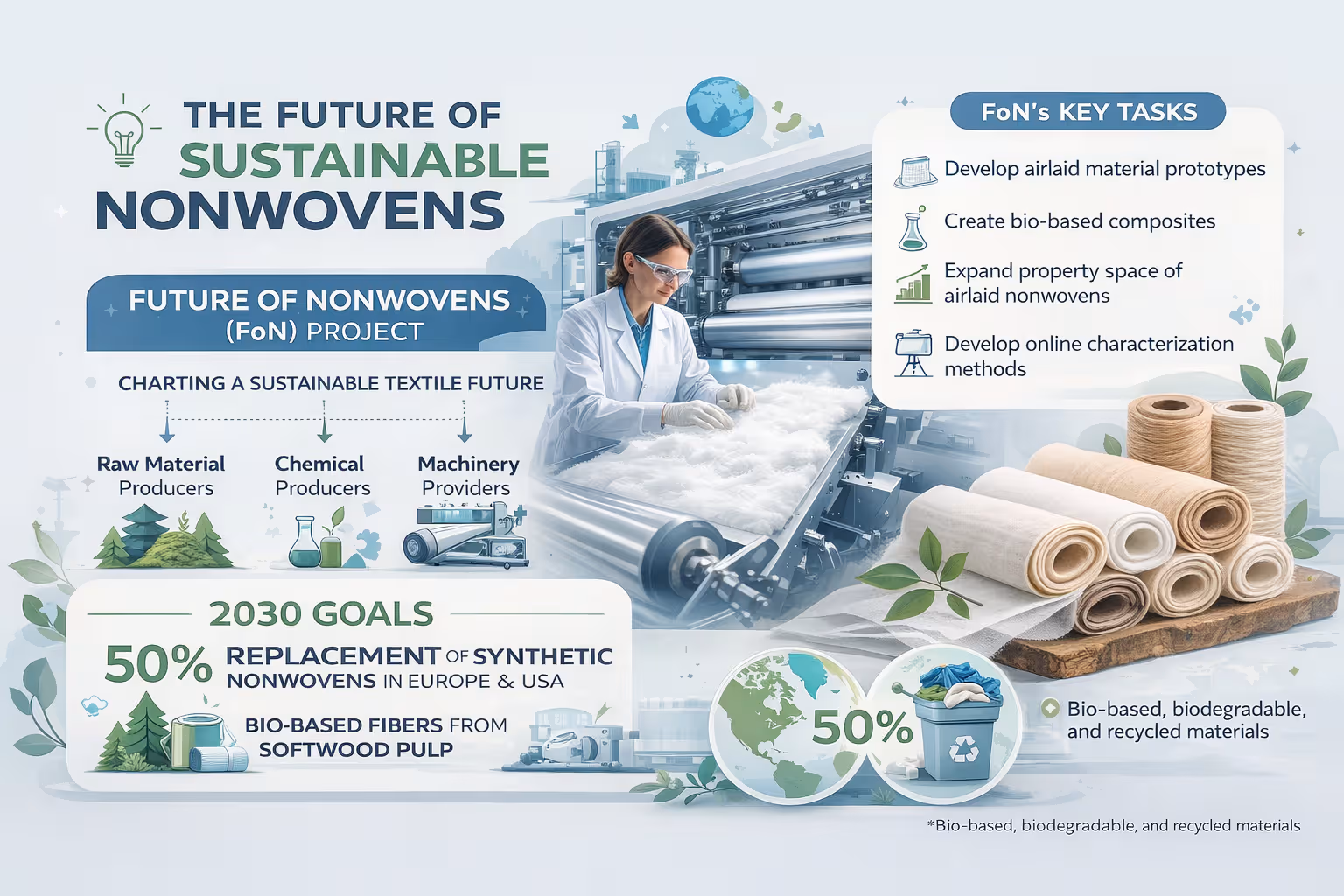
Europe’s nonwoven sector is entering a decisive transformation phase. A new Finnish-led collaborative initiative, The Future of Nonwovens (FoN) project, is positioning itself at the forefront of sustainable material innovation — with a bold vision: replacing more than 50% of synthetic textile fibres in nonwovens with bio-based, biodegradable and recycled alternatives by 2030.
But beyond the announcement, the real question is this: can airlaid technology and cellulose-based fibres genuinely reshape the global nonwoven industry?
A Strategic Alliance Across the Value Chain
The FoN project, operating under Finland’s broader ExpandFibre mission, brings together an unusually comprehensive value chain alliance. The collaboration includes raw material innovators such as Fortum, Metsä Spring, Infinited Fiber Company and UPM; specialty chemical developer CH-Polymers; nonwoven manufacturer Suominen; airlaid machinery producer Anpap; and automation technology supplier Valmet.
This is not a laboratory experiment — it is an industrial ecosystem.
By aligning fibre developers, chemical experts, machinery manufacturers and finished nonwoven producers, the initiative aims to accelerate commercialization rather than simply conduct research.
Also Read: Wetlaid Nonwovens: The Future of Precision and Performance in Technical Textiles
Why Airlaid Is at the Center of the Strategy
Unlike traditional wetlaid processes, airlaid technology uses minimal water, making it significantly more resource-efficient. As global sustainability pressures intensify, water scarcity is becoming a structural concern in textile manufacturing.
FoN specifically focuses on:
- Developing airlaid prototypes from novel cellulose-based fibres
- Creating bio-based, thermoformable composites
- Expanding the “property space” of airlaid materials compared to wetlaid, foam-formed and carded webs
- Advancing spectroscopic methods for real-time quality monitoring
The emphasis on airlaid suggests a strategic shift: low-energy, low-water nonwoven production could become a competitive advantage in future sustainability regulations.
From Waste Textiles to High-Performance Nonwovens
One of the most forward-looking aspects of the project is the use of cellulose-based fibres derived from post-consumer textiles, including used T-shirts and denim.
This approach aligns with Europe’s circular textile strategy, which increasingly demands recycling infrastructure capable of turning textile waste into new industrial materials.
If successful, this could:
- Reduce dependence on fossil-based synthetic fibres
- Create new circular value chains within Europe
- Support compliance with upcoming Extended Producer Responsibility (EPR) frameworks
The project also explores bio-based binders and low-energy air-laying technologies, further reducing environmental impact at multiple production stages.
Market Impact: Beyond Finland
Although the initiative is Finnish-led, its implications are global.
Sustainable nonwovens are gaining momentum in hygiene, wipes, medical, filtration, automotive and packaging applications. Major manufacturers are under pressure to replace petroleum-based polymers with renewable alternatives.
Suominen, one of the project’s key industrial partners, has publicly committed to increasing sales of sustainable products by 50% compared to its 2019 baseline and launching at least ten sustainable products annually. Its current portfolio already includes renewable, recycled, plastic-free, compostable and dispersible nonwoven solutions.
This signals that sustainability in nonwovens is no longer experimental — it is commercially driven.
Can Sustainable Nonwovens Compete on Performance?
A critical barrier to replacing synthetic fibres lies in performance. Structure-performance relationships, bonding strength, durability, and moisture management remain decisive factors in many applications.
The FoN project directly addresses this challenge by:
- Studying the functional properties of novel airlaid composites
- Comparing mechanical and chemical interactions across different web-forming technologies
- Generating data to support rapid market entry
In other words, the goal is not only environmental improvement but technical competitiveness.
What This Means for the Global Nonwoven Industry
The Future of Nonwovens project reflects a broader shift within the European textile and nonwoven ecosystem. Sustainability is transitioning from compliance to innovation strategy.
If airlaid-based bio-composites achieve commercial scalability, they could:
- Redefine raw material sourcing
- Reduce Europe’s dependency on imported synthetic polymers
- Create new export opportunities in sustainable technical textiles
For manufacturers in the Middle East, Africa and Asia, this development also sends a clear message: the next wave of nonwoven competitiveness will be sustainability-driven.
Companies that continue relying exclusively on conventional synthetic inputs may face increasing regulatory and market barriers over the next decade.
Toward 2030: A Structural Transformation in Motion
By 2030, FoN envisions that more than half of synthetic fibres in European and US nonwovens could be replaced by sustainable alternatives.
Whether this target is fully achieved remains to be seen. However, the direction is unmistakable.
The combination of bio-based fibres, advanced airlaid processing, circular raw materials and digital quality monitoring represents a structural transformation — not an incremental upgrade.
The question is no longer whether sustainable nonwovens will grow.
The real question is who will lead the transition.
Are You Ready for the Sustainable Nonwoven Shift?
If your company is active in:
• Airlaid machinery
• Bio-based fibres
• Sustainable binders
• Nonwoven production technologies
• Recycling & circular materials
Kohan Textile Journal connects your innovation directly with verified textile and nonwoven decision-makers across the Middle East, Africa and Türkiye.
📩 Contact us or send us your comment in below, introduce your sustainable solutions to emerging MEA markets.











