




Knitted fabrics play a central role in today’s global apparel and textile industry, from everyday T-shirts and sportswear to premium sweaters and fashion garments. Among the most widely used knitting technologies are circular knitting and flat knitting, two production methods that differ significantly in structure, functionality, production speed, and end-use applications.
Understanding the differences between circular knits and flat knits is essential for textile manufacturers, garment designers, sourcing professionals, and fashion brands looking to optimize product performance, production efficiency, and fabric aesthetics.
What Are Circular Knits?
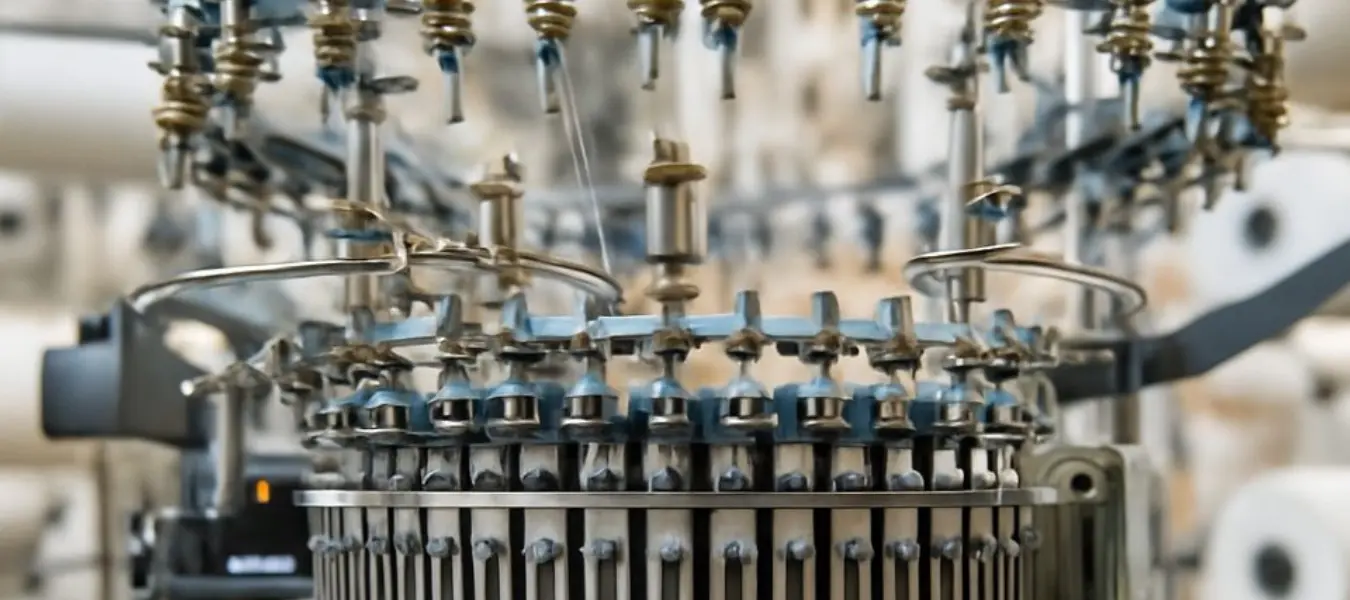
Circular knits are produced using circular knitting machines that continuously create tubular fabric structures. Unlike flat knitting systems, circular machines operate in a continuous rotational motion, allowing fabric to be knitted seamlessly at high production speeds.
The resulting fabric is usually highly stretchable, soft, lightweight, and comfortable, making it ideal for garments worn close to the body.
Circular knitting technology dominates large segments of the apparel industry due to its speed, efficiency, and ability to produce mass-market fabrics with relatively low yarn waste.
Common Applications of Circular Knits
Circular knitted fabrics are widely used in:
- T-shirts
- Sportswear
- Leggings
- Underwear
- Socks
- Activewear
- Casual apparel
The seamless tubular structure also makes circular knits particularly attractive for comfort-focused garments and athleisure products.
What Are Flat Knits?
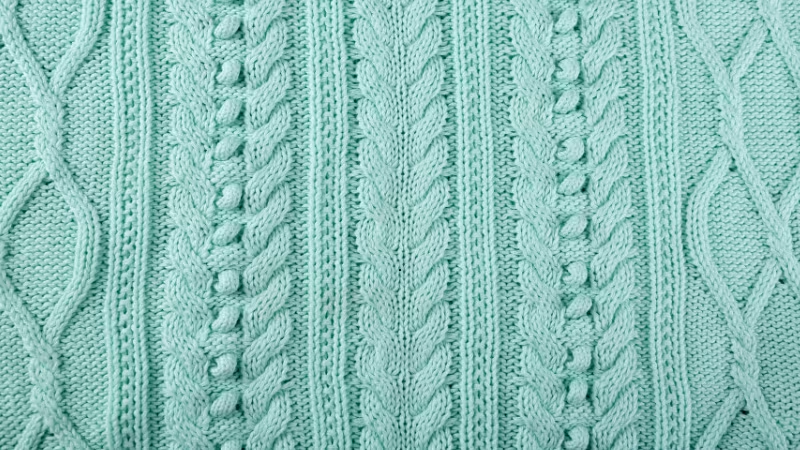
Flat knits are produced using flat knitting machines that knit fabrics back and forth in flat panels instead of continuous tubes. This technology allows greater flexibility in shaping, pattern engineering, and garment construction.
Flat knitting is commonly associated with premium knitwear and structured garments requiring more detailed designs and controlled shaping.
Compared to circular knits, flat knitted fabrics are generally less elastic but offer superior design versatility and structural definition.
Common Applications of Flat Knits
Flat knitted fabrics are commonly used for:
- Sweaters
- Cardigans
- Scarves
- Fashion knitwear
- Technical knit garments
- Shaped apparel components
Modern computerized flat knitting machines also enable advanced 3D knitting and fully fashioned garment production with reduced cutting waste.
Key Differences Between Circular Knits and Flat Knits
The most visible difference lies in fabric construction.
Circular knitting creates tubular, seamless fabrics, while flat knitting produces flat fabric panels that are later assembled into garments.
Production speed is another major distinction. Circular knitting machines operate at significantly higher speeds, making them ideal for mass production environments. Flat knitting, although slower, provides greater flexibility for complex designs and engineered garment structures.
Stretchability also differs considerably. Circular knits are typically more elastic and comfortable, whereas flat knits provide more stability and shape retention.
From a manufacturing perspective, circular knitting is usually preferred for basic apparel categories with high production volumes, while flat knitting is favored for premium knitwear and fashion-oriented products.
The Growing Role of Knitting Technologies in Modern Apparel Manufacturing
As global apparel production evolves, both circular and flat knitting technologies are becoming increasingly important within modern textile manufacturing strategies.
Circular knitting continues benefiting from rising global demand for sportswear, athleisure, seamless garments, and performance apparel. The growth of active lifestyles and comfort-focused fashion has significantly expanded the market for circular knitted fabrics worldwide.
Meanwhile, flat knitting technologies are advancing rapidly through automation, digital programming, and whole-garment knitting systems. These innovations are helping manufacturers reduce waste, improve customization, and support more sustainable apparel production methods.
Leading textile machinery manufacturers are also investing heavily in smart knitting technologies capable of integrating automation, AI-driven programming, and sustainable production processes into future knitting operations.
Sustainability Considerations
Sustainability is becoming a critical factor in knitting technology selection.
Circular knitting offers advantages in terms of production efficiency and reduced yarn waste during high-volume manufacturing. However, flat knitting technologies—particularly fully fashioned and seamless garment knitting systems—can significantly reduce cutting waste and improve material utilization.
As fashion brands increasingly prioritize sustainability and resource optimization, advanced knitting technologies are expected to play an even greater role in future textile manufacturing strategies.
Conclusion
Both circular knits and flat knits remain essential pillars of the global textile and apparel industry, each serving different product categories and manufacturing priorities.
Circular knits excel in speed, comfort, stretchability, and seamless garment production, making them ideal for mass-market apparel and activewear. Flat knits, on the other hand, provide superior shaping, structure, and design flexibility, supporting higher-end knitwear and more complex garment engineering.
As textile manufacturing continues evolving through automation, sustainability, and digitalization, understanding the strengths of each knitting technology will remain crucial for manufacturers, sourcing professionals, and fashion brands worldwide.
Follow us on YouTube for more!











