






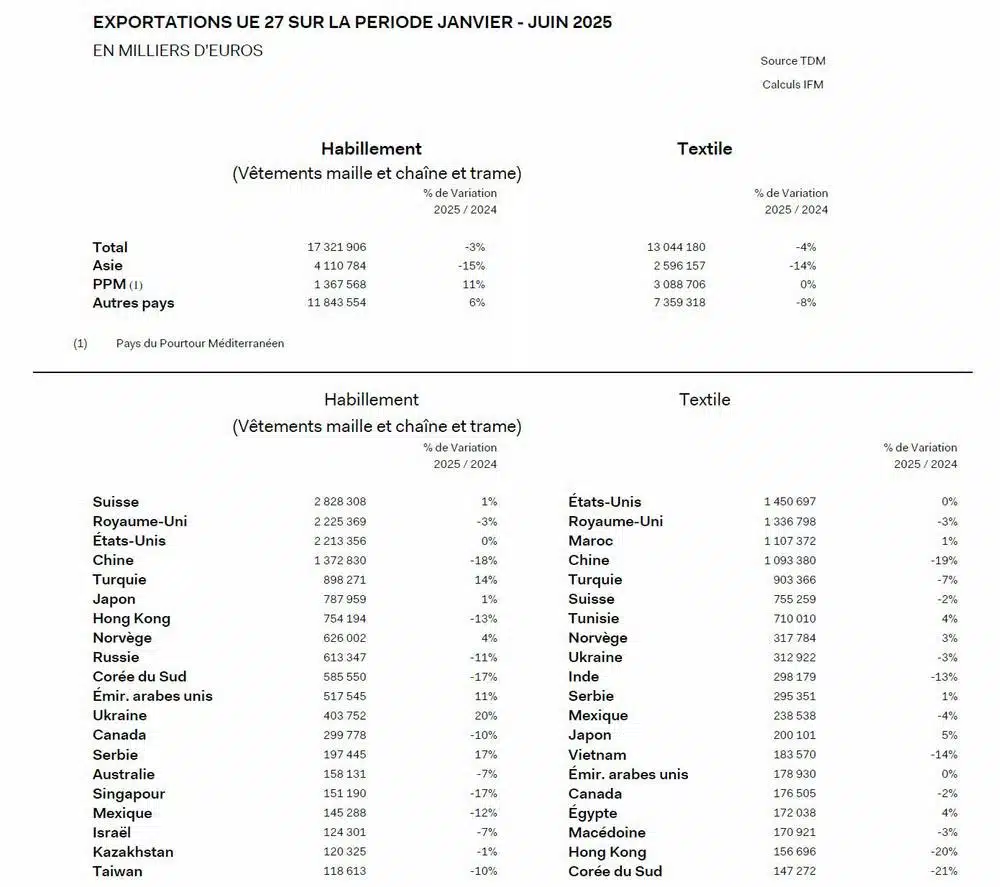
Asia’s textile and clothing industry significantly increased exports to Europe in the first half of 2024, redirecting shipments away from the United States as customs disputes weighed on transatlantic trade. According to figures from the Institut Français de la Mode (IFM), European clothing imports rose 13% to $43.4 billion, with Asia accounting for $32.9 billion of that total.
Surge in Asian Exports to Europe
China (+22%), Bangladesh (+18%), India (+15%), Cambodia (+30%), Vietnam (+17%), and Pakistan (+17%) all registered strong growth in exports to Europe. Turkey was the only major supplier to see a decline, down 7%, contributing to a 4% overall drop in orders from the Mediterranean region.
In textiles, European imports rose 8% to €16.9 billion, driven by a 13% surge in shipments from Asia, which reached €10.9 billion. Growth was led by China, Vietnam, Bangladesh, and Thailand.
U.S. Trade Pressures Reshape Flows
Imports from the United States, which had been climbing since 2021, slowed sharply amid the customs dispute between Brussels and Washington. U.S. clothing shipments to Europe fell 7% in the first six months of 2024, although U.S. textile exports managed a 4% increase to €724 million.
European Exports in Decline
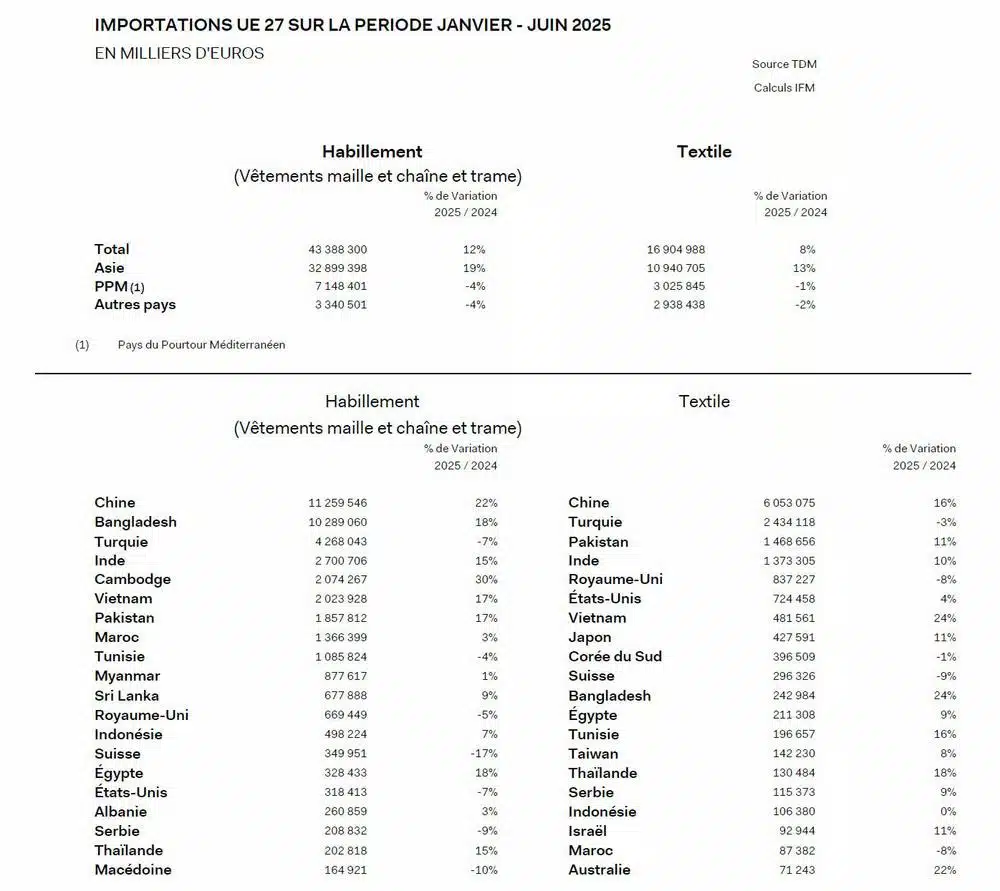
On the export side, the European Union saw continued weakness. Clothing exports dropped 3% year-on-year to €17.3 billion, extending the decline since their 2022 peak. Asian demand slumped by 15% to €4.1 billion, with sharp contractions in China (-18%), Hong Kong (-13%), South Korea (-17%), Singapore (-17%), and Taiwan (-10%).
Textile exports fell 4% to €13 billion, hit by a 14% decline in orders from Asia, while U.S. demand remained steady.
Bright Spots in Mediterranean and Regional Markets
Despite the broader downturn, EU exports found resilience closer to home. Shipments to Mediterranean countries rose 11%, led by Turkey (+14%), Serbia (+17%), and Ukraine (+20%). These markets helped offset some of the declines in Asia and North America.











