




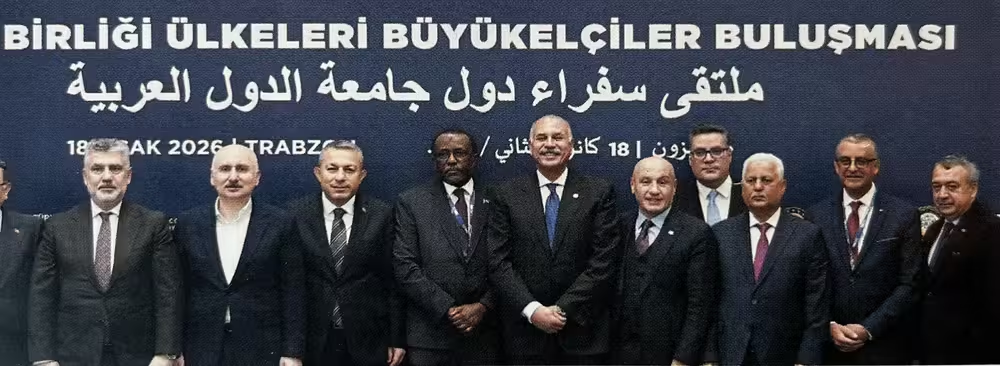
Türkiye is intensifying its trade ambitions with Arab League member states, aiming to significantly expand export volumes and strengthen long-standing economic ties. During a high-level diplomatic and trade meeting hosted in Trabzon by the Turkish Exporters Assembly (TIM), officials outlined a clear roadmap to elevate bilateral trade to new levels.
The gathering brought together diplomatic representatives from 13 Arab countries, highlighting Türkiye’s strategic focus on the region as a key growth market for exports—particularly in textiles, apparel, and industrial goods.
A Strategic Push Toward $65 Billion in Exports
Speaking at the event, Mustafa Gültepe emphasized Türkiye’s ambition to increase exports to Arab League countries from the current level of approximately $49 billion to over $65 billion in the near term.
This target reflects not only the country’s production capacity but also its confidence in the growing demand across Arab markets. Over the past decade, imports by Arab League countries have risen by more than 50%, surpassing $1.2 trillion in 2024—creating substantial opportunities for exporters.
Despite this growth, Türkiye’s share in these imports remains relatively modest, indicating significant untapped potential.
Deep-Rooted Trade Relations with Strong Growth Potential
Historical Ties Supporting Future Expansion
Türkiye and Arab League countries share long-standing cultural, historical, and economic connections. Industry leaders believe these relationships provide a strong foundation for expanding trade beyond current levels.
Officials highlighted that while export volumes have grown in value, Türkiye’s market share in Arab imports has declined over the past decade—from around 5% to below 4%. This signals the need for a more targeted and strategic export approach.
Read more: Türkiye’s Economic Momentum Signals New Opportunities for Global Investors
Increasing this share back above 5% is seen as a realistic and achievable goal, particularly given Türkiye’s diversified production capabilities.
Integrated Production and Geographic Advantage
One of Türkiye’s key strengths lies in its integrated manufacturing structure. From raw materials to finished goods, the country offers a complete production ecosystem that supports flexibility, speed, and quality.
Combined with its geographic proximity to Middle Eastern markets, Türkiye is uniquely positioned to respond quickly to changing demand patterns—an increasingly critical factor in today’s fast-moving global trade environment.
Industry representatives also pointed to specific product categories where export potential remains underutilized. In sectors where Türkiye already exports approximately $65 billion globally, only a small portion is currently directed toward Arab League markets—despite the region importing over $230 billion in those same categories.
Expanding Trade Through Strategic Engagement
Strengthening Commercial Diplomacy
To unlock this potential, Türkiye is actively strengthening its commercial diplomacy efforts. The Turkish Exporters Assembly has placed renewed emphasis on trade delegations, international exhibitions, and B2B matchmaking initiatives across the Arab region.
In 2025 alone, Turkish exporters participated in trade activities across 14 Arab countries, organizing over 500 business meetings and attending more than 70 exhibitions. These efforts brought together over 700 Turkish companies with nearly 3,500 international buyers, resulting in more than 13,000 bilateral business meetings.
Such initiatives are expected to play a crucial role in accelerating export growth and building long-term partnerships.
Editorial Insight: A Shift from Volume to Strategic Growth
Türkiye’s renewed focus on Arab League markets reflects a broader shift in its export strategy.
Rather than relying solely on volume-driven growth, the country is increasingly prioritizing targeted market expansion, value-added production, and stronger regional partnerships. This approach aligns with global trade trends, where proximity, flexibility, and supply chain resilience are becoming decisive factors.
For the textile and apparel sectors in particular, the Arab region offers a compelling opportunity. Rising consumption, expanding retail markets, and increasing demand for diversified products create a favorable environment for Turkish exporters.
The challenge, however, lies in execution.
To fully capitalize on this potential, Türkiye must not only increase export volumes but also strengthen its positioning in high-value segments, enhance brand recognition, and continue investing in innovation and sustainability.
If successful, the country could redefine its role in the regional trade landscape—moving from a strong supplier to a strategic partner in long-term economic growth.











