




The global spinning industry is no longer driven by volume alone. Efficiency, flexibility, sustainability, and the ability to respond to rapid market shifts have become defining factors in determining which mills survive—and which fall behind. In this new reality, machinery is no longer just a production tool; it is a strategic asset.
Saurer’s ZR 72XL and its compact counterpart, the ZI 72XL, enter this landscape not as incremental upgrades, but as a rethinking of what a ring spinning platform should be. Built around modularity, digital integration, and resource efficiency, this machine reflects a broader transformation taking place across the textile value chain.
From processing recycled fibers to delivering consistent yarn quality at high speeds, the ZR 72XL positions itself as a solution for mills navigating both cost pressure and sustainability demands.
A Machine Designed for Uncertainty
Flexibility Is No Longer Optional
One of the most striking aspects of the ZR 72XL is its ability to adapt. In the past, spinning mills could afford to specialize in a narrow product range. Today, that model is increasingly risky. Market volatility, changing consumer preferences, and sustainability requirements demand a more flexible approach.
Saurer addresses this by offering a platform that can process a wide spectrum of fibers—from conventional cotton to recycled blends—without compromising performance. This is not just a technical feature; it is a strategic advantage. Mills can shift production based on demand, rather than being locked into a fixed product portfolio.
The machine’s dual configuration as both a ring and compact spinning system further reinforces this flexibility. It allows producers to target both mass-market yarns and higher-value applications, depending on their business model.
Rethinking Productivity: Beyond Speed
Efficiency as a System, Not a Feature
In traditional discussions about spinning, productivity is often reduced to speed. The ZR 72XL challenges this narrow perspective by redefining efficiency as a system-wide outcome.
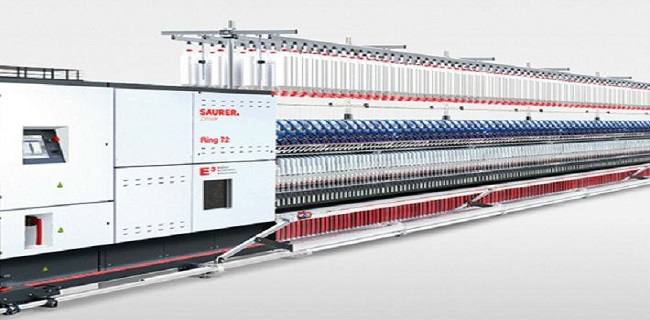
With up to 2,016 spindles, the machine significantly increases output per unit area. However, the real innovation lies in how this capacity is managed. Intelligent systems such as Optispeed continuously adjust machine performance, ensuring that operations remain at the optimal threshold without unnecessary stress or waste.
This results in a measurable reduction in production costs—reported at up to 11% compared to smaller installations.
But more importantly, it signals a shift from brute-force productivity to intelligent productivity. In an era where margins are tightening, this distinction matters.
Stability at High Speed
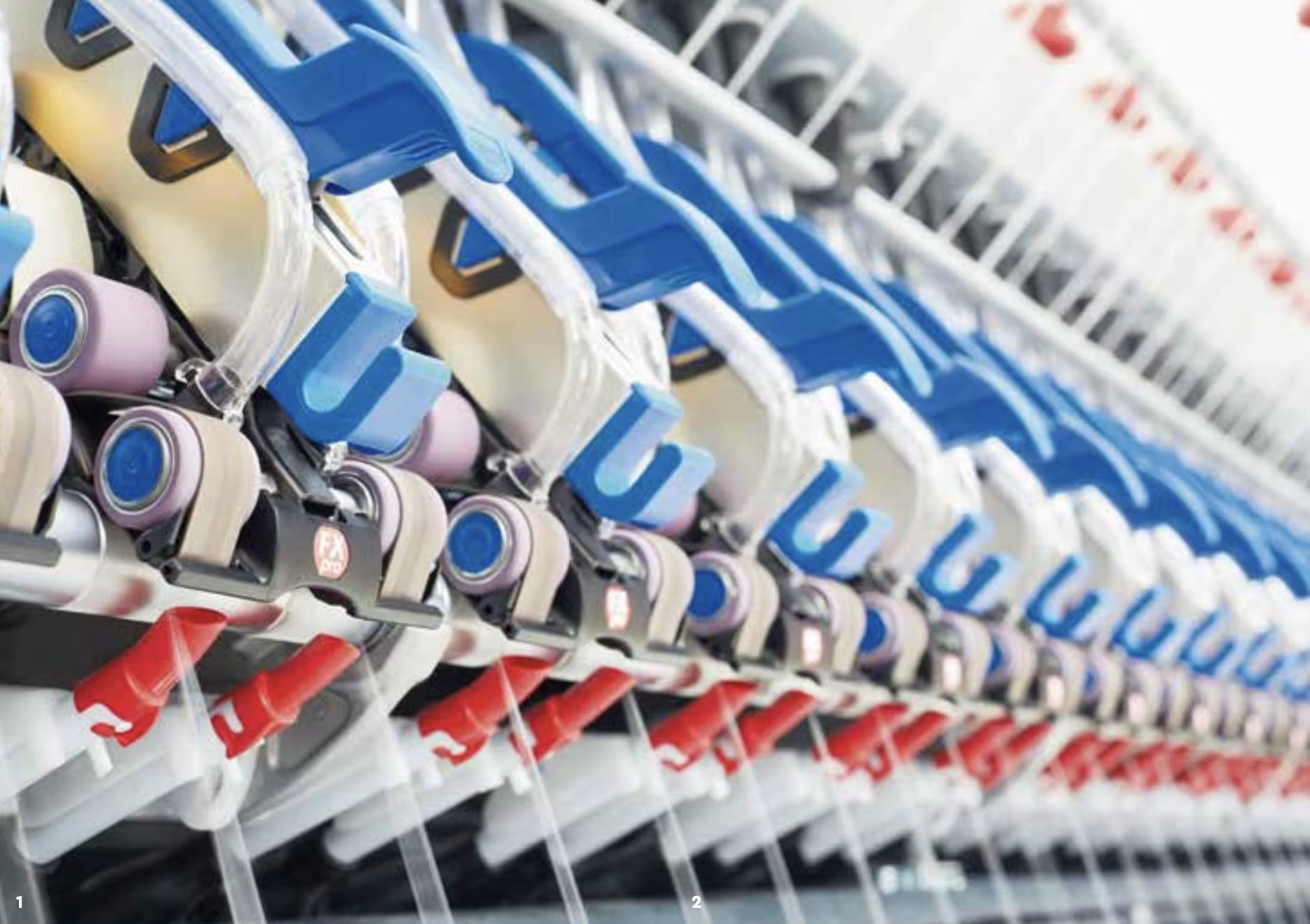
Operating at speeds of up to 27,000 rpm is not unusual in itself. What differentiates the ZR 72XL is its ability to maintain stability and yarn quality at these speeds.
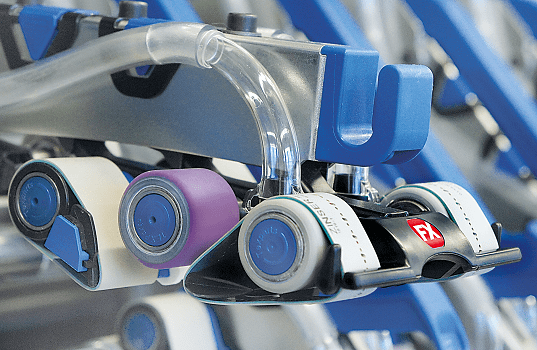
This is achieved through a combination of advanced spindle technology, optimized drive systems, and precise drafting control. The result is a machine that does not trade quality for speed—a compromise that has historically defined much of the industry.
Automation as a Structural Necessity
The End of Labor-Dependent Spinning
Perhaps the most critical shift reflected in the ZR 72XL is the move toward automation. Across the global textile industry, labor availability is becoming increasingly unpredictable. Rising wages, skill shortages, and demographic changes are forcing mills to reconsider their reliance on manual processes.
Saurer’s response is comprehensive. Automation is not treated as an add-on, but as an integral part of the machine architecture. From doffing systems to material transport, the ZR 72XL reduces the need for operator intervention at every stage.
This is not just about cost reduction. It is about consistency. Automated systems eliminate variability, ensuring that yarn quality remains stable regardless of external conditions.
Toward the Autonomous Spinning Mill
The integration of systems such as Cowemat and Cowefeed represents a broader vision: the autonomous spinning mill. These technologies handle tasks that were once labor-intensive, from bobbin handling to tube feeding, with minimal human input.
In doing so, they address one of the industry’s most pressing challenges—how to maintain high productivity with fewer skilled workers.
Sustainability Moves from Concept to Practice
Engineering for the Circular Economy
Sustainability has long been discussed in the textile industry, but its implementation has often lagged behind. The ZR 72XL brings this conversation into the realm of practical application.
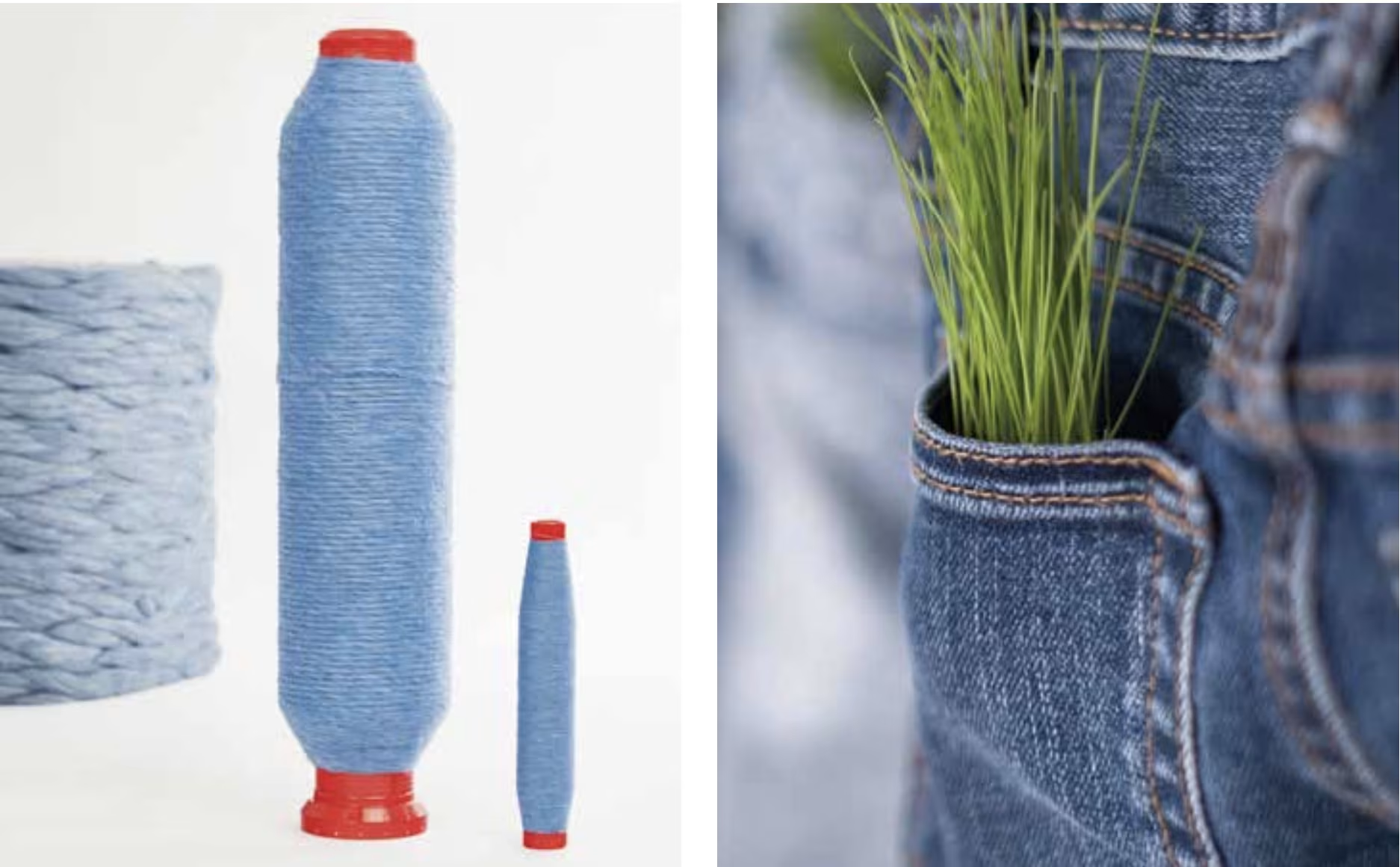
Designed to process recycled and short fibers, the machine aligns with the growing demand for circular production models. This capability is particularly relevant as brands and regulators push for greater use of recycled materials.
What makes this significant is not just the ability to process such fibers, but to do so efficiently and at scale.
Energy Efficiency as a Competitive Advantage
Energy consumption is one of the largest cost drivers in spinning. The ZR 72XL addresses this through a combination of mechanical design and digital monitoring.
Systems such as Twinsuction and Optisuction optimize airflow and vacuum levels, reducing unnecessary energy use. Meanwhile, integrated energy monitoring provides real-time insights, enabling mills to manage consumption more effectively.
This reflects a broader trend in the industry: energy efficiency is no longer just an environmental concern—it is a competitive advantage.
Digitalization and the New Role of Data
From Machine to Platform
The integration of the Senses digital platform transforms the ZR 72XL from a standalone machine into part of a connected production ecosystem.
By collecting and analyzing machine data, Senses provides a level of transparency that was previously difficult to achieve. Operators and managers can monitor performance, identify inefficiencies, and make informed decisions in real time.
This shift toward data-driven production is one of the defining characteristics of modern textile manufacturing.
Simplifying Complexity
At the same time, the machine’s Easyspin interface ensures that this complexity remains manageable. By centralizing control and simplifying parameter adjustments, it reduces the risk of human error while improving operational efficiency.
This balance between advanced technology and user-friendly design is critical. Without it, digitalization risks becoming a burden rather than a benefit.
Responding to Fashion’s Demand for Speed
The Rise of Agile Yarn Production
The fashion industry’s increasing pace has placed new demands on spinning mills. The ability to produce small batches, switch products quickly, and respond to trends is becoming essential.
The ZR 72XL addresses this through rapid setup changes and integrated systems for producing fancy yarns. Technologies such as Fancydraft enable mills to create complex yarn effects without additional equipment, reducing both cost and complexity.
This capability allows producers to move beyond commodity yarns and enter higher-value segments.
A Strategic Perspective for Emerging Markets
For regions such as the Middle East and Africa, where the textile industry is still expanding, the ZR 72XL offers a particularly compelling proposition.
These markets often face a combination of challenges: limited skilled labor, high energy costs, and the need to compete with established production hubs. A machine that integrates automation, efficiency, and flexibility provides a pathway to overcoming these barriers.
Moreover, its ability to process recycled fibers aligns with the growing emphasis on sustainable industrial development in these regions.
Conclusion: More Than a Machine
The ZR 72XL is not just another addition to the portfolio of spinning machinery. It represents a shift in how the industry approaches production.
By combining modularity, automation, sustainability, and digital integration, it reflects the realities of a textile sector in transition. For mills willing to embrace this change, it offers not only improved performance but a foundation for long-term competitiveness.
In an industry where margins are tight and expectations are rising, such a platform is not a luxury—it is a necessity.
Downloads
Find out more about our products. Here we provide you with all the relevant documents for download in PDF format.
ZR 72XL/ZI 72XL product brochure EN











