




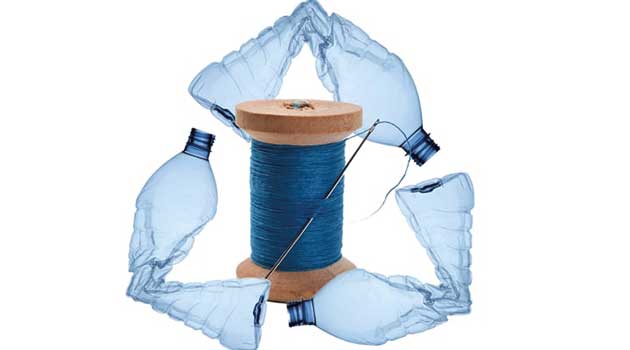
Levi’s has just launched its sustainable puffer jackets made from recycled plastic bottles and waste. The jacket is made from recycled plastic bottles and waste, with the use of recycled materials the resources required to grow cotton and make polyester are removed.
The production includes post-consumer waste (PCW) being broken down with discarded polyester and then being blended into a new synthetic fibre, this is used to insulate the jacket. This is less impactful on the environment as recycled polyester requires less energy to produce than the initial polyester, and it reduces landfill overflow and the dependence on fossil fuels.
Levi’s recently launched its most sustainable jeans to date. Each pair of jeans is made of 20 percent recycled denim, 20 percent sustainably sourced viscose, and 60 percent organic cotton, in addition, the denim also reduces the water, chemical and CO2 footprint during manufacturing.
The American heritage retailer also has a 2025 sustainability pledge. The goals are to achieve a 90 percent reduction in its greenhouse gas emissions, use 100 percent renewable throughout its facilities and reduce its greenhouse gas emissions by 40 percent through its global supply chain.
FashionUnited and Fashion Snoop previously reported that brands and retailers who are re-thinking their assortment strategies for post-pandemic life must ensure four consumer needs touchless, resilience, sanitation, and immune-boosting technologies.
Levi Strauss announces 2025 sustainability pledge
Levi Strauss is getting serious about sustainability. The American heritage denim brand has partnered with International Finance Corporation (IFC) on a 2.3 million dollar cooperation agreement to meet corporate objectives regarding reducing greenhouse gas emissions and water usage.
According to a company statement, Levi Strauss has set science-based targets for itself. The company intends to achieve a 90 percent reduction in greenhouse gas emissions and use 100 percent renewable energy throughout its facilities, as well as reducing greenhouse gas emissions by 40 percent throughout its global supply chain by 2025.
“At Levi Strauss & Co., we’re not just about making great clothes — we’re about making great clothes in a sustainable way,” the statement reads. “By doing what’s right for the planet, we create a business that’s as durable as the products we make.”
IFC will help Levi Strauss to meet its goals through working with 42 suppliers and mills, implementing renewable energy and water-reducing tactics.
“We are thrilled to be partnering with the IFC to help achieve our science-based climate targets and benefit our vendors and their communities,” Levi’s executive vice president, global product and supply chain, Liz O’Neill, said. “We hope this program can also benefit others in the apparel industry and help reduce our collective footprint.”











