




ONCHEK is emerging as an important example of Nigeria’s efforts to rebuild its local textile and apparel manufacturing capacity. Based in Lagos, the Nigerian company is developing a vertically integrated model for T-shirt production, connecting textile processing and garment manufacturing within a predominantly local supply chain.
Founded by Chekwas Okafor, ONCHEK originally started as an online marketplace connecting global consumers with African fashion brands. However, challenges surrounding production reliability, sourcing and supply-chain consistency eventually pushed the company toward a fundamentally different model: building manufacturing capacity closer to home.
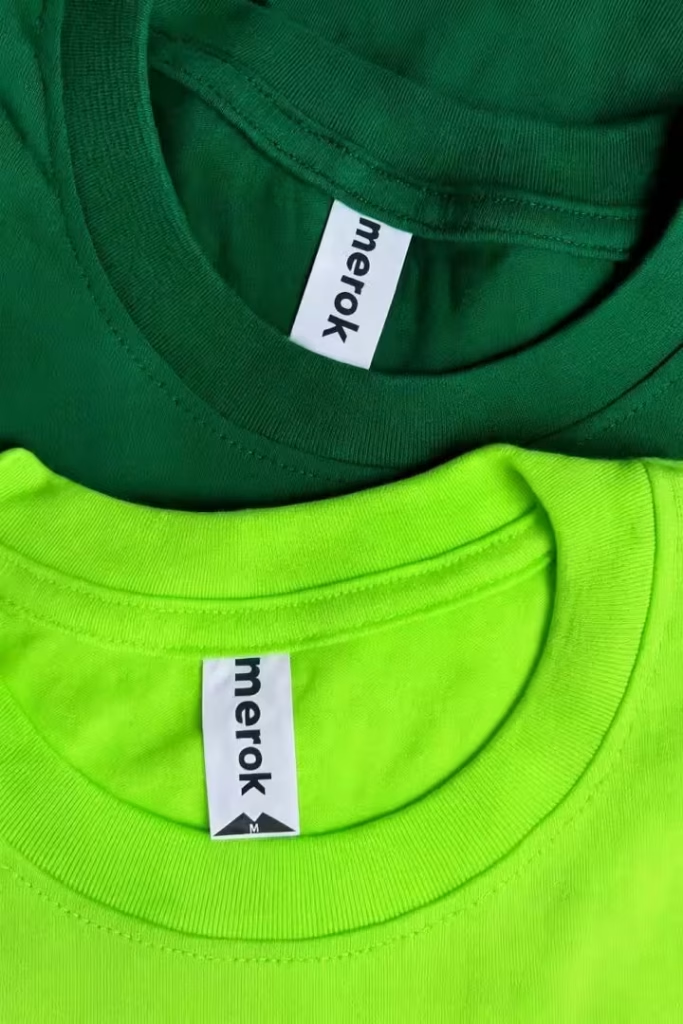
Today, ONCHEK combines textile and garment manufacturing with digital infrastructure, aiming to provide businesses and organizations with faster access to locally produced apparel while reducing dependence on imported finished garments. Through its Merok brand and manufacturing operations, the company represents a broader ambition that is becoming increasingly important for Nigeria: retaining more textile value within the country and rebuilding domestic industrial capabilities.
As Africa searches for ways to strengthen regional supply chains and capture a greater share of the global textile and apparel value chain, ONCHEK provides an interesting case study of how local manufacturing, vertical integration and digitalization could work together to support a new generation of African apparel production.
Building a Local Alternative to Imports
Nigeria imports more than 250 million T-shirts annually, primarily from China, Bangladesh, and Turkey, costing the economy over US$4 billion each year. ONCHEK aims to change that by producing high-quality garments within the country’s borders — cutting lead times from 60 days to less than 10, while eliminating freight, customs, and currency volatility costs.
The company has set up an integrated manufacturing network in Lagos, including knitting, dyeing, cutting, sewing, and finishing units. The facilities currently produce around 200,000 T-shirts per month, with expansion plans to reach 500,000 units by mid-2026.
Digital Infrastructure Meets Industrial Execution
Unlike many fashion startups that focus solely on e-commerce, ONCHEK combines digital systems with real manufacturing capacity. Its upcoming platform will connect businesses, schools, and organizations to verified local production units capable of delivering consistent quality at scale — essentially becoming a digital bridge between demand and African textile capacity.
This hybrid approach, combining technology, data, and local production, marks a significant step toward the re-industrialization of Africa’s fashion sector. It addresses not just creative visibility, but the practical backbone of supply chains — manufacturing, logistics, and value retention.
ONCHEK in 2026: Scaling Local Textile and Garment Manufacturing
ONCHEK has continued to expand its manufacturing operations since this article was first published in 2025, providing further evidence that its local production model is moving beyond the startup stage.
In May 2026, ONCHEK founder and CEO Chekwas Okafor said the company was producing approximately 8,000 shirts per day and had recently secured orders for 200,000 shirts. He also reported that the company employed around 150 people, with plans to expand its workforce as production grows.
The development is particularly significant because ONCHEK is attempting to capture more stages of the textile and apparel value chain within Nigeria. According to Okafor, the company vertically integrated its operations in 2023, producing both textiles and garments locally after its previous Lagos-based supplier could no longer meet growing demand.
Today, ONCHEK describes itself as a vertically integrated textile and garment manufacturer using West African-sourced cotton and a predominantly local supply chain. Its manufacturing strategy is focused on making basic garments locally while reducing dependence on imported finished products.
For Nigeria’s wider textile industry, ONCHEK’s progress offers an interesting example of how local raw materials, textile manufacturing and garment production can be connected within the same domestic value chain. If this model can be expanded successfully, it could support job creation, reduce pressure on foreign exchange and retain a greater share of textile value within Nigeria. (Source: News Agency of Nigeria – May 2026 report)
Towards a Self-Sufficient African Apparel Ecosystem
By empowering local production, ONCHEK’s model supports the African Continental Free Trade Area (AfCFTA) vision of developing intra-African supply chains. It also creates direct employment opportunities and contributes to building a more resilient and sustainable apparel industry across the region.
Founder Chekwas Okafor notes that the goal is not simply to make T-shirts, but to “rebuild the system that makes them” — one that is efficient, transparent, and proudly African.
ONCHEK’s growing success reflects a new wave of innovation emerging from the continent — where industrial production, sustainability, and digital transformation converge to reshape Africa’s role in the global textile and fashion economy.
Frequently Asked Questions About ONCHEK and Nigeria’s Textile Industry
What is ONCHEK Nigeria?
ONCHEK is a Nigerian textile and apparel company founded by Chekwas Okafor. The company initially operated as a marketplace for African fashion brands but later moved toward vertically integrated textile and garment manufacturing, with a focus on building more of its supply chain locally in Nigeria.
What does ONCHEK manufacture?
ONCHEK manufactures textiles and finished garments, with T-shirts and basic apparel forming an important part of its production model. Through its manufacturing operations and Merok brand, the company aims to connect local textile production more directly with finished garment manufacturing.
Where is ONCHEK based?
ONCHEK is based in Lagos, Nigeria, where it has developed its textile and garment manufacturing operations.
How many garments does ONCHEK produce?
In May 2026, founder and CEO Chekwas Okafor said ONCHEK was producing approximately 8,000 shirts per day. He also reported that the company had secured orders for around 200,000 shirts, indicating growing demand for its locally manufactured products.
Why is ONCHEK important for Nigeria’s textile industry?
ONCHEK is significant because its business model focuses on retaining more stages of the textile-to-garment value chain within Nigeria. Local manufacturing can potentially reduce dependence on imported finished garments, create industrial employment, shorten supply chains and retain more economic value within the country.
Can Nigeria become a major textile and apparel manufacturing hub?
Nigeria has significant potential due to its large domestic market, workforce and access to regional raw materials. However, developing a globally competitive textile and apparel industry will also require reliable infrastructure, investment in modern machinery, skilled workers, access to finance and stronger integration between spinning, textile processing and garment manufacturing.
What is the future of local apparel manufacturing in Africa?
Local apparel manufacturing could play a larger role as African countries seek to strengthen regional supply chains and capture more value from their raw materials. Companies such as ONCHEK demonstrate how vertical integration, local manufacturing and digitalization can potentially contribute to building more resilient African textile and apparel supply chains.












I’m Nizam from *VIVOSA*, a UK-based company with manufacturing and sourcing operations in *Bangladesh, Vietnam, India. We specialize in high-quality jackets and premium shirts for men, women, and children across all seasons.
We operate on a *made-to-order basis*, with an in-house design team ready to collaborate on exclusive designs tailored to your brand. Our goal is not just to supply garments but to help you achieve cost efficiency while delivering sustainable, luxury-quality apparel.
Approximately *85% of our production is based in Bangladesh, allowing us to offer premium quality at competitive prices, along with strict quality control and 24/7 service support.
I’d be happy to share more details or arrange sample shipments at your convenience. If someone else manages purchasing, I’d appreciate it if you could point me in the right direction.
Looking forward to your response
Best regards