




The Association of Women in Fashion-Tech (WIFT) is reshaping Africa’s garment and textile sector by addressing its most pressing challenges—ranging from cheap imports and design theft to weak infrastructure and limited financing. With more than 2,000 members in Lagos alone, WIFT is building an ecosystem where women-led businesses can thrive through access to fashion technology, sustainable production methods, leadership training, and global market linkages. By combining advocacy with innovation, WIFT ensures that African women entrepreneurs not only preserve cultural identity but also stand as competitive leaders on the world stage.
What are the most pressing challenges facing garment manufacturing in Africa today, and how is the association helping women-led businesses overcome them?
The Association of Women in Fashion-Tech (WIFT) highlights the most pressing challenges facing Africa’s garment manufacturing sector today. Chief among them are the influx of imported garments that undermine local production, the rising cases of design theft and counterfeiting, the burden of unresolved debt and limited financing for women entrepreneurs, weak value chains and infrastructure, and the urgent need to align with sustainable practices.
WIFT is responding with bold action. We are actively advocating for policies that protect the local industry, establishing systems to safeguard members’ intellectual property, and building a supportive ecosystem through training in value chain management, digital fashion technology, and sustainable production. Beyond skills development, WIFT provides mentorship, market access, and opportunities for women-led businesses to showcase their work at global platforms.
Our mission is clear: to strengthen women-led garment enterprises, preserve Africa’s cultural identity in fashion, and ensure that our members are equipped to compete on the world stage.
Role of Technology:
WIFT emphasizes fashion-tech. How can technology specifically address issues such as production inefficiency, sustainability, and global competitiveness for African garment producers?
The Association of Women in Fashion-Tech (WIFT) underscores the critical role of technology in transforming Africa’s garment industry. For women-led enterprises, Fashion-Tech is the key to overcoming inefficiencies, driving sustainability, and competing globally.
Through digital pattern-making, smart sewing systems, and supply chain platforms, technology helps businesses improve productivity and reduce costly errors. Virtual sampling and AI-driven forecasting are enabling designers to minimize fabric waste, adopt circular practices, and meet the growing demand for sustainable fashion. e-commerce, digital marketplaces, and virtual trade fairs are opening direct channels for African women designers to showcase their work to global buyers.
WIFT is leading this digital shift by training its members in fashion-tech tools, advocating for access to affordable innovation, and building digital platforms that connect African garment producers to international markets. By embracing technology, women-led businesses are not only safeguarding Africa’s cultural identity in fashion but also positioning themselves as competitive players on the world stage.
Sustainability & Circular Practices:
Your mission highlights circular and sustainable production. What practical steps are your members taking to adopt sustainable models, and how do you measure their impact?
Sustainability and circular production are at the heart of wift’s mission to reshape Africa’s garment industry. Our members are taking concrete steps to embed eco-friendly practices into their businesses. These include adopting upcycling and recycling techniques to transform textile waste into new products, using locally sourced raw materials to cut down on carbon emissions, applying 3d virtual sampling to reduce fabric waste during prototyping, and incorporating natural and biodegradable dyes.
We also encourage slow-fashion principles by producing smaller, high-quality collections that preserve African cultural identity while minimizing excess stock. In addition, many members are introducing take-back schemes and repair services to extend the lifecycle of garments.
To measure impact, WIFT tracks key indicators such as the volume of textile waste diverted from landfills, the percentage of sustainable or local materials used, energy and water savings in production, and the number of women-led businesses adopting eco-certifications or green production standards. These data points not only demonstrate progress but also build trust with global partners who are seeking ethical and transparent supply chains.
By embedding sustainability into everyday practice, WIFT members are proving that African fashion can be both culturally rooted and globally responsible.

Empowering Women Entrepreneurs:
With over 2,000 members in Lagos alone, how does WIFT ensure that women entrepreneurs gain not just technical training but also leadership and confidence to thrive in the global fashion industry?
With over 2,000 members in Lagos alone, the Association of Women in Fashion-Tech (WIFT) is committed to empowering women entrepreneurs with more than technical training—we are building leaders. Our programs are designed to strengthen both skills and confidence, ensuring that women-led businesses can thrive on the global stage.
Alongside advanced training in garment production and fashion technology, wift provides leadership workshops, mentorship networks, and peer-to-peer learning platforms where women share experiences and solutions. We also facilitate direct exposure to international trade fairs, pitch opportunities, and global partnerships that help our members gain visibility and credibility beyond Africa.
Equally important, WIFT cultivates a strong community of support that inspires confidence and resilience. By combining technical expertise with leadership development, business coaching, and access to markets, we are equipping African women entrepreneurs not only to participate in the fashion industry but to shape its future.
Access to Global Markets:
What strategies is WIFT implementing to connect “made in Nigeria” fashion with international buyers and consumers, and what barriers still remain in achieving stronger global recognition?
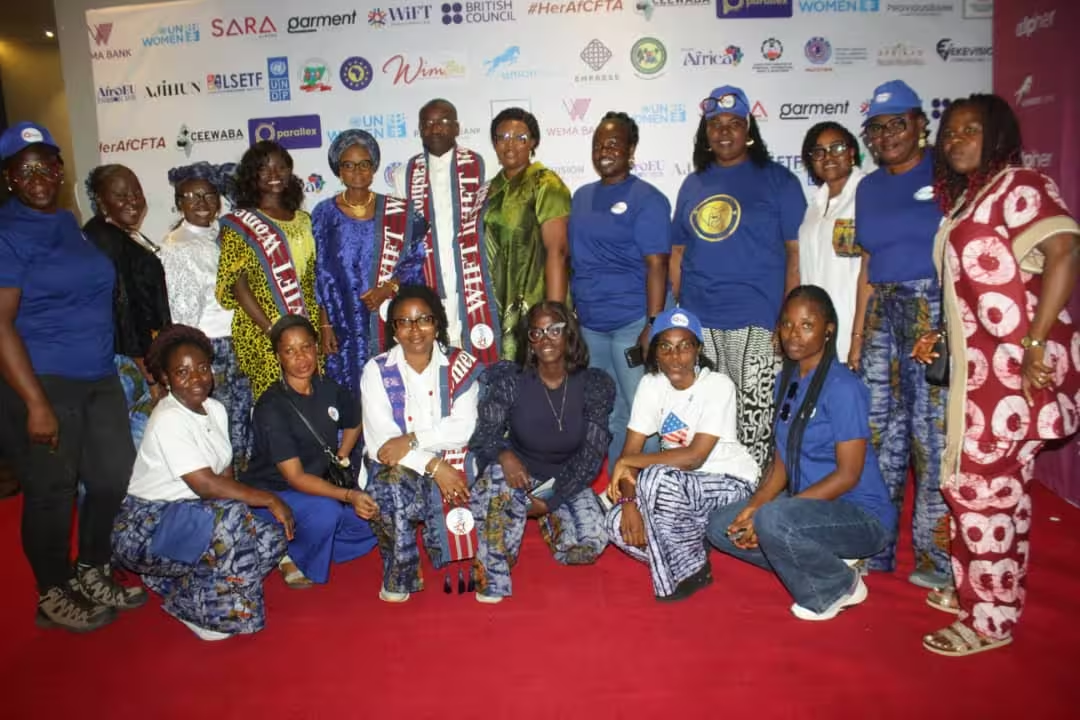
The Association of Women in Fashion-Tech (WIFT) is actively positioning “made in Nigeria” fashion for international recognition by building bridges between local creativity and global markets. Our strategies include curating export-ready collections from women-led brands, organizing international trade missions, and leveraging digital platforms to showcase Nigerian fashion directly to buyers across Europe, North America, and Latin America. We are also forging partnerships with embassies, development agencies, and global fashion councils to create lasting trade linkages.
Through training in export standards, digital marketing, and cross-cultural design adaptation, wift ensures that our members are prepared to meet the demands of international consumers. By promoting authentic African aesthetics alongside sustainable and ethical production, we are carving out a strong niche for Nigerian fashion globally.
However, barriers remain. Limited access to financing for scaling production, high logistics and shipping costs, gaps in intellectual property protection, and fragmented trade policies continue to challenge market expansion. WIFT is addressing these by advocating for supportive government policies, building collective export networks, and creating digital b2b platforms that lower entry barriers for women entrepreneurs.
With persistence and innovation, we believe “made in Nigeria” will become a recognized standard of creativity, quality, and cultural pride on the global fashion stage.
Future Vision:
Looking ahead, how does WIFT envision Africa’s role in the global textile and garment supply chain in the next 5–10 years, and what role will women entrepreneurs play in shaping this future?
Looking ahead, the Association of Women in Fashion-Tech (WIFT) envisions Africa emerging as a vital hub in the global textile and garment supply chain within the next 5–10 years.
With abundant raw materials, rich cultural heritage, and a fast-growing pool of skilled entrepreneurs, Africa is poised to transition from being primarily a consumer market to becoming a trusted producer of high-quality, sustainable fashion.
Women entrepreneurs will be at the heart of this transformation. through their leadership in sustainable production, innovative use of fashion technology, and commitment to cultural authenticity, women-led businesses will define africa’s global fashion identity. wift is equipping these entrepreneurs not only with technical expertise but also with the confidence, leadership skills, and international networks needed to drive large-scale industry change.
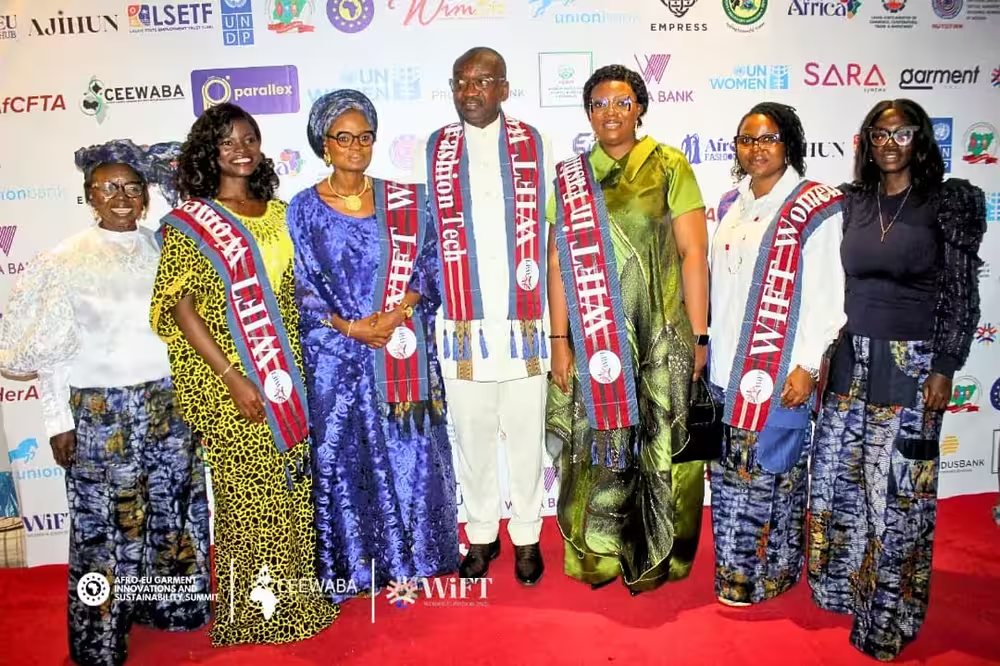
Our vision is clear: Africa will not merely participate in the global fashion industry—it will set new standards for sustainability, inclusivity, and cultural influence. Women will be the driving force behind this shift, ensuring that the continent’s textile and garment sector is competitive, resilient, and globally respected.











