Rethinking Water in Textile Processing
Water has traditionally been the cornerstone of the textile dyeing process. However, it is also one of the industry’s most critical environmental pain points. Conventional dyeing can consume between 100 to 200 liters of water per kilogram of fabric, much of which becomes chemically contaminated wastewater.
As regulatory pressure and environmental awareness grow, “Nowater Dyeing” technologies are emerging as a groundbreaking alternative—offering efficient, scalable, and ecologically responsible solutions for the future of textile production.
What is Nowater Dyeing?
Nowater Dyeing refers to dyeing processes that eliminate or drastically reduce the use of water, replacing aqueous dye baths with alternative media or dry application techniques. These technologies not only minimize water usage but also eliminate wastewater treatment costs, reduce energy consumption, and deliver faster processing times.
Key technologies include:
• Supercritical CO₂ Dyeing
Uses carbon dioxide under high pressure and temperature to dissolve disperse dyes and penetrate synthetic fibers, particularly polyester. Commercialized by companies like DyeCoo, this method achieves vibrant, uniform coloration without a single drop of water.
• Dry Spray & Microencapsulation Techniques
Involve applying dye directly to fabrics through precision-controlled spray systems, allowing for targeted, low-consumption color application without immersion.
• Ozone and Plasma-Assisted Surface Treatment
Enable pre-treatment and dye fixation in low-moisture environments, particularly useful in denim finishing and synthetic fabrics.
• Digital Dry Printing
An emerging solution for patterned fabrics using solid or gas-phase colorants, especially suitable for short runs and high design flexibility.
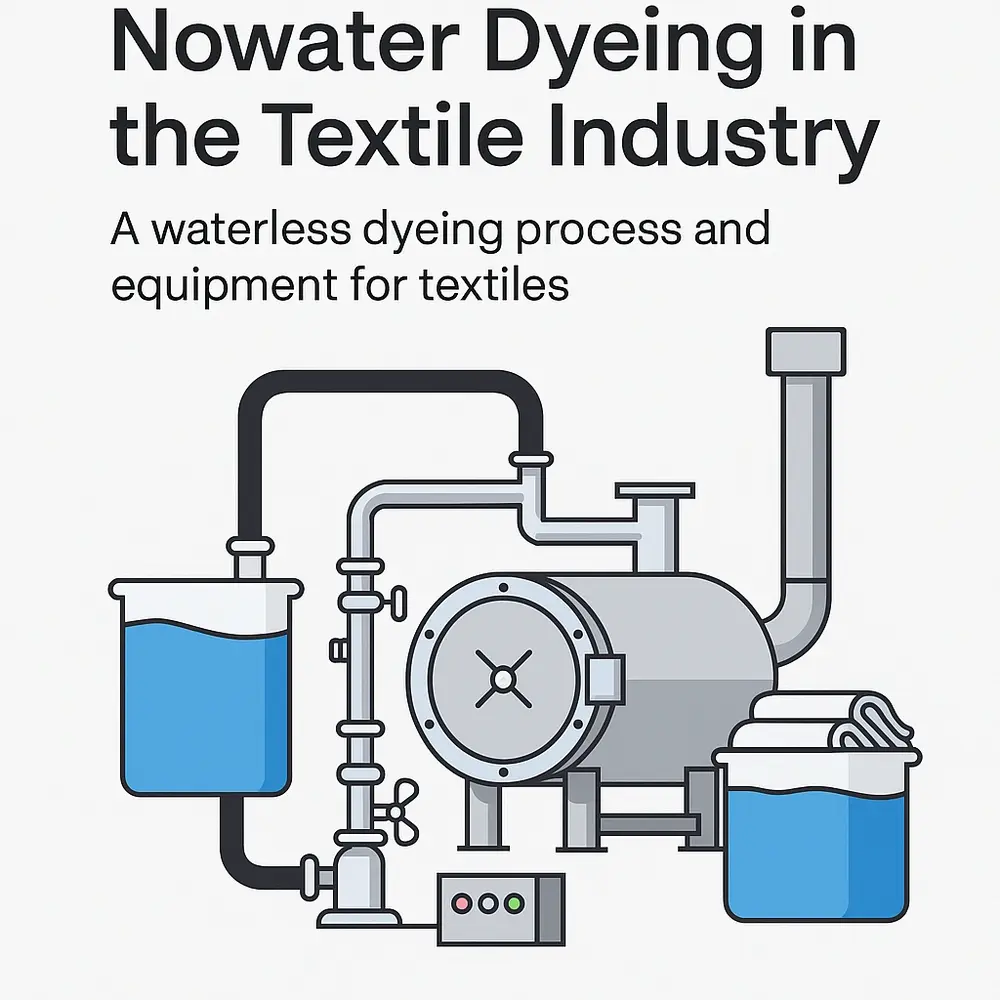
Machinery and Industrial Implementation
While still in early adoption stages, several manufacturers have developed industrial-scale equipment for nowater dyeing:
• DyeCoo’s CO₂ dyeing machines: Already used by major global brands, with CO₂ recovery systems for circular operation.
• Jeanologia (Spain): Offers G2 Dynamic and ColorBox technologies for water-free and low-impact finishing of denim and garments.
• EFI Reggiani and Kornit Digital: Focused on dry and low-water inkjet printing for fashion and home textiles.
These machines often feature:
• Closed-loop dye systems
• Precision dye control
• Digital monitoring and recipe management
• High-pressure chambers (for CO₂ systems)
Benefits for the Industry
Nowater dyeing offers distinct advantages across the production chain:
| Benefit | Impact |
| Water Elimination | 90–100% reduction in water use |
| No Wastewater | No effluent treatment required |
| Lower Energy | Use Less heating, shorter drying phases |
| Faster Cycle | Times Shorter process, quicker turnaround |
| Color Precision | Better consistency and reproducibility |
| Brand Value | Alignment with sustainability goals |
Challenges & Considerations
Despite its promise, nowater dyeing comes with hurdles:
• High CapEx: Investment in specialized machinery is still a barrier for many SMEs.
• Limited Fiber Compatibility: CO₂ dyeing is ideal for polyester but not yet viable for cotton.
• Color Range Constraints: Certain dyes and effects may not yet be replicated without water.
• Need for Process Adaptation: Requires training and adjustment in production protocols.
The Road Ahead: Strategic Adoption
With growing interest from global brands and sustainability watchdogs, nowater dyeing is no longer a concept—it’s a viable industrial path forward. Countries with severe water scarcity and high environmental compliance costs stand to benefit the most from early adoption.
Governments, associations, and leading mills in Turkey, India, Vietnam, and even Iran should consider incentives and pilot programs to integrate this technology and secure a competitive edge in sustainable manufacturing.
Final Thoughts
The textile industry’s water footprint has long been a challenge without a scalable solution. Nowater dyeing technologies are shifting that paradigm—offering a sustainable, efficient, and high-quality path to the future.
For textile manufacturers in the Middle East, North Africa, and Central Asia, now is the time to evaluate, invest, and innovate—before the global market demands it as a baseline.