




In a recent interview with Behnam Ghasemi, Mr. Alex Zucchi, President of CEMATEX (European Textile Machinery Manufacturers Association), outlined the urgent need for a coordinated and realistic global approach to sustainability in the textile industry, warning against repeating past policy mistakes driven by rigid deadlines and regional thinking.
Zucchi noted that awareness of European Union sustainability policies has significantly increased across the industry, with clear objectives now aligned toward 2030. Dedicated commissions have been established to address these goals, yet reaching consensus remains complex due to the global nature of textile production. “We must consider the entire ecosystem,” he stressed, emphasizing that sustainability decisions cannot be made in isolation or imposed overnight.
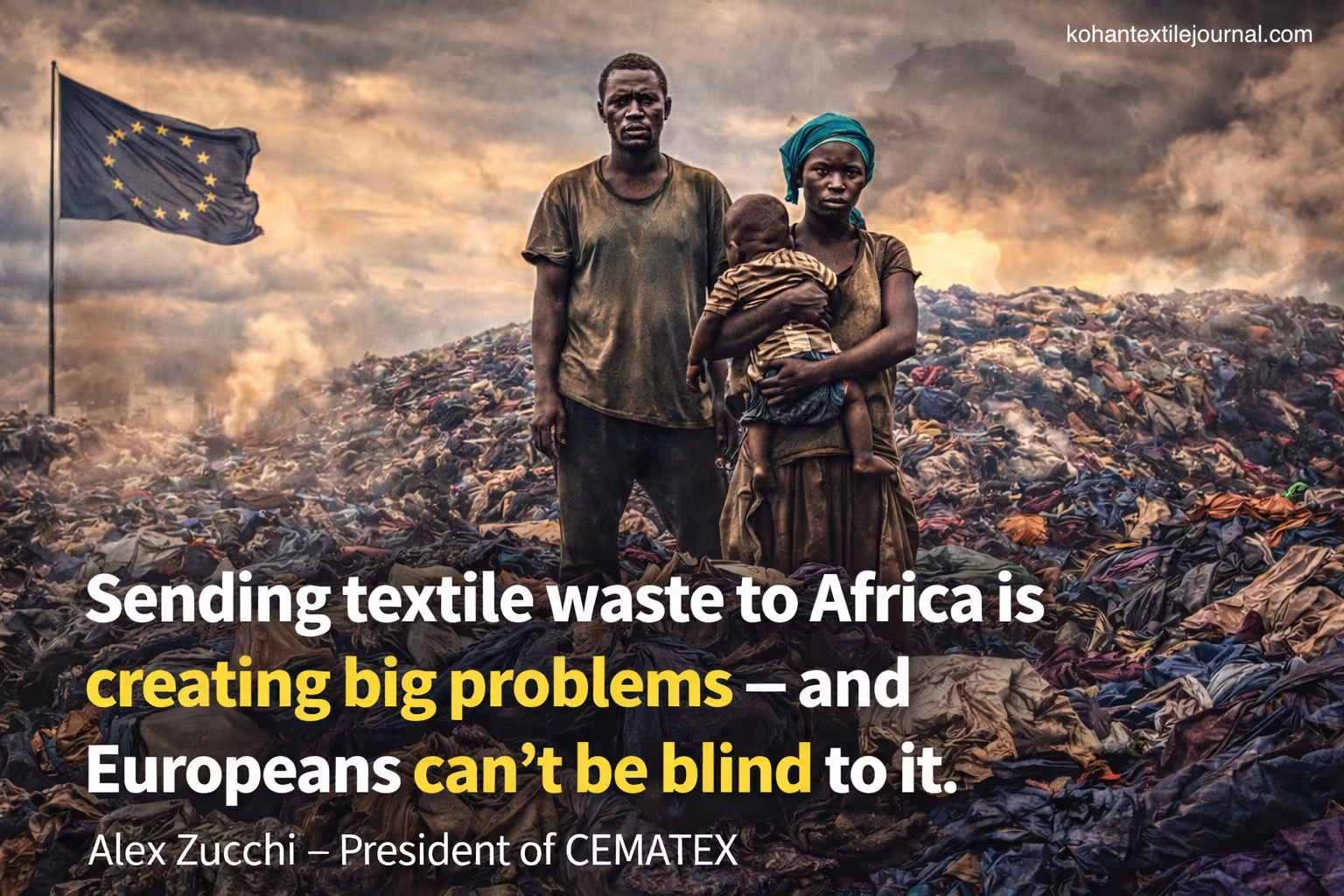
Zucchi warned that exporting textile waste to Africa is creating serious environmental and social problems, stressing that Europeans cannot turn a blind eye to the consequences of their consumption.
Sustainability Requires Time, Scale, and Global Alignment
Drawing lessons from the automotive sector, Zucchi cautioned against setting unrealistic mandates, such as forcing all garments to be made from a single fiber within a short timeframe. “This is simply not feasible,” he said, pointing out that millions of people worldwide depend on the current textile value chain. Instead, he advocated for a gradual transition that balances environmental responsibility with economic and social realities.
Highlighting the scale of the challenge, Zucchi revealed that in 2023 alone, Europe faced an excess of more than 14.5 million tons of textile products beyond consumption levels. Of this volume, only about one million tons were recycled, while roughly two million tons were incinerated. The remainder underscores the urgent need to rethink overproduction, waste management, and recycling capacity across the industry.
Zucchi emphasized that sustainability cannot be treated as a Europe-only obligation. Europe accounts for approximately 7% of global pollution, while countries such as China contribute a significantly larger share. Applying strict rules solely within Europe, he warned, would be counterproductive. “Sustainability must be implemented in Europe, but also taught globally,” he said, adding that knowledge transfer, improved production practices, and skills development in manufacturing countries are essential to achieving meaningful results.

Also Read : The Shadow of War Over the Textile Industry
Machinery as an Enabler of Change
Zucchi underlined the importance of clearly distinguishing between textile producers and textile machinery manufacturers. While textiles represent the end product, machinery makers play a critical enabling role by providing the technologies required to reduce waste, improve efficiency, and lower environmental impact. Advanced machinery, he noted, is central to achieving sustainability goals without disrupting global supply chains.
Despite the complexity of the transition, Zucchi expressed cautious optimism. He referenced recent application figures related to upcoming European initiatives, noting that industry engagement has exceeded expectations, even earlier than anticipated. “This is a positive signal,” he said. “It shows that, despite difficult conditions, the industry believes progress is possible.”
He concluded by stressing that sustainability should remain a clear goal—but one pursued with realistic timelines and shared global responsibility. “If we move too fast without preparation, we risk failure,” Zucchi warned. “But if we act together, with technology, education, and time, meaningful change can be achieved.”











