




Introduction: A New Era for Tunisian Textiles
The global textile landscape is undergoing a seismic shift. As Europe pushes for “Green Deals” and near-shoring becomes the strategy of choice for global brands, Tunisia—led by the Federation Tunisienne du Textile et de l’Habillement (FTTH)—is positioning itself not just as a manufacturing hub, but as a strategic partner in innovation.
Building on the foundation of previous agreements, such as the strategic partnership with EURATEX, the Tunisian textile sector is moving beyond basic assembly toward a fully integrated, sustainable, and digitally-driven ecosystem. This article explores the roadmap set by FTTH to navigate the complexities of 2026 and beyond.
The Strategic Pivot: From Mass Production to Value-Added Manufacturing
For decades, Tunisia was known for its speed and proximity to Europe. However, in the current market, speed is no longer enough. FTTH has identified that the future lies in Value-Added Manufacturing.
Investing in R&D and Technical Textiles
The federation is actively encouraging factories to transition from traditional apparel to Technical Textiles. This includes medical-grade fabrics, protective gear, and automotive textiles. By diversifying the output, Tunisia reduces its dependency on fast-fashion cycles and taps into high-margin industrial sectors.
Digital Transformation and Industry 4.0
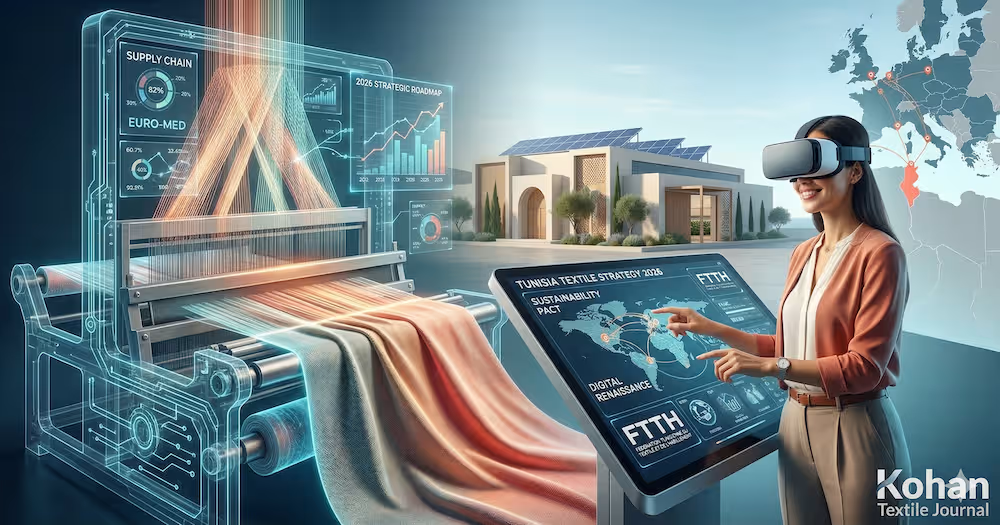
The integration of AI in pattern making, automated cutting technologies, and blockchain for supply chain transparency is no longer a luxury. FTTH’s current roadmap emphasizes the “Digital Factory” model, ensuring that Tunisian firms can integrate seamlessly with the digital platforms of European retailers.
Sustainability as a Competitive Advantage
With the implementation of the EU Strategy for Sustainable and Circular Textiles, Tunisian exporters face new regulations regarding recyclability and carbon footprint. FTTH is leading the charge to turn these challenges into a “Green Advantage.”
Decarbonization of the Supply Chain
One of the primary goals highlighted in recent FTTH reports is the reduction of energy consumption. By shifting to solar energy and optimizing water usage in denim washing (as seen in the success stories of “Denim House”), Tunisia is significantly lowering the environmental impact of its exports.
Circular Economy and Recycling Initiatives
Tunisia is developing local infrastructure for textile-to-textile recycling. Instead of importing all raw materials, the focus is shifting toward recovering textile waste to create new yarns, keeping the value within the Tunisian borders and meeting the strict EU circularity requirements.
Strengthening the Euro-Mediterranean Partnership
The collaboration between FTTH and international bodies like EURATEX and UNIDO is the backbone of the industry’s growth.
Tunisia is uniquely positioned to benefit from the Pan-Euro-Med cumulation of origin. FTTH is working to educate local manufacturers on how to maximize these trade benefits, ensuring that “Made in Tunisia” remains the most cost-effective and compliant choice for European brands looking to move production away from Asia.
Human Capital: Upskilling the Next Generation
A major pillar of the FTTH strategy is the “Talent Factory.” By partnering with technical universities, the federation is ensuring that the workforce is trained in sustainable chemistry, digital design, and advanced logistics management. This focus on human capital is what will sustain the industry’s growth for the next decade.
Market Outlook: Tunisia in 2026 and Beyond
The data shows a clear trend: European buyers are looking for resilience. The disruptions of the past years have proven that a short, transparent supply chain is vital.
Sustainable Denim: Utilizing eco-friendly dyes and laser finishing.
Smart Apparel: Clothing integrated with wearable technology.
Eco-Friendly Knitwear: High-quality basics produced with organic or recycled fibers.
Conclusion: The Path Forward
The Tunisian Textile and Clothing Federation (FTTH) has proven that adaptability is the key to survival. By focusing on the twin pillars of Digitalization and Sustainability, Tunisia is not just keeping up with global trends—it is setting the standard for the Mediterranean region.
For global investors and brands, the message is clear: Tunisia is ready to deliver high-quality, ethically produced, and technologically advanced textiles that meet the demands of the modern consumer.











 is leading the industry toward sustainability and digital transformation. Explore the 2026)