




By: Behnam Ghasemi – Editor in Chief at kohan Textile Journal
Italy’s textile machinery industry once again underlined its strategic focus on South America during Colombiatex 2026, with a strong and coordinated presence led by ACIMIT, the Association of Italian Textile Machinery Manufacturers.
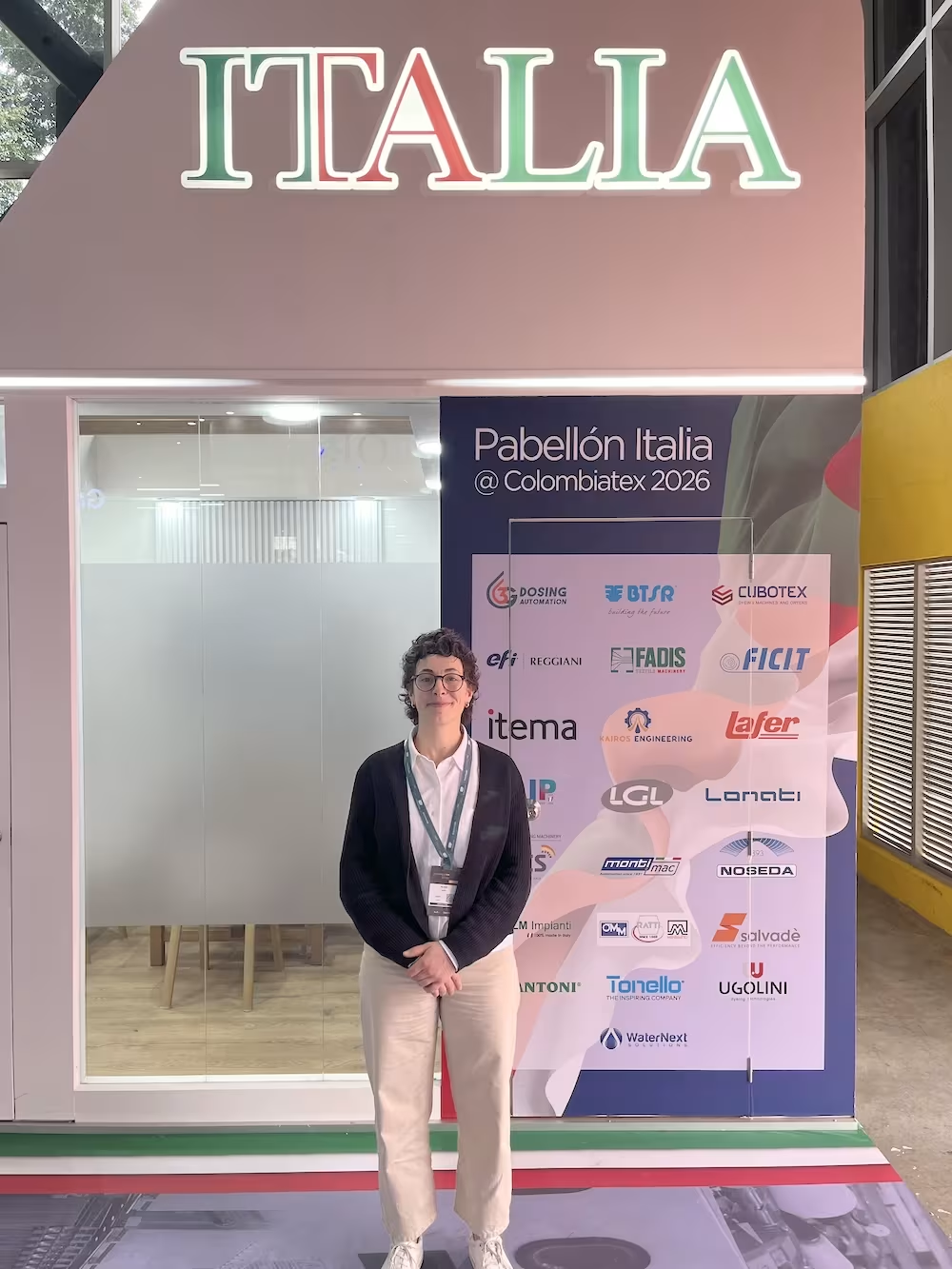
Speaking to Kohan Textile Journal on the sidelines of the exhibition, Alice Vago, Project Manager at ACIMIT, highlighted Colombia—and South America more broadly—as a market of growing importance for Italian machinery suppliers, driven by industrial expansion, sustainability demands, and closer trade relations with Europe.
A Decade of Italian Pavilion at Colombiatex
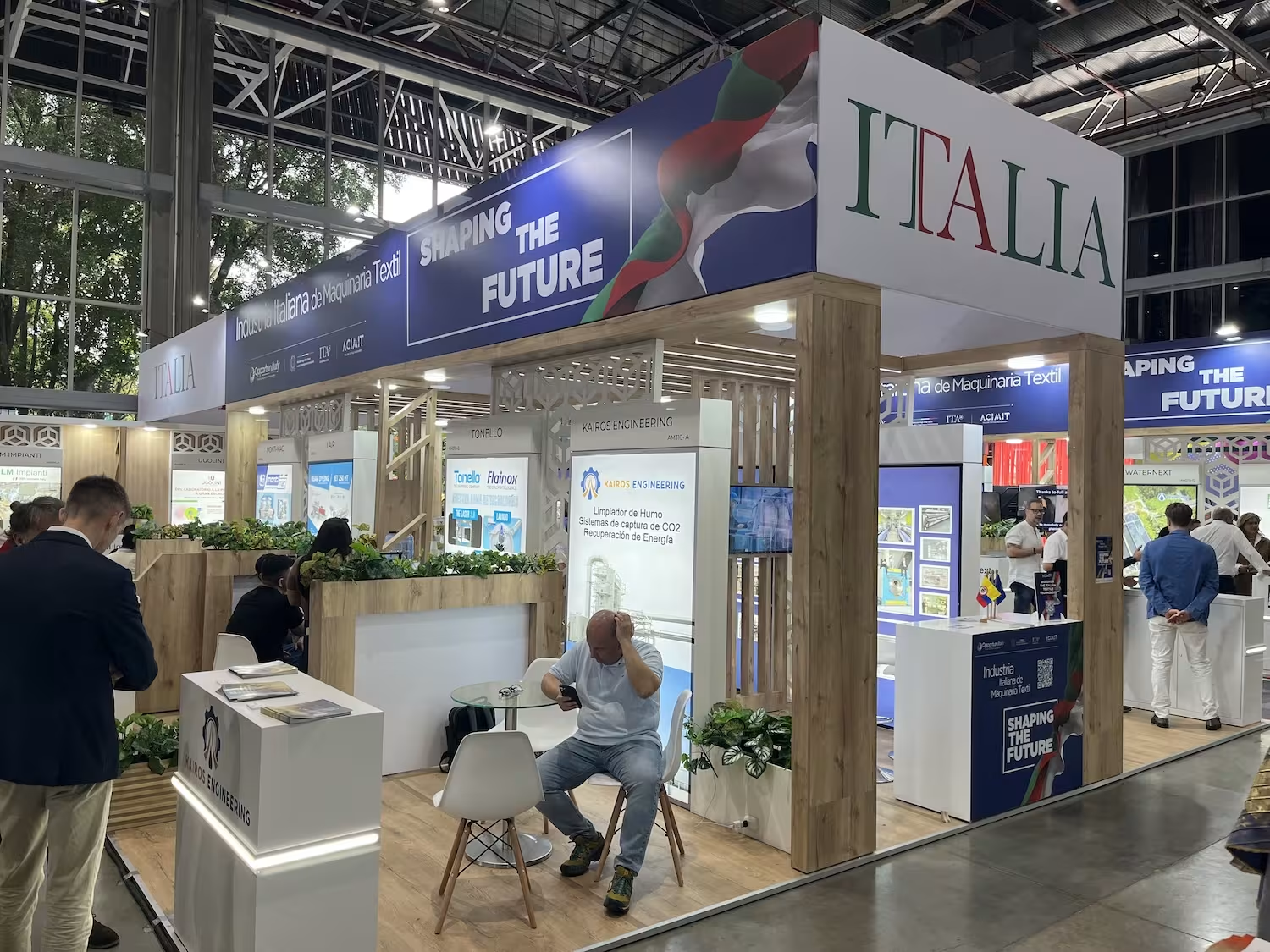
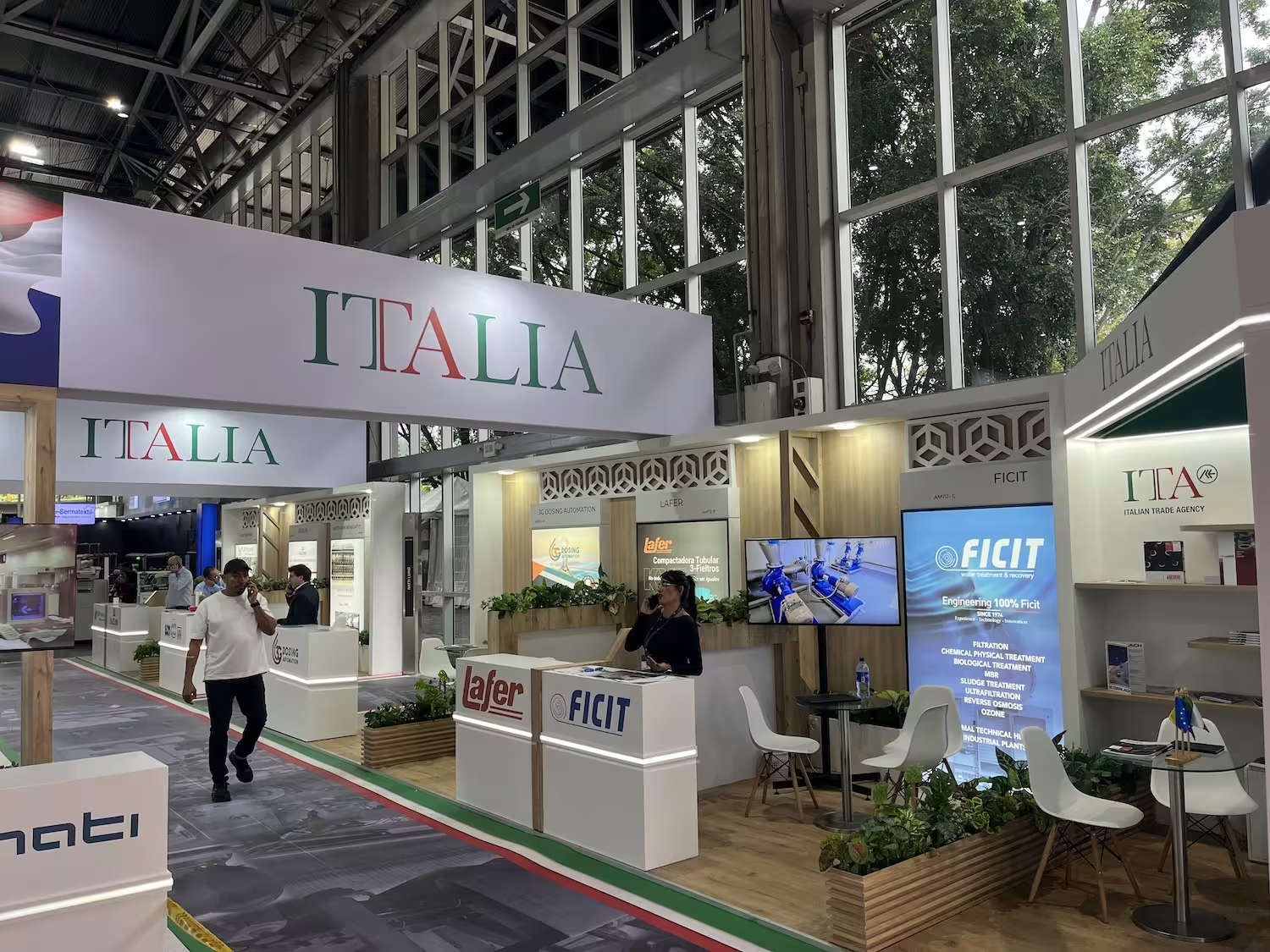
According to Vago, 2026 marks 10 years of organized Italian participation at Colombiatex. This year, the Italian national sector group hosted 22 companies, while many other Italian manufacturers took part independently or through local agents.
“Beyond the national pavilion, several Italian companies are present with their own structures, agents, or machinery,” Vago explained. “This shows how deeply rooted Italy’s engagement with the Colombian and South American textile markets has become.”
Why South America Matters for Italian Machinery
South America represents a growing and strategically evolving market for Italian textile technology. Vago pointed to new trade dynamics, including closer EU–Mercosur relations, as an additional incentive for Italian manufacturers to strengthen their visibility and long-term positioning in the region.
“What we offer is innovation, sustainability, and efficiency,” she noted. “Italian technologies focus on energy saving, reduced consumption, lower production costs, and high-quality after-sales assistance.”
ACIMIT mainly represents small and medium-sized enterprises, a structure that allows Italian manufacturers to build close, personalized relationships with customers and respond flexibly to specific production needs.
Italy’s Unique Strength: From A to Z Textile Technology
One of Italy’s defining advantages, according to Vago, is its ability to supply textile machinery across the entire value chain—from spinning and weaving to dyeing, finishing, and advanced processing.
“The real secret is collaboration,” she explained. “Italian companies work as a group, sharing knowledge, processes, and expertise. If a customer needs a complete solution, companies often support each other rather than competing in isolation.”
This collaborative culture is reinforced by ACIMIT and European-level industry bodies, which ensure the continuous exchange of information on technological innovation, sustainability standards, and regulations.
Staying Ahead in a Highly Competitive Global Market
With increasing competition from emerging machinery producers in Asia and beyond, Vago stressed that Italian manufacturers remain competitive by raising standards rather than lowering prices.
A key example is ACIMIT’s Climate Certification Label, which applies Life Cycle Assessment (LCA) methodology to measure energy consumption, CO₂ emissions, and overall environmental impact of textile machinery.
“This level of transparency and data-based certification sets a benchmark that many competitors simply cannot match,” she said. “It gives buyers clear, comparable information and reinforces trust.”
Beyond sustainability, machine safety and worker welfare are also highlighted as non-negotiable priorities for Italian manufacturers.
Automation, AI, and the Future of Textile Production
Looking ahead, Vago confirmed that Italian textile machinery producers are actively moving toward automation, artificial intelligence, and data-driven production.
“AI, data collection, remote maintenance, and digital services are already part of our reality,” she said. “Today, many issues can be resolved remotely, without sending technicians on-site, which saves time, costs, and resources.”
While the concept of fully automated or “dark” factories is still evolving, she believes the industry is clearly heading toward smarter, more autonomous, and self-sustained production systems.

A Long-Term Vision for Colombia and the Region
Concluding the interview, Vago reaffirmed ACIMIT’s confidence in the future of the South American textile sector and Italy’s role within it.
“We are very confident in this direction,” she said. “Sustainability, safety, service, and intelligent automation are not trends for us—they are long-term commitments.”











