




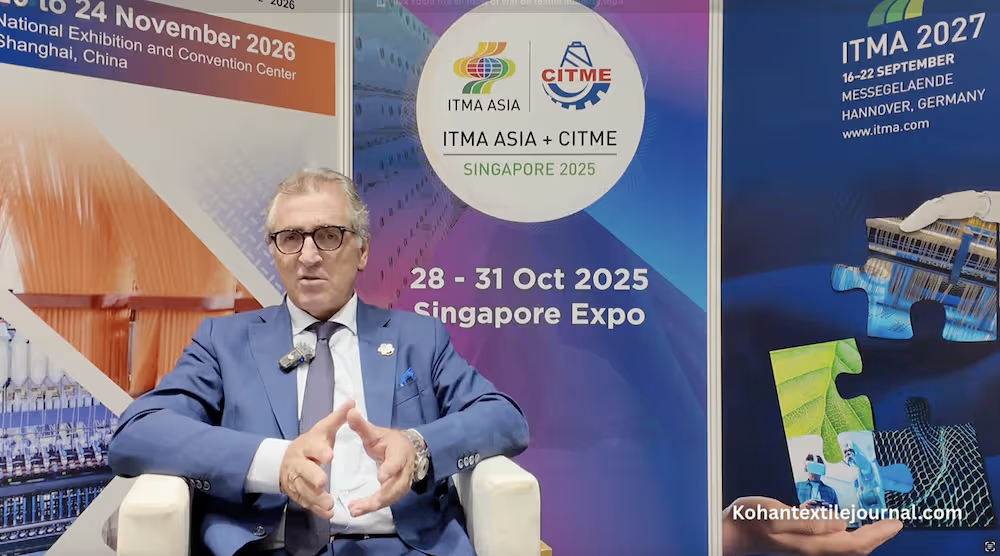
In an interview reflecting the growing concerns across the global textile value chain, Mr. Alex Zucchi, President of CEMATEX, shared a clear and realistic view of the pressures currently shaping the textile and textile machinery markets worldwide.
Energy, Geopolitics, and a Market Under Pressure
According to Zucchi, the textile industry is still operating under the strong influence of the war between Russia and Ukraine. While textile production is now largely concentrated in Asia, the consequences of the conflict are global. Energy remains the most critical issue. With restrictions on Russian gas—traditionally a low-cost energy source—production costs have risen sharply. For an energy-intensive industry such as textiles, this has made operations increasingly difficult, not only in Europe but also in key manufacturing countries across Asia.
In an interview with Behnam Ghasemi, Zucchi emphasized that the situation goes beyond energy alone. New trade policies and tariffs are accelerating changes in global sourcing. Major international buyer groups are actively shifting orders from India to countries such as Bangladesh and Vietnam, largely due to tariff pressure. While this trend has created challenges for India, it has supported recovery in Bangladesh and has also contributed to improving conditions in Pakistan, where order activity is beginning to return.
From Capacity to Technology
From the perspective of textile machinery manufacturers, Zucchi underlined that the market’s expectations have fundamentally changed. Many producing countries already have sufficient machinery to meet current consumption levels. What they are now looking for is not additional capacity, but advanced technology. Energy efficiency, sustainability, and higher-performance solutions are becoming decisive factors in investment decisions. Simply offering machinery is no longer enough; suppliers must deliver clear technological advantages.
Shifting Trade Routes and a Cautious Outlook
Zucchi also pointed to structural shifts affecting traditional textile hubs. Turkey, once a major exporter to Russia, is facing increasing pressure as Russia loses importance as a destination market. At the same time, countries such as Uzbekistan, Turkmenistan, and Kyrgyzstan are actively promoting themselves and capturing new business, reshaping regional trade dynamics.
Despite these challenges, Zucchi remains cautiously optimistic. He noted that global production capacity currently exceeds consumption, largely because uncertainty has weakened consumer confidence. With the war taking place close to Europe, the psychological impact on spending is significant. However, he believes that once a geopolitical solution is reached, recovery will follow. While growth will not be immediate, Zucchi estimates that within around one year after stability returns, the textile industry should begin to regain momentum.
What is your view on this issue?
How do you see the impact of war, energy costs, and shifting trade routes on the global textile industry? We invite KTJ readers to share their insights and opinions in the comments section below. Selected comments may published.











