




By the Editorial Team | Kohan Textile Journal
Walk through the commercial districts of Douala, Cameroon’s economic heartbeat, and something has changed. Hanging above the storefronts, more and more often, is not just a price tag — it is a Turkish flag. It is a subtle signal of a seismic shift underway across sub-Saharan Africa’s textile landscape: the steady, deliberate displacement of Chinese fabric dominance by Turkish-made clothing, carried one suitcase at a time by traders who know both worlds.
The Traveller-Traders: A New Axis of Textile Commerce
For years, Africa’s informal garment economy ran on a single supply chain: Chinese manufacturers, shipping containers, and cut-price goods flooding local markets. That model, efficient and relentless, left little room for alternatives. Then came the disruptions — first the COVID-19 pandemic, which shuttered markets and choked import pipelines, and then something more durable: a reputational shift in what African consumers were willing to wear.
Read more: Cameroon Set to Launch Camtext SA, a $300 Million Cotton-to-Textile Mega Project
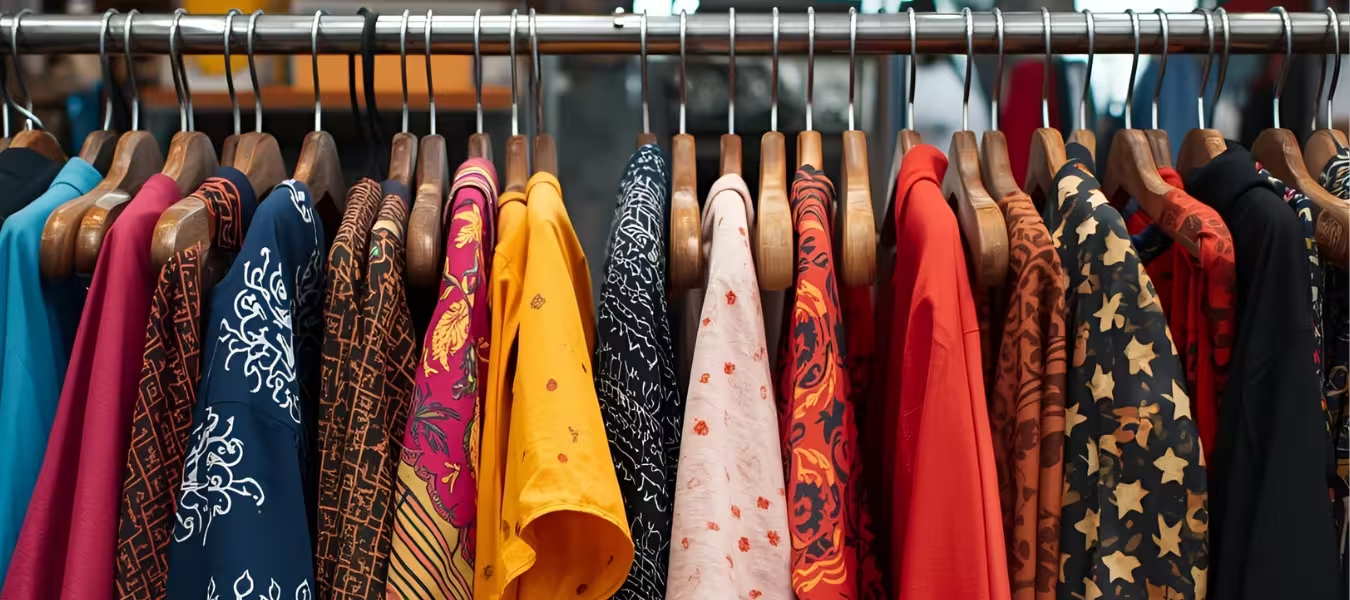
Cameroonian clothing traders, as reported by Anadolu Agency, began making regular trips to Istanbul — to the textile wholesale corridors of Laleli and Osmanbey — and returning with goods that could command a premium. Not because of branding, necessarily, but because of a word-of-mouth quality perception that has proven remarkably durable: Turkish means better.
From Suitcase Trade to Structural Shift
This is not yet a story of industrial-scale supply chains. It is, for now, a story of individual initiative — traders who absorb the cost and risk of transcontinental travel because the margins justify it. But when individual decisions aggregate across thousands of traders operating across West and Central Africa, they begin to look less like hustle and more like strategy. Turkey’s Africa trade volume grew from just $5.4 billion in 2003 to over $40 billion by the early 2020s, and Turkish direct investment on the continent now exceeds $10 billion — figures that did not emerge by accident.
Why Turkish Goods? The Case for Quality in a Price-Driven Market
Africa’s textile market is not a monolith. It ranges from fast-moving informal stalls to aspirational boutiques in capital cities. But across this spectrum, a consistent consumer appetite has emerged: people want clothes that last. African Development Bank data indicates that over 40 percent of Africa’s population is under the age of 15 — a generation of consumers growing up with stronger brand awareness and rising expectations of durability.
Turkish manufacturers have historically competed on a middle ground: higher-quality than mass-market Chinese goods, significantly more affordable than European labels. For African traders, this positions Turkish textile as almost uniquely well-suited to a continent where purchasing power is growing but remains constrained — and where the used-clothing trade (second-hand imports to Cameroon rose by 18.6 percent in volume in 2024 alone) reveals the pressure on pricing that even domestic producers cannot escape.
Cultural and Religious Proximity as a Commercial Asset
There is another dimension that market analysis rarely captures adequately: cultural affinity. Turkey’s identity as a Muslim-majority country — visible in its fashion sensibilities, its modest-wear ranges, and even the symbolism of the Turkish flag — resonates across significant portions of Cameroonian and broader West African society. For traders who are themselves Muslim, sourcing from Turkey carries a social dimension that Chinese goods simply cannot replicate. Commerce, here, is also community.

Cameroon’s Textile Paradox: Export Strength, Domestic Collapse
The irony of Cameroon’s textile situation is stark. In 2024, the country posted its highest textile and apparel export figures since 2019, with CFA59.4 billion — roughly $96 million — worth of goods leaving its borders. Yet inside the country, the domestic textile industry is in a state of near-collapse.
The Industrial Cotton Company of Cameroon (Cicam), once a CEMAC regional powerhouse, now controls less than 5 percent of its own domestic market.
Read more: Africa Supplies Over 40% of Bangladesh’s Cotton Imports as Country Becomes World’s Largest Buyer
The culprits are familiar: cheap Chinese imports, smuggled textiles from West Africa, and the surge in second-hand clothing that has reshaped consumer habits in ways that formal manufacturers are ill-equipped to compete with. The Cameroonian government’s ambition to process 50 percent of its cotton output domestically by 2030 — and to grow national cotton production to 600,000 tons annually — represents a counter-strategy, but one that requires industrial investment and political will that has historically proved elusive.
The Larger African Picture: A Market in Motion
Cameroon is not an isolated case. Across Africa, the textile market is being reshaped by competing forces: Chinese manufacturers seeking to relocate production bases to Ethiopia and other countries to circumvent U.S. trade pressure; the African Continental Free Trade Area (AfCFTA) gradually opening intra-African garment corridors; and new entrants — Morocco, Turkey, Bangladesh — positioning themselves as quality alternatives to China in African markets.
Read more: Turkey Textile Exports 2025: How It Dominates the Middle East and Africa Market
Africa’s overall textile market, valued at $1.76 billion in 2024, is forecast to grow to $2.23 billion by 2033. The clothing segment commands nearly 60 percent of that market. Nigeria alone accounts for just under 30 percent of continental textile demand. These are numbers that Turkey’s trade strategists have been watching closely — and acting on, deliberately, for two decades.
Turkey’s Africa Strategy: Commerce as Geopolitics
Turkey’s engagement with Africa is not accidental. The country’s Africa Action Plan (2021–2026) and its series of Turkey–Africa Partnership Summits — in 2008, 2014, and 2021 — represent a sustained diplomatic and commercial effort that has few parallels among middle powers. Textile and garment exports have served as a visible, street-level expression of that broader policy ambition.
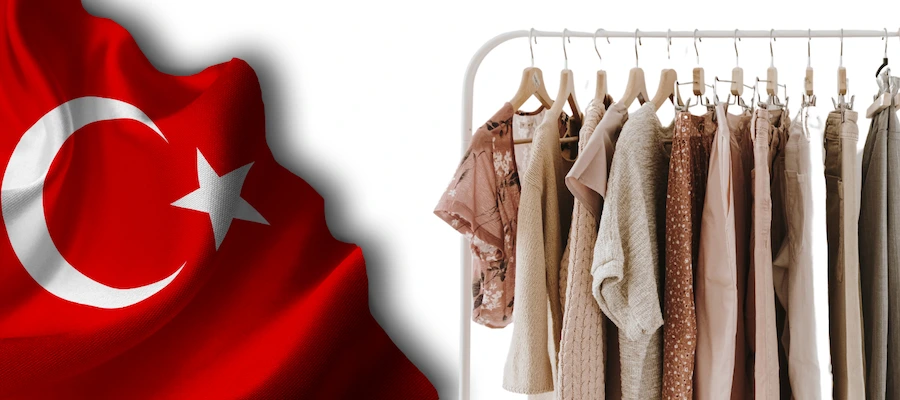
Where Chinese trade has often been characterized by large state-backed infrastructure deals — roads, ports, railways — Turkey’s penetration of the African market has come from the bottom up: through individual traders, family businesses, and the accumulated commercial relationships built one textile deal at a time. The Turkish flag above a Douala shopfront is, in its modest way, the end result of a foreign policy.
Outlook: What Comes Next for This Trade Corridor
The trajectory of Turkish textile in Africa will depend on several variables. The maturation of AfCFTA could, over time, create stronger incentives for intra-African textile production — potentially squeezing out even quality imports like Turkey’s. Rising African manufacturing ambitions, particularly in Ethiopia, Rwanda, and Senegal, could absorb market share. And if currency volatility or political instability disrupts Cameroonian traders’ ability to finance Istanbul sourcing trips, the current momentum could stall.
But for now, the direction is clear. African consumers are moving toward quality. Turkish manufacturers are positioned to supply it. And a generation of traders — nimble, well-networked, and increasingly sophisticated in their sourcing — are building the commercial infrastructure that formal trade statistics will only fully capture years later. The next chapter of Africa’s textile story is being written, one flight to Istanbul at a time.
What do you think?
The rise of Turkish textiles in African markets is more than a trade story — it is a signal of shifting consumer expectations, evolving geopolitics, and the quiet power of individual traders who move faster than policy ever could. But the picture is far from complete.
Is Turkish dominance in African clothing markets sustainable long-term, or will rising African manufacturing capacity — backed by AfCFTA — eventually close the door on imports? And what does this mean for domestic producers in countries like Cameroon, already fighting for survival? We want to hear from industry professionals, traders, and readers on the ground.
Share your perspective in the comments below — your insight shapes our next analysis.











