The Middle East and North Africa (MENA) region has quietly become one of the most strategic apparel manufacturing hubs in the global fashion supply chain. Competitive labor, proximity to Europe, preferential trade agreements, and growing sustainability standards have reshaped the region’s role in international sourcing. At the center of this transformation stands Classic Fashion, widely recognized as the largest garment manufacturer in the MENA region.
From Jordan to Global Supply Chains
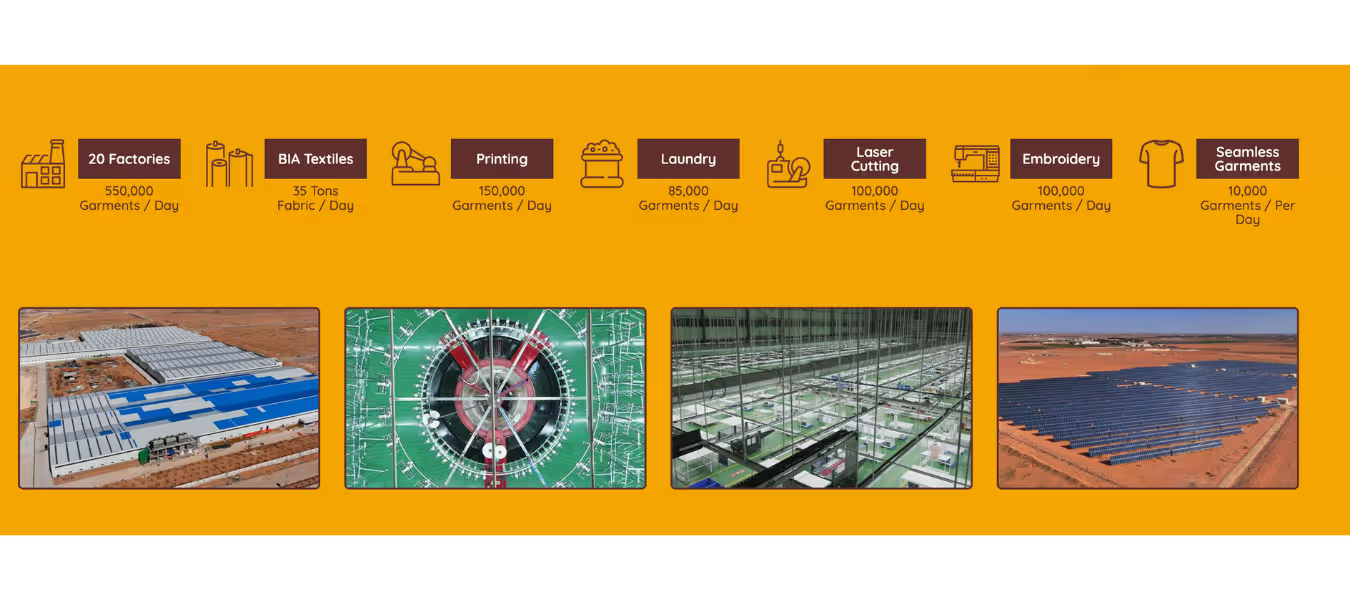
Founded in 2003 and rooted in Jordan, Classic Fashion has evolved from a regional producer into a global-scale manufacturing powerhouse. Today, the company operates 20 advanced factories, supported by satellite units, and produces up to 550,000 garments per day. With a workforce of approximately 36,000 employees, it is not only the region’s largest apparel producer but also its biggest employer in the garment sector.
Jordan’s unique positioning has played a critical role in this success. Preferential access to the US, European, and Canadian markets, combined with a stable industrial ecosystem, has allowed Classic Fashion to integrate seamlessly into global retail supply chains.

Scale, Speed, and Specialization
What truly distinguishes Classic Fashion is not just scale, but operational depth. The company has vertically integrated capabilities that cover nearly every stage of garment production:
- Fabric processing exceeding 35 tons per day
- Printing capacity of around 150,000 garments per day
- Laundry and finishing reaching 85,000 garments per day
- Laser cutting and embroidery operations handling up to 100,000 garments daily
- Seamless garment production, addressing the growing demand for performance and comfort wear
This breadth allows the company to deliver high-volume orders while maintaining flexibility for diverse product categories, from basics to premium and performance apparel.
Also Read: Jordan’s Textile & Apparel Industry: Small But Significant
Trusted Partner to Global Brands
Classic Fashion’s client portfolio reflects its credibility on the international stage. The company supplies apparel to some of the world’s most demanding brands across the United States, Europe, and Canada. What makes these partnerships sustainable is strict compliance with labor welfare standards, transparent operations, and rigorous quality control systems.
Notably, many client brands operate their own accredited laboratories directly inside Classic Fashion’s facilities, a strong signal of trust and long-term collaboration. This embedded oversight model ensures consistency, traceability, and alignment with global compliance requirements.
Industry 4.0 and Technology Leadership
Positioned firmly within the fourth industrial revolution, Classic Fashion has embraced Industry 4.0 practices, integrating advanced automation, robotic processes, and SAP-based ERP systems across its operations. This digital backbone improves production planning, reduces waste, enhances traceability, and enables faster response to changing market demands.
In a region where many manufacturers still rely on labor-intensive legacy systems, this level of technological adoption places Classic Fashion several steps ahead of its regional peers.
Sustainability as a Core Strategy
Sustainability at Classic Fashion is not treated as a marketing slogan but as a structural pillar of growth. The company aligns its operations with the United Nations Sustainable Development Goals, Jordan’s Vision 2025, and national economic growth plans. Environmental protection, responsible resource use, and employee welfare are embedded into daily operations.
This approach has earned recognition from authorities, communities, and international buyers, reinforcing Jordan’s image as a responsible and labor-friendly apparel sourcing destination.
People-Centered Manufacturing
Behind the factories and technology lies a strong people-first philosophy. Classic Fashion’s leadership emphasizes transparency, trust, and ethical conduct as the foundation of long-term success. The company’s Code of Business Conduct and Ethics reflects over two decades of operational experience and places employee welfare at the heart of decision-making.
This culture has positioned Classic Fashion as a role model within Jordan’s industrial sector, contributing significantly to national garment exports while maintaining a reputation as one of the most labor-friendly employers in the country.
Why Classic Fashion Matters to the MENA Region
As global brands diversify sourcing away from traditional Asian hubs, the MENA region is gaining strategic importance. Within this shift, Classic Fashion represents a blueprint for what large-scale, compliant, technology-driven, and sustainable garment manufacturing can look like in the region.
Its success demonstrates that the MENA region is no longer just an alternative sourcing option—it is becoming a core pillar of the global apparel industry.
What do you think about the rise of large-scale garment manufacturing in the MENA region?
Share your perspective in the comments and let us know how you see the future of apparel sourcing evolving.