






In recent years, Africa has emerged as one of the most promising frontiers for the global fashion and textile industry. With its young population, rich cultural heritage, and expanding digital ecosystem, the continent is no longer just a source of raw materials, but a growing hub for creativity, entrepreneurship, and value-added production. At the heart of this transformation stands Fashionomics Africa, a flagship initiative launched by the African Development Bank (AfDB) to reposition Africa within the global fashion value chain.
What is Fashionomics Africa?
Fashionomics Africa is a pan-African platform designed to empower micro, small, and medium-sized enterprises (MSMEs) operating in the textile, apparel, and accessories sector. Its main objective is to connect African designers and fashion entrepreneurs with markets, finance, knowledge, mentors, and investors across the world. A strong focus is placed on women and youth, two critical drivers of Africa’s future industrial growth.
Beyond commercial goals, Fashionomics Africa also plays a cultural role by promoting Made-in-Africa identity, preserving traditional craftsmanship while integrating it with contemporary design and global fashion standards.
Why Textile, Apparel and Accessories?
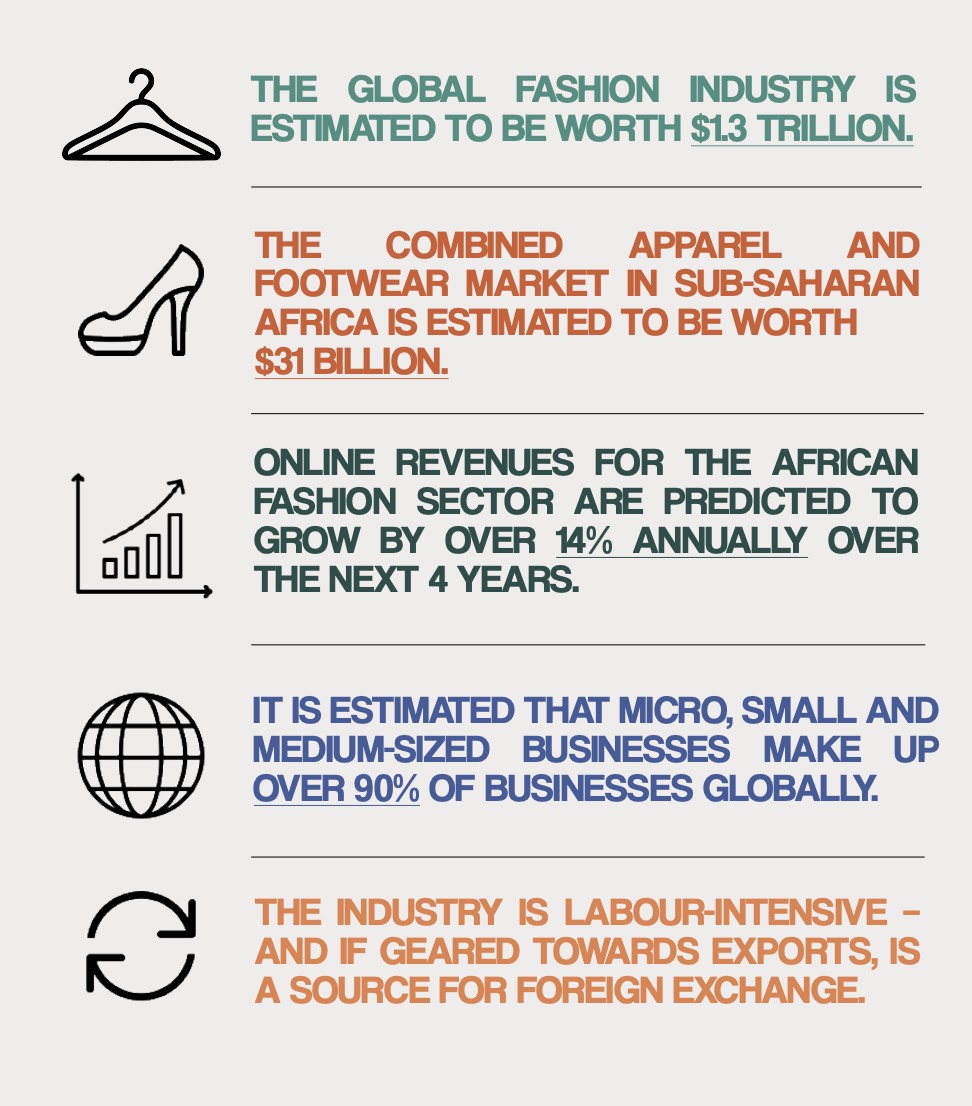
The fashion industry represents a massive economic opportunity for Africa. Globally, the fashion sector is valued at over USD 1.3 trillion, while the combined apparel and footwear market in Sub-Saharan Africa alone exceeds USD 31 billion. Moreover, online revenues in African fashion are expected to grow by more than 14% annually in the coming years.
Textiles and apparel are among the most labour-intensive industries, making them ideal for job creation, export development, and industrialisation. With over 90% of businesses globally being SMEs, Fashionomics Africa targets exactly the segment that can generate scalable impact across the continent.
How Does Fashionomics Africa Work?
The platform is built around three strategic pillars:
- Learning – offering masterclasses, webinars, reports, and market intelligence to build business capacity.
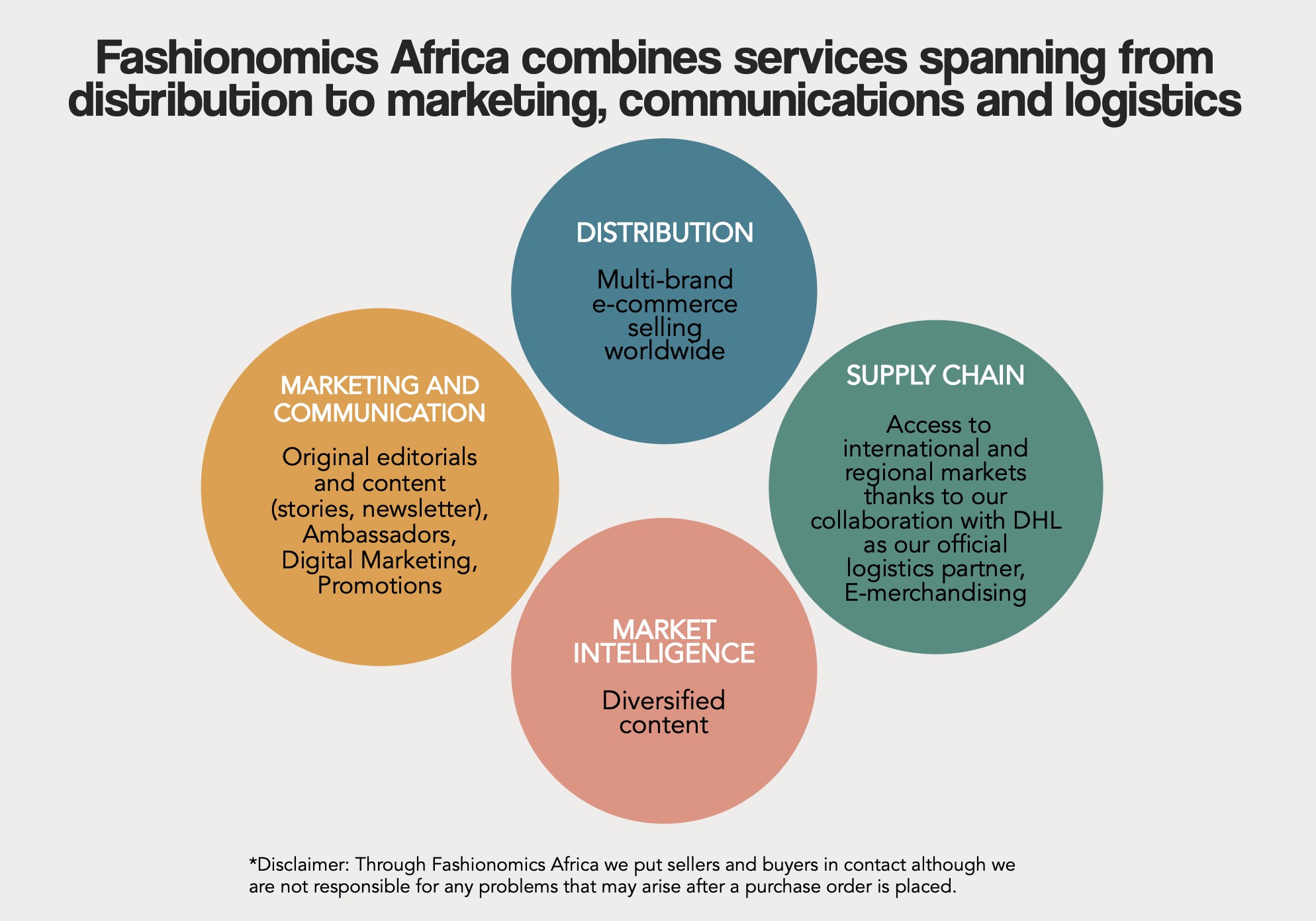
- E-commerce – enabling African brands to sell globally through digital marketplaces, supported by logistics partners such as DHL.
- Networking – connecting designers, manufacturers, buyers, investors, service providers, and institutions.
This integrated model transforms Fashionomics Africa into a complete ecosystem, not just a marketplace.
Digital Platform & Services
Fashionomics Africa operates one of the first pan-African B2B and B2C digital platforms dedicated to fashion and textiles. Through its mobile application and online marketplace, entrepreneurs can access:
- Global distribution channels
- Supply chain solutions
- Digital marketing tools
- Editorial content and storytelling
- Market data and trend analysis
The marketplace has now migrated to Afrikrea (ANKA), one of Africa’s largest fashion e-commerce platforms, enabling sellers to ship worldwide and receive payments through international and local systems.
Education, Market Studies & Trade Shows
Beyond digital tools, Fashionomics Africa is highly active in capacity building. It has trained over 2,500 entrepreneurs, 65% of whom are women, across countries such as Nigeria, Kenya, South Africa, Ethiopia, and Rwanda.
Its market studies explore strategic sectors such as jewellery manufacturing, sustainable value chains, and women-led enterprises. Meanwhile, Fashionomics Africa trade shows and international partnerships help African brands enter global markets, attract investment, and build international visibility.
Why Fashionomics Africa Matters?
Fashionomics Africa represents a shift from exporting raw materials to exporting creativity, design, and intellectual value. It aligns perfectly with Africa’s long-term industrial goals: sustainability, circular economy, digitalisation, and inclusive growth.
For investors, it offers access to one of the world’s fastest-growing creative economies. For designers and manufacturers, it provides the tools needed to compete globally. And for Africa as a whole, it marks a strategic move towards owning a larger share of the global fashion value chain.











