




▶︎ In Brief:
Jordan’s textile and apparel industry is a key economic pillar, contributing over 27% of exports and employing 75,000 workers. Supported by U.S. trade deals and QIZs, it faces rising competition, labor challenges, and energy costs—but remains a top sourcing hub for major global brands.
The textile and apparel industry in the Hashemite Kingdom of Jordan — a Middle Eastern country sandwiched between Israel, Saudi Arabia, Iraq and Syria — is relatively small, but it is one of Jordan’s main industrial sectors.
In that country, which has a population of more than 9.5 million and a labor force of nearly 3 million, the textile and apparel industry employs approximately 75,000 people, according to the World Bank, and the apparel sector accounts for approximately 27 percent of export earnings.
In 2019, Jordan’s exports of textile yarn, fabrics, made-up articles, related products and apparel totaled US$2 billion, according to the Central Bank of Jordan’s (CBJ’s) preliminary figures.

Trade Agreements
The garment industry in Jordan has expanded rapidly over the past fifteen years. Jordan’s textile and apparel industry has benefited from numerous free trade agreements (FTAs) the country has signed as part of efforts to strengthen international cooperation and trade and increase its exports. Jordan has signed FTAs with the United States, European Union, European Free Trade Association, the Greater Arab Free Trade Area, Morocco, Turkey, Singapore and Canada.
Both the Jordan-United States FTA and the Qualified Industrial Zone (QIZ) agreement have significantly increased Jordan’s access to the U.S. market. The Jordan-United States FTA went into force in 2001 and allows Jordanian products to enter the United States duty-free.
The QIZ agreement went into force in 1996 and allows Jordanian products made in designated areas and containing Israeli inputs to enter the United States duty-free and quota-free. Together, the agreements have contributed to an increase in Jordan’s apparel and textile exports to the United States from US$50 million annually before 1999 to US$1 billion in 2010, according to a MENA Knowledge and Learning report published by the World Bank in February 2012. In 2010, the United States constituted 93 percent of Jordan’s total apparel exports, the CBJ reports.
Jordan’s exports to the United States go through two main seaports in the Middle East, Aqaba and Haifa, which are among the fastest suppliers to the East Coast and offer shipping lead times of less than three weeks.
The Jordanian textile and apparel industry’s U.S. customers include brands and retailers such as Gap, JCPenney, Levi Strauss & Co., Liz Claiborne, Calvin Klein, Tommy Hilfiger, Walmart, Kmart, Limited, Sears, Columbia, New York Laundry and Victoria’s Secret.

Possible Setbacks
Jordan has been faced with numerous issues impacting its textile and apparel industry. Decreasing natural gas supply to the country and increasing oil prices have necessitated the import of more expensive fuel to generate electricity. This energy crisis, combined with regional tensions and the global economic downturn, has contributed to a slowdown in Jordan’s economic growth.
Another problem with Jordan’s textile and apparel industry is labour unrest. Several of the country’s news agencies have reported strikes by factory workers demanding increased wages, improved health insurance coverage and other benefits. Earlier this year, the Institute for Global Labour and Human Rights reported labour violations at a Jordanian apparel factory, alleging that hundreds of guest workers were forced to work overtime hours without adequate pay or health benefits.
More than two-thirds of jobs in Jordan’s textile and apparel sector are held by guest workers, primarily from Bangladesh, India and Sri Lanka. The Ministry of Labour has urged employers in the sector to reduce their dependence on foreign employees — especially considering Jordan’s high unemployment rate, which was 12.9 percent in 2017, according to Jordan’s Department of Statistics.
Last year, the Jordan Garments, Accessories, & Textiles Exporters’ Association announced there were 5,000 available jobs for Jordanians in apparel factories, but the organization was unable to fill the openings. The Ministry of Labour is offering vocational training programs to Jordanian workers in conjunction with Better Work Jordan’s efforts to boost domestic employment.
Future of Jordan’s Textile & Apparel Industry
The Jordanian government has set up a comprehensive five-year national program for economic reform, and is receiving financial support from the International Monetary Fund, which has approved a three-year US$2.06 billion Stand-By Arrangement to help implement the program.
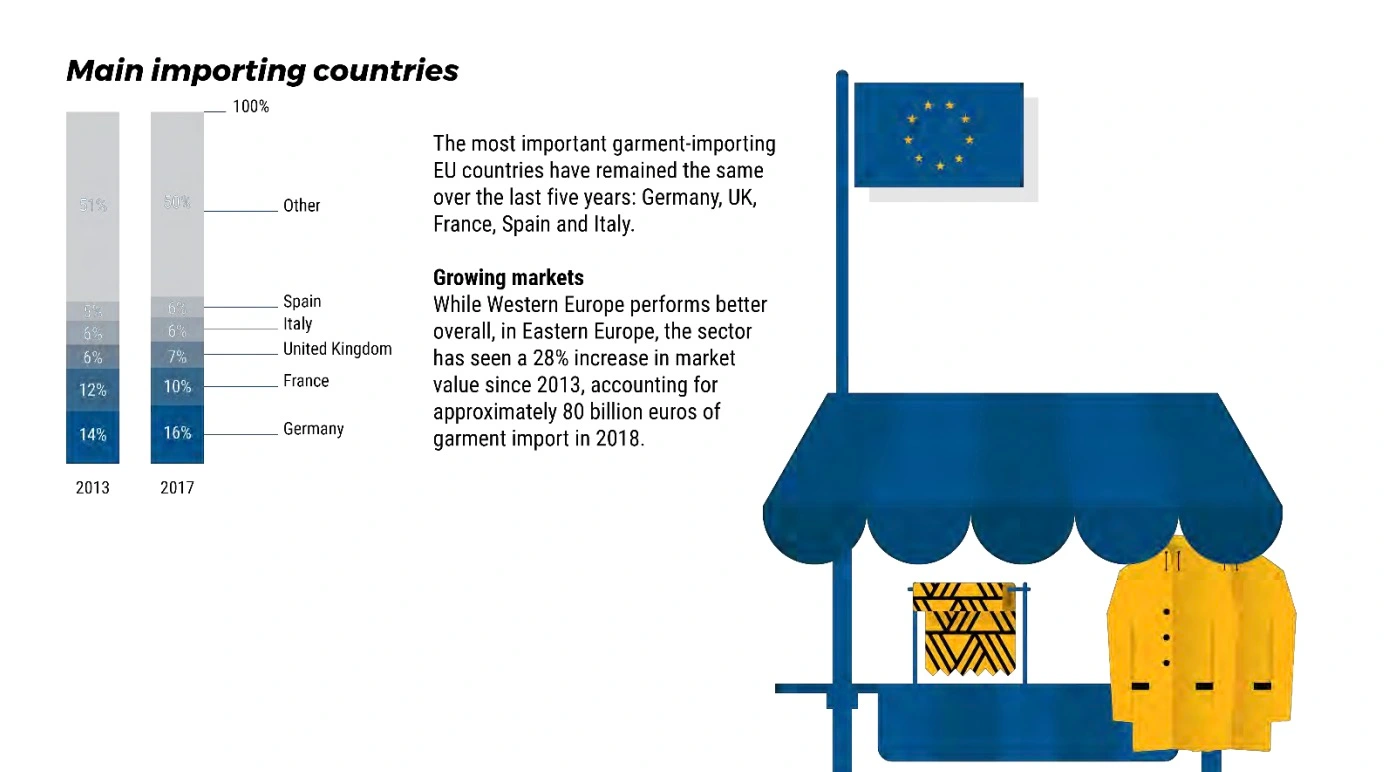
Jordan has a good opportunity to attract foreign investment in the textile and apparel sector, as many countries in the region — particularly Iran, Iraq, Syria, Lebanon and Egypt — are experiencing political unrest. The sector holds great potential for the Jordanian economy, especially if it is given adequate support by the government.
Jordan’s textile sector still has a lot to boast of Mounting labour problems and other setbacks have not discouraged some well-known brands to choose Jordan over other countries for textile and garment manufacturing.
The broad contours of Jordan’s textile sector present an encouraging face, but the country struggles to portray a reasonable picture as far as its textile workers are concerned.
The problems and challenges are many for Jordan’s textile sector, but the industries flourish as exports rise and well-known names in the apparel sector continue to support and prefer Jordan over other countries.
Jordan garment sector: Exploitation of migrant workers
Jordan’s garment sector is booming, driven by a free trade agreement with the United States and cheap migrant labour from South and Southeast Asia. Historically the situation of these vulnerable workers has been dire and although there have been some real improvements in recent years, systemic problems around migrant workers’ legal status and recruitment means serious abuses continue to occur. The potential for progress to be undone is heightened by the influx of an estimated 1.3 million Syrian refugees.
Why Garment Made in Jordan?
Textiles play a big part in the Jordanian culture and that of the area around it. Throughout history, Jordanians have used textiles in practical, day-to-day uses; in architecture, as we see in Bedouin tents, furniture, products, and clothing and fashion. More than that, textiles have been an important part of the culture and identity of a place, reflecting its history, lifestyles, economy, and values.
- Jordan -US Free Trade Agreement
- Zero Custom Duties NO Tariff Duties
- Support Migrants And Syrian Refugees
- High Labour Standards
- International Compliance
- Collective Bargaining and Freedom Of Association
- Enhanced Gender Equality
- Workers Center and Welfare Facilities
- Occupational Safety and Health Management System

$1.1 million to boost leather and textile industries in Jordan
The leather and textile industry sector is a vital engine to the national economy, as it contributed to about 27 percent of the total exports in 2019, Minister of Industry and Trade state.
In remarks during the launching ceremony of a project to enhance the competitiveness of the leather and textile industries sector in Jordan (MENATEX), implemented by the International Trade Center (ITC) in cooperation with the Industry Ministry and the Jordan Chamber of Industry, and funded by the Swedish government, the minister pointed out that the sector faces great challenges of which efforts must band together to turn them into opportunities.

Project’s Manager in Jordan, Iman Bseisu, said that ITC has evaluated the needs of the small and medium-sized enterprises (SMEs), the sector’s mechanism of work and its priorities.
‘The $1.1 million project aims at improving the environment for companies in the textile sector, by training workers on international best practices that qualify them to enter the global markets’, ITC’s advisor of the Textiles and Clothing, Abdul Latif Obaid, said.
‘About 20 companies were chosen to benefit from the project’s technical support to enhance production, export and sustainability standards,’ he said, adding that the project is part of the MENATEX regional program, which covers 4 countries: Jordan, Egypt, Tunisia and Morocco.
About Jordan
The Hashemite Kingdom of Jordan is a small country with few natural resources, but it has played a pivotal role in the struggle for power in the Middle East.
Jordan’s significance results partly from its strategic location at the crossroads of what Christians, Jews and Muslims call the Holy Land.
The Kingdom of Jordan
Capital: Amman
- Population: 9.5 million
- Area: 89,342 sq km (34,492 sq miles)
- Major language: Arabic
- Major religion: Islam
- Life expectancy: 72 years (men), 75 years
Jordan’s textiles, garments and accessories segment pushes into new markets
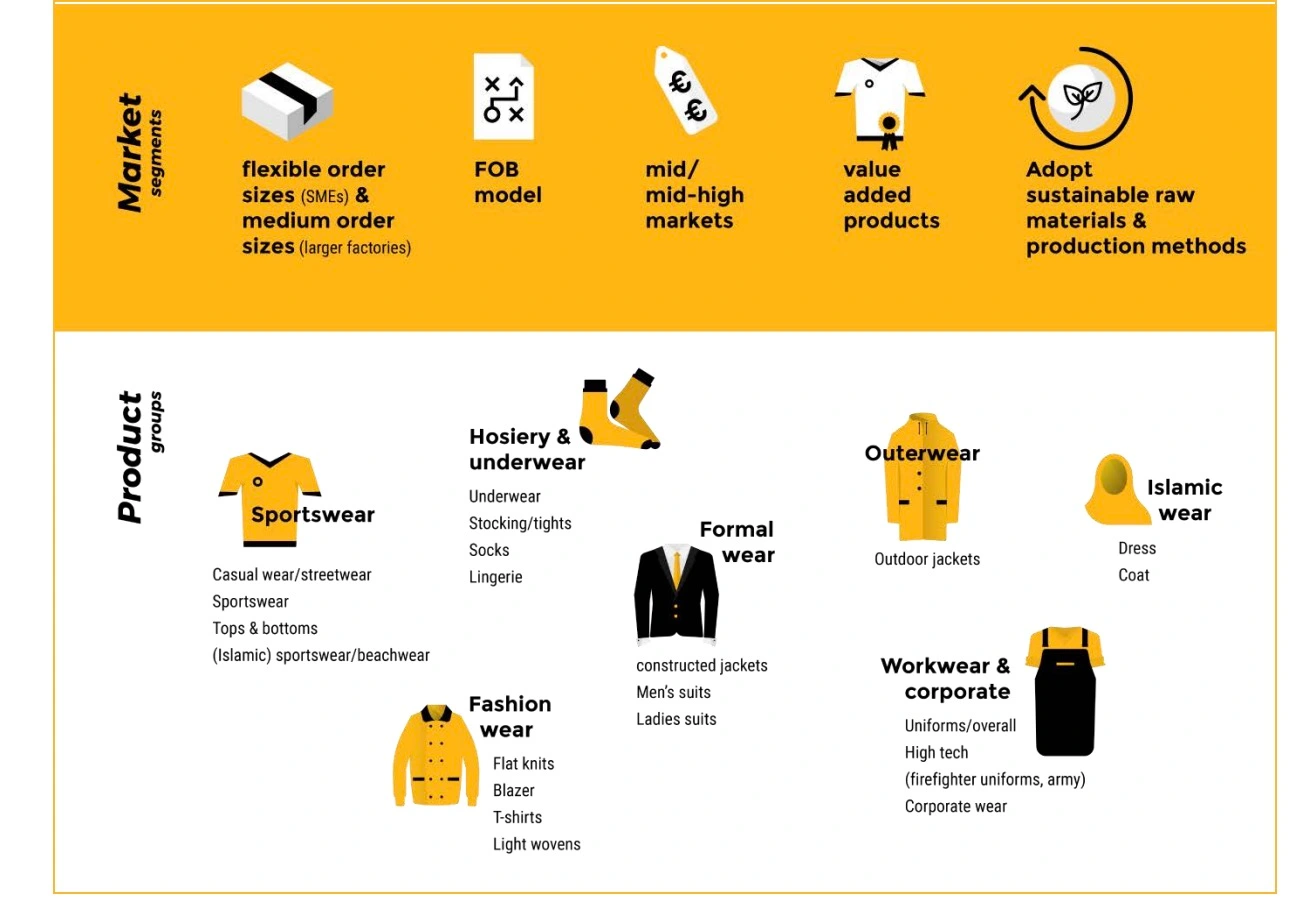
The textiles, garments and accessories segment has been a success story of Jordan’s industry. The ready-wear, footwear and fabric manufacturers have grown despite difficult business environments. The segment is likely to benefit from a relaxation of the rules of origin (ROO) agreement with the EU, as more companies raise standards to meet materials-sourcing and employment criteria.
Companies are set to create agreements with larger suppliers in Europe, replicating the other successful examples. “What we need to do is use the experience we have gained in the US market to establish the EU as a more major export partner,” Fares Hammoudeh, chairperson of the Zarqa Chamber of Industry, told OBG.
The industry faces challenges of cost management and competition, and there is a need to innovate and produce more value-added products. This will require a shift in output from staples to designer items, and from bulk supplying to cultivating branded chains. These may be some way off, but signs point to Jordan’s garment manufacturers moving the market in this direction.
Facts & Figures
According to the Department of Statistics, Jordanian clothing manufacturers exported JD1.11bn ($1.6bn) worth of products in 2017, equivalent to 24.9% of export earnings. When JD537,700 ($759,000) in footwear exports and JD28.7m ($40.5m) in yarn, fabrics, made-up articles and related products are added, the percentage rises to 25.5%. Only chemicals exported more, at JD1.5bn ($2.1bn).
Clothing producers have reported consistent export growth in recent years, of 2.7% and a value of JD1.02bn ($1.4bn) in 2016, 7.8% in 2015 (JD979.1m, $1.38bn), 12.1% in 2014 (JD908.2m, $1.28bn) and 9.7% (JD810.1m, $1.1bn) in 2013, bucking the more mixed trend overall. The total export value declined in 2015 and 2016 from a high of JD5.2bn ($7.3bn) in 2014, as regional conflicts and economic softening took their toll.
Segment History
The garment sector began to take off in 1996 with the signing of the qualifying industrial zones (QIZs) agreement with the US. Under this, Jordanian manufacturers were given tariff- and quota-free access to the US market if they used a certain portion of inputs from Israel, the US, Jordan and the Palestinian Territories (see overview). Manufacturers were given designated production areas, the first of which was the Al Hassan Industrial Estate at Irbid, which began operations in 1998.
Additional QIZs have been created since then, with 14 in existence at the end of 2016. The removal of tariffs and quotas was a boon for the garment segment, as import tariffs on these goods were particularly high in the US at the time.
In the years of the QIZs, Jordanian garment manufacturers made agreements directly with large stores and outlets in the US, along with bulk textile and clothing manufacturers there.
The US outfits established reliable supply chains, good relationships and long-term contracts, while Jordanian products became more well known and in demand.
However, in 2001 a free trade agreement was signed between Jordan and the US, removing some competitive advantages of the QIZs. Nonetheless, the majority of garment firms remain there, with the three largest at Dual, Sahab and Irbid. QIZs mainly produce men’s and women’s apparel.
Boosting Trade
The garment segment was thought to be the main beneficiary of this. Yet, as of early 2018 just 11 Jordanian companies met the ROO conditions, and only three of these were engaged in trading, according to the Ministry of Planning and International Cooperation.
While few businesses have taken advantage of the relaxation of the ROO, many can export qualified goods to the EU. Indeed, the kingdom already does substantial trade with the bloc, recording JD124m ($174.9m) in exports and JD3.17bn ($4.5bn) in imports in 2017.
“We need to get out of the formalities of the agreement and into the practice,” Hammoudeh told OBG. Making business-to-business connections is the next step towards this transition.
The government is ready to assist with agencies such as the Jordan Enterprise Development Corporation and the Industrial Development Directorate. Individual chambers of the industry have a major role to play in solidifying partnerships as well, attempting to directly match members with major EU industrial and commercial players.
The next advantageous development target of garment firms may be domestic designer brands and becoming a sourcing place for international brands to produce in Jordan, with a booming local fashion designer scene emerging. The domestic high-end fashion industry may be in its infancy compared to more established markets, but branded products represent the most value-added line of the industry and are an area that manufacturers could more aggressively pursue.
Structure and Governance
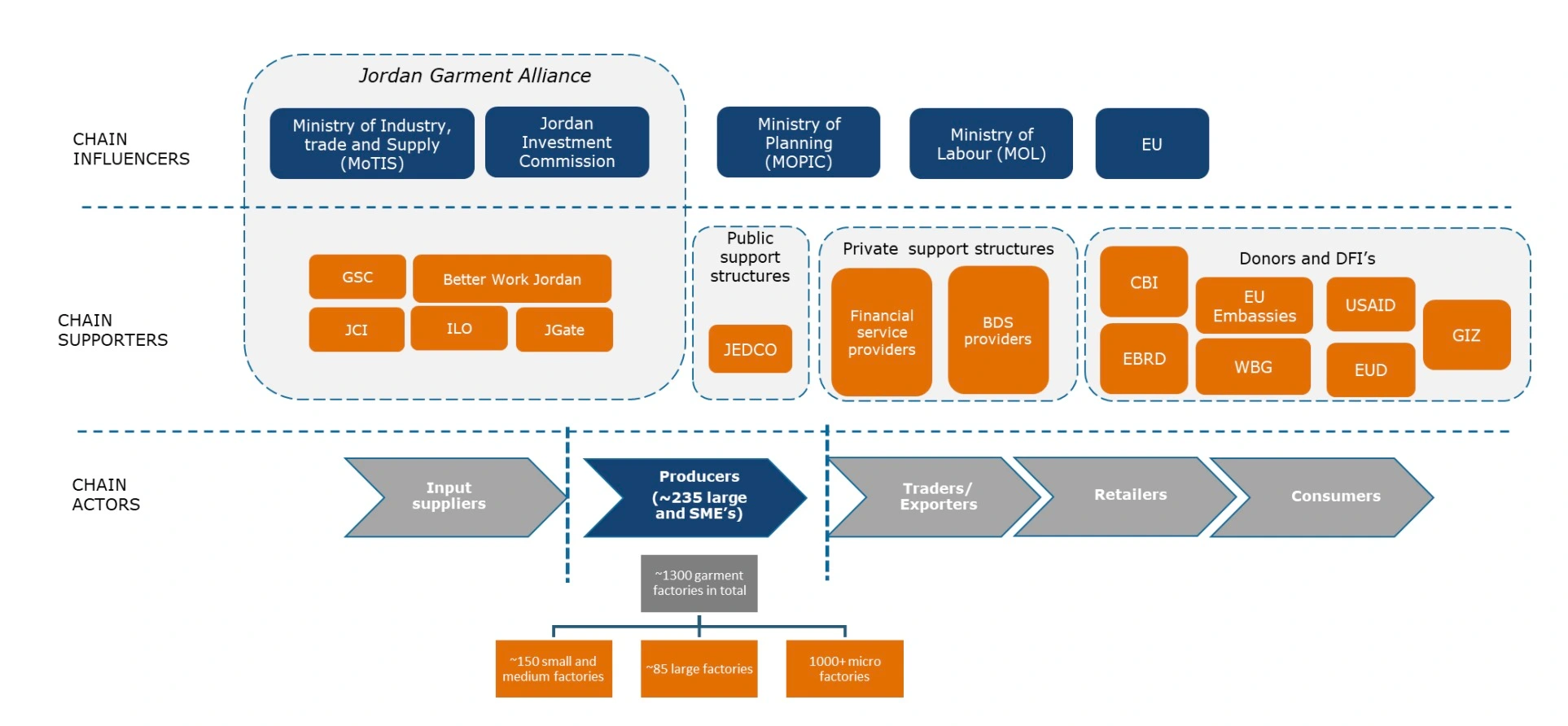
This section will introduce the key players in Jordan’s garment export value chain. Garment factories do not only work with a range of suppliers and clients, but are also affected by the support and activities of various public and private sector actors. We will introduce these relevant players on the sidelines of the garment production, and discuss how they could play a role in the export sector development.
Key value chain stakeholders
Governmental organisations:
• Ministry of Trade and Industry
• Jordan Investment Commission
• JEDCO
Private sector organisations:
• GSC: The Garment Design & Training Services Center (GSC)
• JGate: Jordan Garment Accessories and Textile Exporters Association
• JCI: Jordan Chamber of Industry
• ACI: Amman Chamber of Industry
• The Garment Alliance
Trade unions and labour unions:
• The General trade Union of Workers in Textile, Garment & Clothing Industries (JTGCU)
• Textile and Readymade Clothes Syndicate
International organisations:
• ILO: The International Labour Organisation & the Better Work Programme
• The World Bank
• USAID
• Netherlands Enterprise Agency
• PUM
• GiZ
• EBRD
• The Confederation of Danish Industry (DI)
• ITC
Certification
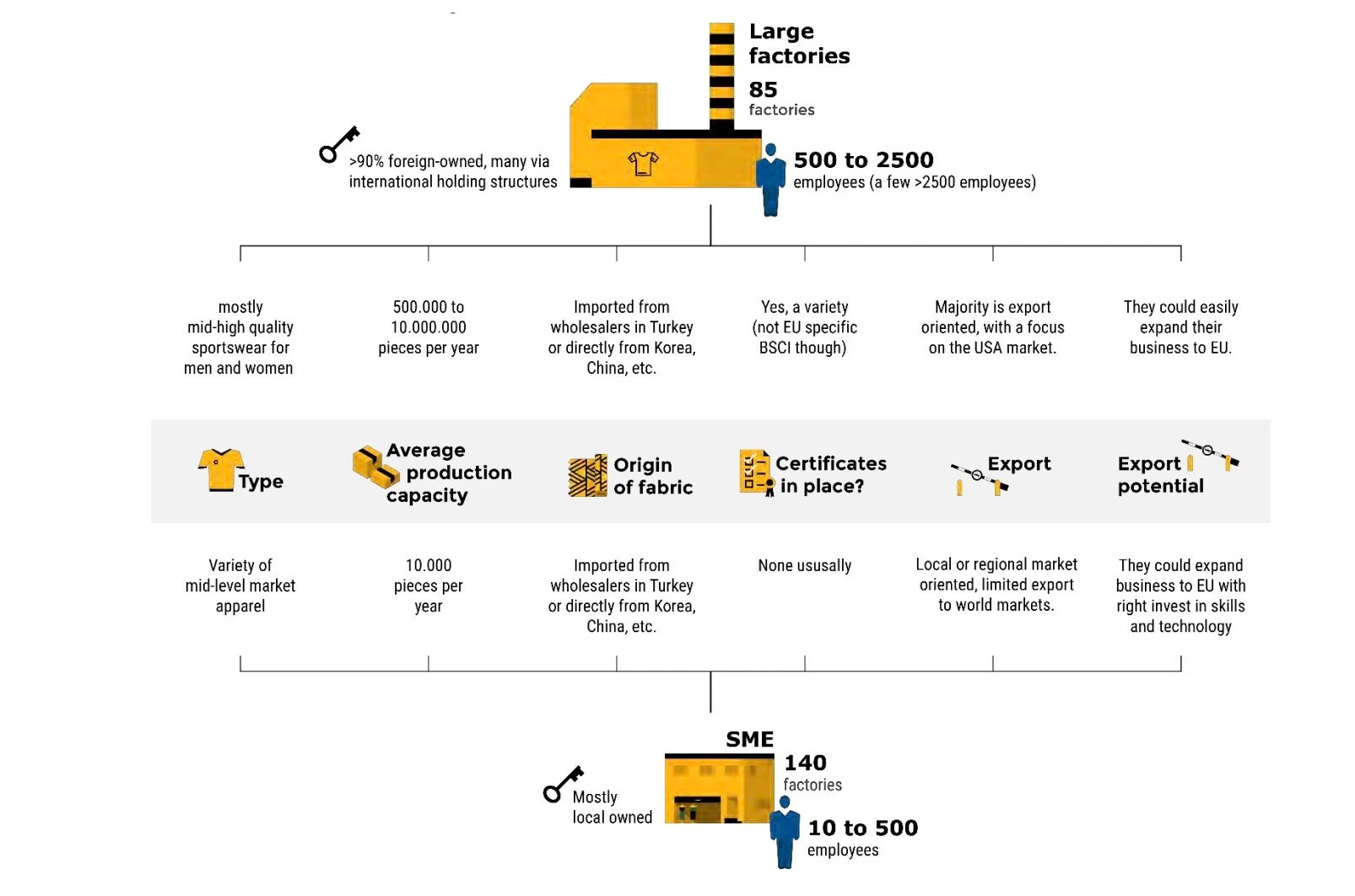
The interviewed SMEs generally do not see the need for investing in certifications, as they are not required by their buyers. This covers both local buyers as well as regional buyers from the Middle East.
Only companies exporting to Westerns countries including the EU and the US tend to have certain international certification standards in place. This is a firm requirement on the buyers’ side. The list below introduces the key national and international certification requirements for export.
National standards:
• CTPAT — anti-terrorism;
• Golden List — Ministry of Labour;
• Better Work Jordan ILO — labour standards;
International standards:
• ISO 14001 — environmental management system;
• HIGG index — a self-assessment tool to measure the environmental impact of textile companies;
• SEDEX — social auditing certification system, mostly for UK markets;
• Amfori — previously BSCI, a social auditing system that is used by most EU buyers.
• Fairwear — based on eight labour standards derived from ILO Conventions and the UN’s Declaration on Human Rights;
• WRAP — platinum, gold or silver, mostly for US markets;
• ISO 9001 — quality management system.
Top Textile Manufacturers in Jordan

Classic Fashion Apparel Industry Ltd. Co.
Website: www.classicfashionapparel.com
Tel: +962 273 91369
Email: info@classicfashionapparel.com
Classic Fashion, headquartered in Jordan, is the largest apparel manufacturer in the MENA region, with an annual turnover of $610 million. It produces 450,000–500,000 garments daily across 200 styles monthly and accounts for over 30% of Jordan’s total garment exports. Employing 30,000 workers from multiple nationalities, the company operates 16,000 machines in 12 factories and 7 satellite units. In 2019, Classic Fashion produced 100 million garments, with a projected 120 million in 2020 using Industry 4.0 systems. Its product range includes sportswear, swimwear, golf wear, outerwear, denim, and casual apparel for global markets.

Needle Craft for Clothing Industry
Website: www.ncljo.com
Phone: +962 5 3825680 -1
Email: info@ncljo.com
Founded in 2000, Needle Craft has grown into a trusted name in high-quality apparel manufacturing for global markets. The company is dedicated to delivering premium products on time, at competitive prices, while continually improving customer satisfaction. Guided by a vision to become a market-driven, diversified organization, Needle Craft focuses on innovation and consistent quality. Beyond products, the company invests in its people—fostering an empowering and growth-oriented work environment. With a strong commitment to excellence and adaptability, Needle Craft aims to remain a preferred apparel partner worldwide through sustained value creation and performance.

Hi-Tech Textile L.L.C.
Website: www.hitech-textile.com/jordan/
Phone: +962 – 5 3825 169 / 320 / 530
Email: info@hitech-textile.com
Established in May 2000 in Jordan’s Ad-Dulayl QIZ, Hi-Tech Textile LLC is a trusted name in casual bottoms production, backed by decades of industry expertise. As part of the renowned Fair Deal Textiles Group (since 1960), Hi-Tech blends legacy with modern innovation. Specializing in design, embroidery, and both dry and wet garment processing, the company delivers 35,000 dozen pieces per month. With a team of skilled professionals from South Asia, Hi-Tech is committed to quality, efficiency, and competitiveness—earning the trust of global partners through consistent performance and customer-centric service.
JORDAN APPAREL INDUSTRY
The apparel industry is considered one of the main industrial sector in Jordan contributing more than 40% of Jordan’s total exports and employing more than 75,000 employees. Jordan’s success story with the apparel industry was initiated by the Qualified Industrial Zones agreement which was signed in 1999 between Jordan, Israel and the United States. The agreement grants any product manufactured within the QIZ preferential duty-free and quota-free access to the United States.
QIZs have attracted huge investments into Jordan from various parts of the world and in the year 2016, Jordan’s apparel exports to the U.S. topped 1.6 billion dollars. In addition to the QIZs, the Jordan-U.S. Free Trade Agreement which was singed in 2001 offers preferential duty-free treatment for all of the apparel products.
Currently, Jordanian manufacturers are serving leading U.S. companies such as Polo Ralph Lauren, One Jeanswear Group, Wal-Mart, Sara Lee, Perry Ellis, Sears, Liz Claiborne, JC Penny, Gap, Chaps, Victoria’s Secret, Target, Under Armor, Talbots, Macy’s, Nike, Adidas, Puma to mention a few.

Gai Fashion
President & CEO: Mohammad Nur Alam
Phone: Jordan +962796742457
Email: alam@gaifashion.com / info@gaifashion.com
Galaxy Apparel Industry employs over 1,000 skilled workers from Bangladesh, Sri Lanka, Nepal, India, and Jordan. The company ensures comprehensive welfare by offering competitive compensation, quality accommodation, nutritious meals, healthcare, entertainment, and social security benefits. All payments, including mandated wages, overtime, and allowances, are made promptly in compliance with local labor laws. Galaxy strictly adheres to legal limits on working hours and guarantees one day off every seven days. In rare cases of urgent shipment needs, alternative or additional holidays are provided to maintain fair treatment and employee satisfaction.

GTA Plastics – Hangers
Website: www.gtame.com
Phone: +971 4 88 17 166 / 8817159
Hanger Division: custsupp1@gtame.com
Founded in 2000 by industry veteran Mr. Rajan Lall, GTA is a key player in the Middle East and Africa’s plastics and garment accessory sector. As the exclusive licensee of Mainetti—the world’s largest hanger manufacturer—GTA offers innovative hanger solutions using K-Resin, polypropylene, and polystyrene. The company tailors products with custom colors, printing, and labeling to meet retailers’ diverse needs, including hangers for suits, coats, and lingerie. Backed by strong leadership, cutting-edge technology, and Mainetti’s global expertise, GTA sets the benchmark for quality, service, and sustainable innovation in garment trims and accessories.

Rainbow Jordan
Website: www.rainbowjordan.com
Mail: INFO@RAINBOWJORDAN.COM
Tel :+962-5-3825-801 / 802
Rainbow Textiles LLC (RTL), located in Jordan’s QIZ zone, is a leading activewear and knitwear manufacturer for men and women, backed by over 30 years of textile expertise from a distinguished Pakistani group. With a modern, high-capacity facility, RTL stands out for its ability to handle a wide range of fabric types while maintaining robust quality controls. The company’s commitment to excellence is driven by a dedicated team focused on delivering premium products with zero compromise. At RTL, quality is not just a standard—it’s the core of its business philosophy.

EAM Maliban Textiles (Jordan) Pvt Ltd
Website: www.maliban.com
Azeem Ismail – Managing Director
Tel: +962 53824765
Email: general@jdn.maliban.com
Established 38 years ago, EAM Maliban Textiles stands as a pioneering force in Sri Lanka’s garment industry. Born in an era of limited technological access, the company quickly rose to prominence through bold leadership and relentless commitment to quality. Partnering with Melbourne for specialized wet processing, EAM Maliban delivers premium woven garments that meet the highest global standards. Renowned for consistent quality, on-time delivery, and operational reliability, the company continues to uphold its reputation as a trusted apparel exporter with full-spectrum manufacturing and finishing capabilities.

Akkad Carpet
Website: www.akkadcarpet.com/
Phone +962 7 7000 0112
Email: info@akkadcarpet.com
samir.akkad@hotmail.com
Founded by the pioneering Akkad family, Akkad Company for Carpets is one of Jordan’s largest and most prestigious textile manufacturers. Located in Al-Muwaqqar Industrial Development City, the state-of-the-art facility produces high-quality ground carpets, polyester yarns, and dyed yarns using advanced Belgian, German, British, and Italian machinery. As one of the earliest industrial leaders in Jordan, the company leverages the Kingdom’s strategic location to foster strong regional trade. Continuous innovation, world-class technology, and a deep commitment to quality have positioned Akkad as a leader in the Middle Eastern carpet and yarn industry.

JORDANIAN MODERN TEXTILE
Website: www.jordanianmoderntextile.com/
PHONE: +962 6 4020112
Established in 2002, Jordanian Modern Textile (JMT) is a family-owned manufacturer specializing in high-quality casual knitwear for men, women, and children, including T-shirts, trousers, tops, and training suits. Based on principles of service, integrity, and partnership, JMT has built a reputation for reliability and long-term client relationships. The company’s core philosophy is rooted in putting people and principles first, ensuring consistent quality and customer satisfaction. By fostering strong ties with clients, employees, and vendors, JMT continues to grow as a trusted name in Jordan’s textile industry, offering tailored solutions and unmatched service.

ATLANTA JORDAN
Website: www.atlanta.com.jo/
Tel: +962-6-4021836
ATLANTA JORDAN, a proud member of the QVE Apparel Group, stands as a symbol of modern efficiency and quality in the apparel industry. With a lean organizational structure and enhanced productivity, the company is strategically positioned to meet evolving market challenges. At the heart of its operations lies a relentless commitment to quality, continuous improvement, and operational excellence. ATLANTA JORDAN upholds the QVE Group’s core philosophy of adaptability and innovation, ensuring that clients receive exceptional value, timely delivery, and consistent performance in every order.

GARMENT DESIGN & TRAINING SERVICES CENTER
Website: www.gsc.com.jo/Default/En
Tel: +962 (6) 5620056
Email: programs@gsc.com.jo
The Garment Design & Training Services Center (GSC) is an establishment created through the direct support of Jordan Enterprise Development Corporation, Dedicated to provide specialized technical assistance and fashion training courses through local and International expertise.

Jerash Garment
Website: www.jerashholdings.com/
Tel: 201-285-7973
Email: enquiry@jerashholdings.com
Jerash Holdings is a leading manufacturer and exporter of custom, ready-made sportswear and outerwear, proudly serving top global brands like The North Face, Timberland, New Balance, Calvin Klein, Adidas, and American Eagle. Operating six factories and four warehouses in Jordan, our 5,700-strong workforce produces over 14 million garments annually. We offer duty-free, quota-free access to U.S. and EU markets under free trade agreements. While we operate at scale, quality remains our top priority—ensuring every piece meets the highest international standards.
Rich Pine International Group Jordan Textile Co.
Email: alaeddin@richpine.com.jo
Established in 2001, Rich Pine International Group Jordan Garments Manufacturing Ltd is a Private Limited Company based in Irbid City, Jordan. The organisation operates in the Clothing & Accessories, and Specialty REITs sectors.












we want to export textile & Garments products
Garments sewing mechanic 13 year experience
I used to work as a senior mechanic in Ethiopia and now I am working in Bangladesh
I want to go for work in textile mill such as dyeing spinning etc. 10 years experience in dyeing from me.
Respected kohan textile journal readers,
Pleased to introduce our Company as Dawood Javed Textiles Export, situated in Nishatabad , Faisalabad working in the Textiles Sector for many years.
We would also like to inform you that we deal in all kind of Fabrics and all Textile Items, however in the Dyed Fabrics such as
Fire Prove Fabrics, Water Prove Fabrics, Florescent Fabrics, Silk Fabrics, Satin Fabrics, Camouflage Fabrics, Uniform Fabrics, Karate Belt Fabrics, Cotton and Pc Twill Fabrics, Rib Stop Fabrics, Canvas Fabrics, Latah Black and White Fabrics and like 82×52/14×14 PC Twill Fabrics.
It is pleasure for us to let you know about our Products in Dyed as well as in Printed Fabrics such as in Home Textiles, Kitchen Accessories, Hospital Items, Hosiery Items, Martial Art Items and Garments Items.
Bed Sheets, Bath Towel, Kitchen Towel, Kitchen Gloves, Working Gloves, Working Suits, Scrub Suits, Bathrobe, Dungaree, Hajj Ahraam, Under Garments and all Garments Articles.
It would be so kind of you if you please give us the inquiry for the same, assuring you to provide the best quality as well as the better services in this regard.
Thanks,
Mirza Nazir Ahmad,
Marketing Manager,
Dawood Javed Textiles Export,
Address: Main Sheikhupura Road Malik Pur Stop, Nishatabad, Faisalabad, Pakistan
I have 15 years exp. in textile lab mainly for report review & report making to various buyer according to their standard. I am looking job in jordan textile industry.
I want to job in Jordan & anyone please help me in this regard. So I have lot of experience I quality assurance department as a final auditor. I am from Pakistan.
Hi,
I am with Style textile from last 5 years as a Senior internal Auditor.Now I’m looking for a job in jorden appearl textile .
Thanks and Regards,
Mudasir Ali
Sir,I am a sample cutting master