Reframing coating as a core textile engineering process
In the contemporary textile industry, coating has evolved far beyond its traditional role as a finishing step. It has become a defining process that directly influences the functionality, durability, and market value of textile products. Whether in technical textiles, nonwovens, or carpet applications, the ability to apply coatings with precision and consistency has become a critical competitive factor.
Within this context, the engineering approach developed by Zimmer Austria represents a significant shift in how coating systems are designed and implemented at industrial scale. Drawing on more than a century of technological experience, the company has positioned coating not as an isolated process, but as an integrated system where precision, flexibility, and efficiency must coexist.
A modular architecture for industrial flexibility
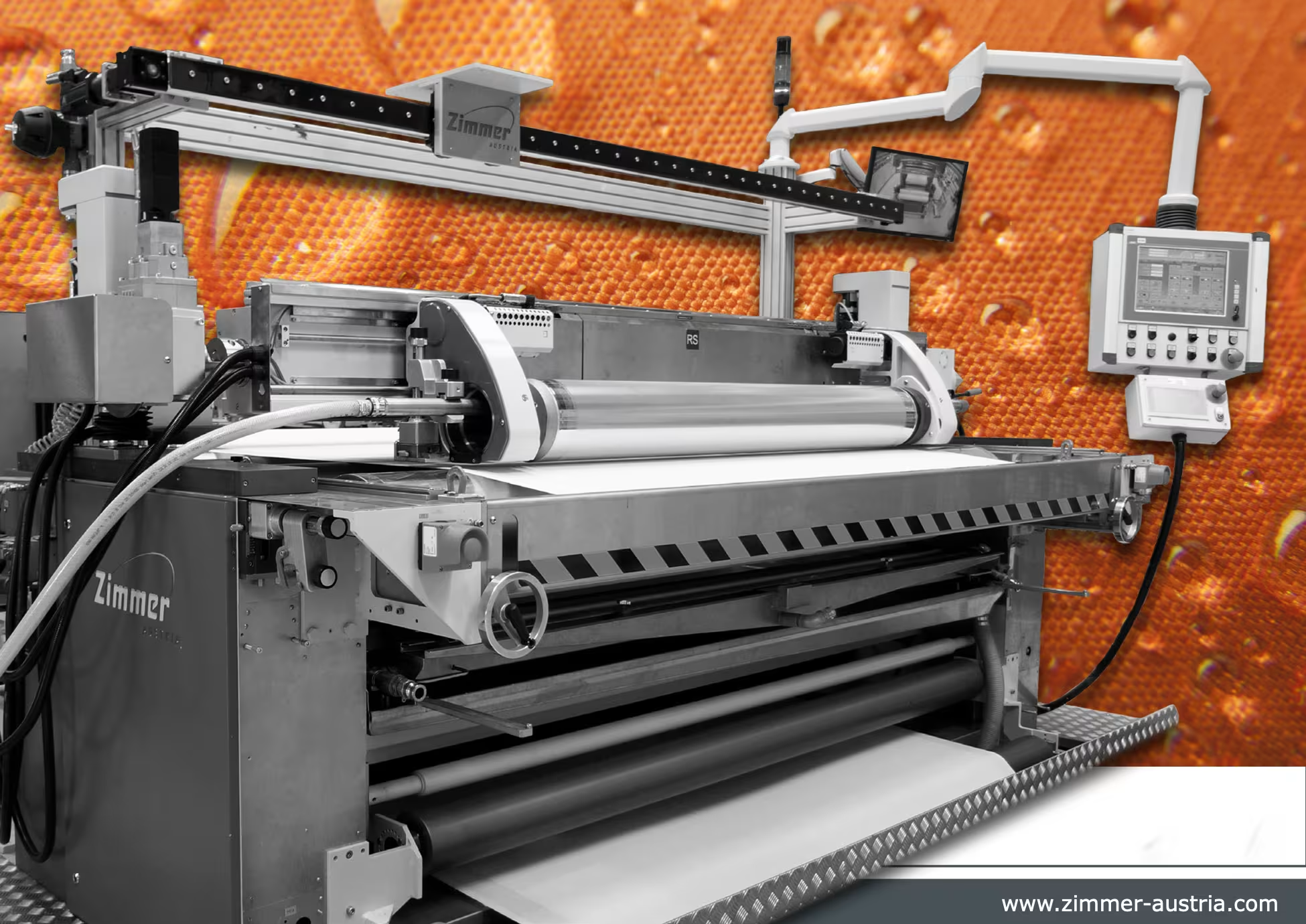
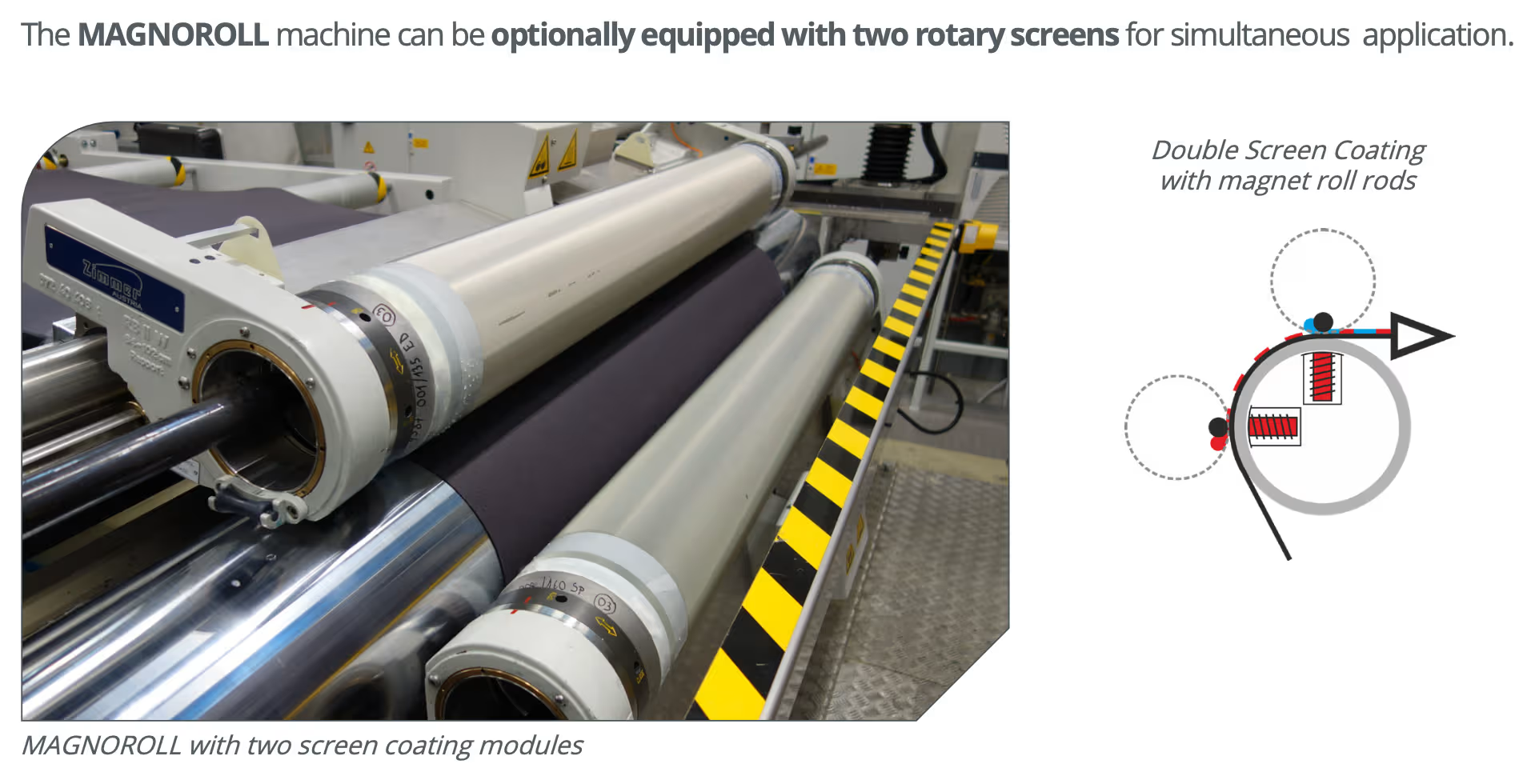
One of the defining characteristics of Zimmer Austria’s coating systems is their modular design philosophy. Rather than relying on dedicated machines for each coating technique, the systems are engineered to accommodate multiple application methods within a single platform. This approach allows manufacturers to transition between processes such as knife coating, screen coating, magnet roll coating, and slot coating with minimal interruption.
This flexibility is not simply a matter of convenience. In an industry increasingly driven by shorter production cycles and diversified product requirements, the ability to adapt quickly has become essential. By reducing changeover time and enabling multi-functionality within one machine, the modular concept directly contributes to improved operational efficiency and reduced production risk.
Precision as a foundation of coating performance
Achieving uniform coating across wide working widths remains one of the most complex challenges in textile processing. Variations in pressure, material behavior, or machine alignment can result in inconsistencies that affect the final product’s quality.
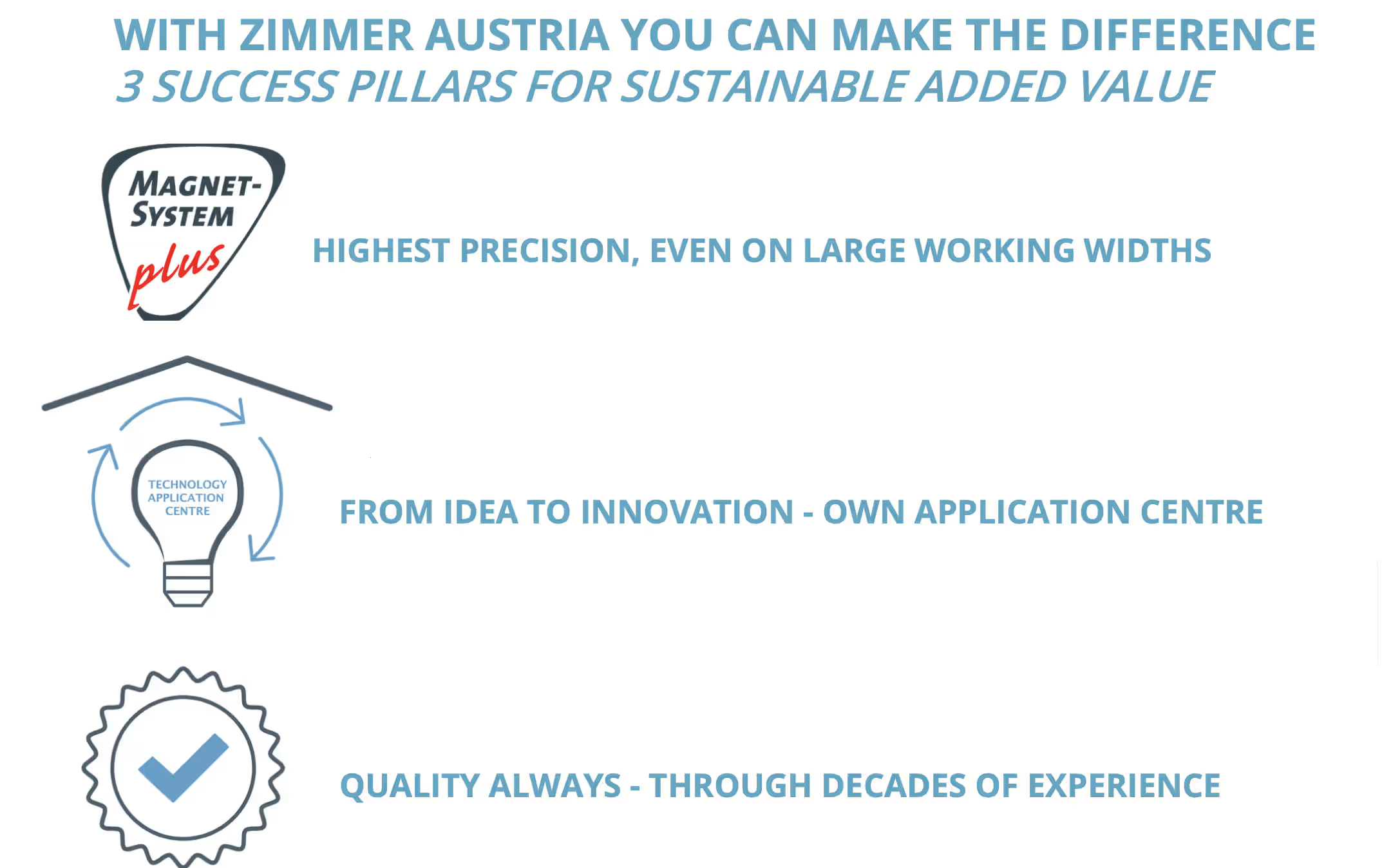
Zimmer Austria addresses this challenge through highly engineered mechanical and control systems that ensure precise application, even at industrial scale. Technologies such as magnet-based application systems enable a uniform distribution of coating media, maintaining consistency regardless of width or speed. This level of precision is particularly important in sectors such as carpet manufacturing, where large surface areas must meet strict quality standards.
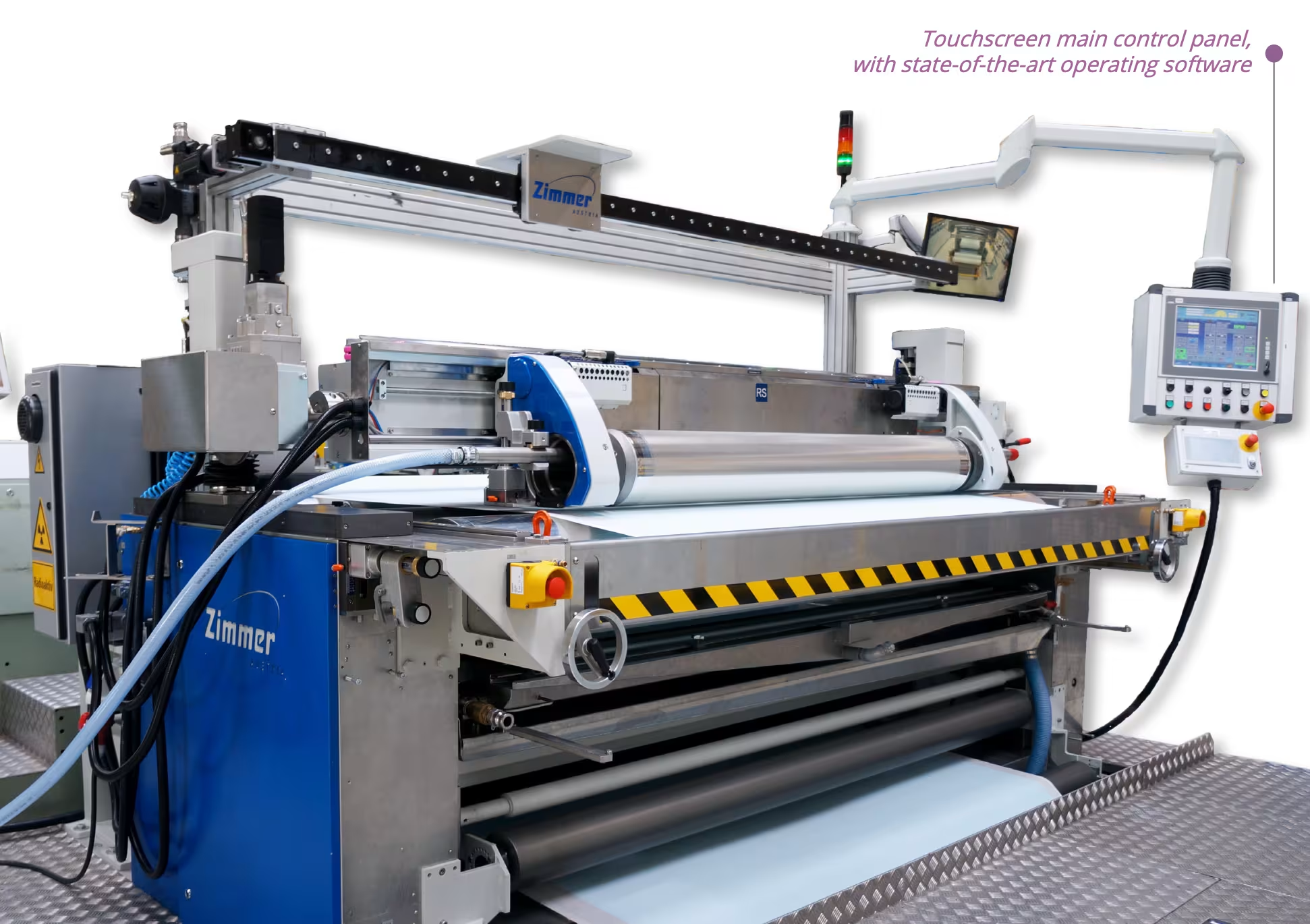
The integration of servo-controlled movements and real-time monitoring further enhances process stability, allowing manufacturers to maintain consistent output while optimizing resource usage.
Controlling material behavior in coating applications
Coating processes involve a wide range of materials, including liquids, pastes, lacquers, and foams, each with distinct physical properties. Managing these materials requires not only mechanical precision but also a deep understanding of their behavior under industrial conditions.
Zimmer Austria’s coating technologies are designed to control these variables with a high degree of accuracy. Slot coating systems, for instance, enable controlled application without exposing the material to air prior to deposition, reducing the risk of evaporation or contamination. Similarly, foam coating systems allow for precise regulation of penetration and application volume, ensuring consistent results even on complex or highly absorbent substrates.
By addressing both the mechanical and material aspects of coating, these systems create a stable environment where process variables can be controlled rather than managed reactively.
Integration of coating into complete production lines
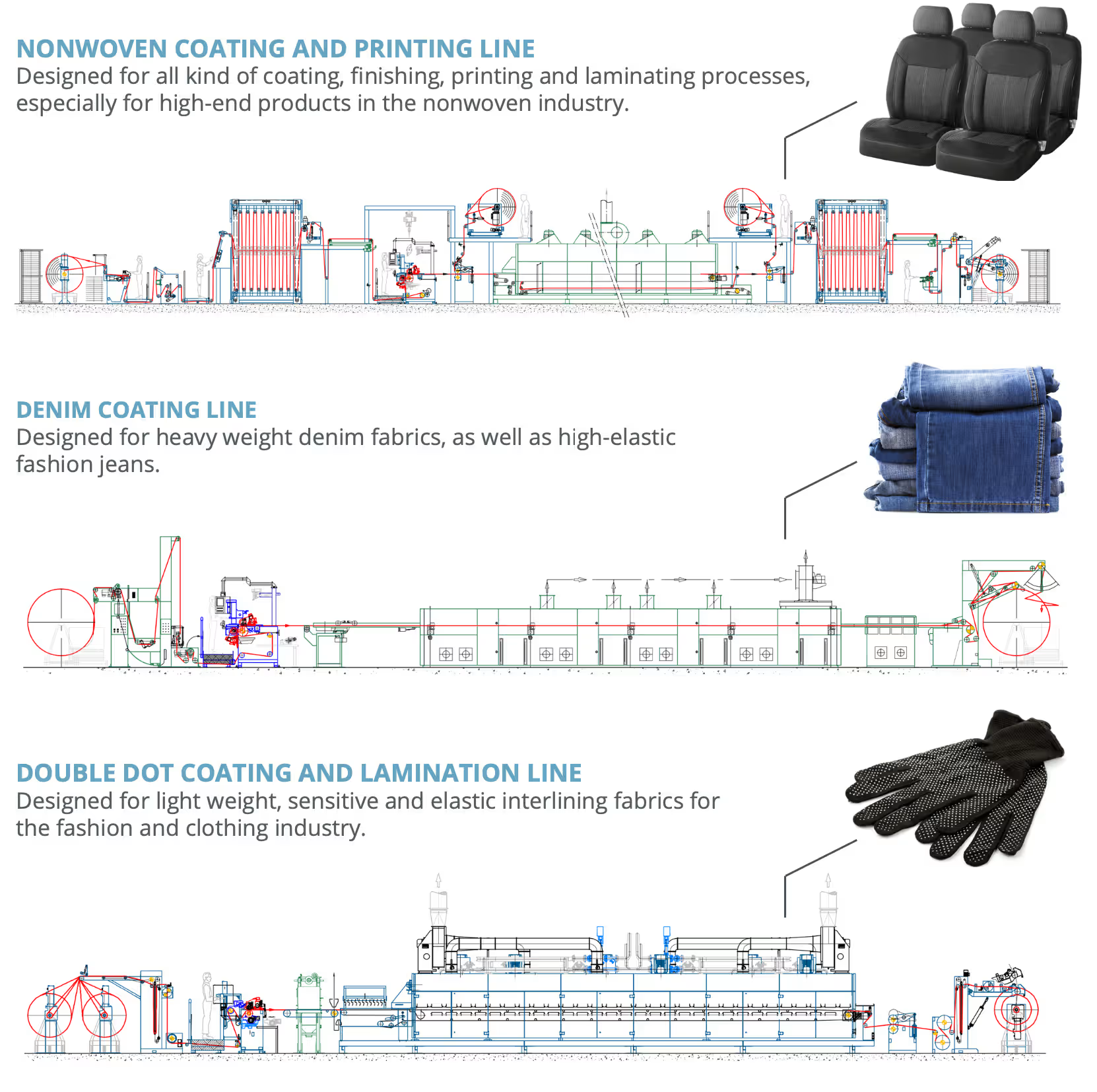
Another defining aspect of Zimmer Austria’s approach is the integration of coating systems into fully engineered production lines. Rather than focusing solely on the application stage, the company designs complete solutions that include unwinding, web guiding, coating, drying, and post-treatment processes.
This integrated perspective is essential for achieving consistent quality. Each stage of the process influences the final result, and any imbalance can lead to defects or inefficiencies. By synchronizing all components within a single system, manufacturers can ensure that coating performance is maintained throughout the entire production cycle.
Energy efficiency is also a key consideration within this framework. Advanced drying systems, designed with optimized airflow and temperature control, play a critical role in stabilizing the coating while minimizing energy consumption. This reflects a broader industry trend toward more sustainable production practices without compromising performance.
Application across technical and industrial textile sectors
The versatility of modern coating systems is increasingly important as textile applications expand into new and highly specialized areas. From nonwovens used in hygiene and medical products to coated fabrics in automotive or construction applications, each segment requires specific performance characteristics.
Zimmer Austria’s technologies are designed to accommodate this diversity. Their systems are capable of processing a wide range of substrates, including textiles, nonwovens, films, and carpets, enabling manufacturers to address multiple markets with a single technological platform.
This adaptability is particularly relevant for producers seeking to diversify their product portfolios or enter higher-value segments within the textile industry.
From development to industrial implementation
A recurring challenge in textile innovation lies in the transition from concept to production. Many technologies demonstrate strong results in laboratory conditions but encounter difficulties when scaled to industrial environments.
To address this gap, Zimmer Austria provides access to its Technology Application Center, where coating processes can be tested and optimized under realistic production conditions. This environment allows manufacturers to validate new applications, refine process parameters, and reduce uncertainty before full-scale implementation.
Such facilities play an increasingly important role in accelerating innovation, ensuring that new technologies are not only theoretically viable but also practically applicable.
Final perspective: coating as a driver of textile innovation
From an editorial perspective, what distinguishes advanced coating technologies today is not only their technical capability, but their role in shaping the future of textile manufacturing. As products become more functional and performance-driven, the importance of precise and adaptable coating systems will continue to grow.
Zimmer Austria’s engineering approach reflects this evolution. By combining modular design, process control, and integrated production systems, the company contributes to a model of manufacturing where efficiency and innovation are closely aligned.
In an industry facing increasing pressure to deliver both performance and sustainability, coating technologies are emerging as a critical interface between material science and industrial production. The ability to control this interface with precision will define the next generation of textile solutions.