




By Behnam Ghasemi / Editor-in-Chief
A Quiet Shift Inside the Spinning Hall
Walk into almost any spinning mill in the world and you will see something interesting. The machines are modern. The monitoring systems are digital. Production data flows on screens in real time. And yet, between these advanced systems, sliver cans are still being pushed manually from one section to another.
It is a familiar image. So familiar that most people no longer question it.
But perhaps they should.
For years, spinning mills have focused on improving speed, drafting precision, carding quality, and yarn uniformity. Enormous investments have gone into optimizing every technical parameter. Yet one of the most sensitive parts of the process — internal material flow — has often remained dependent on manual handling.
That quiet contradiction is exactly where T-CAN enters the story.
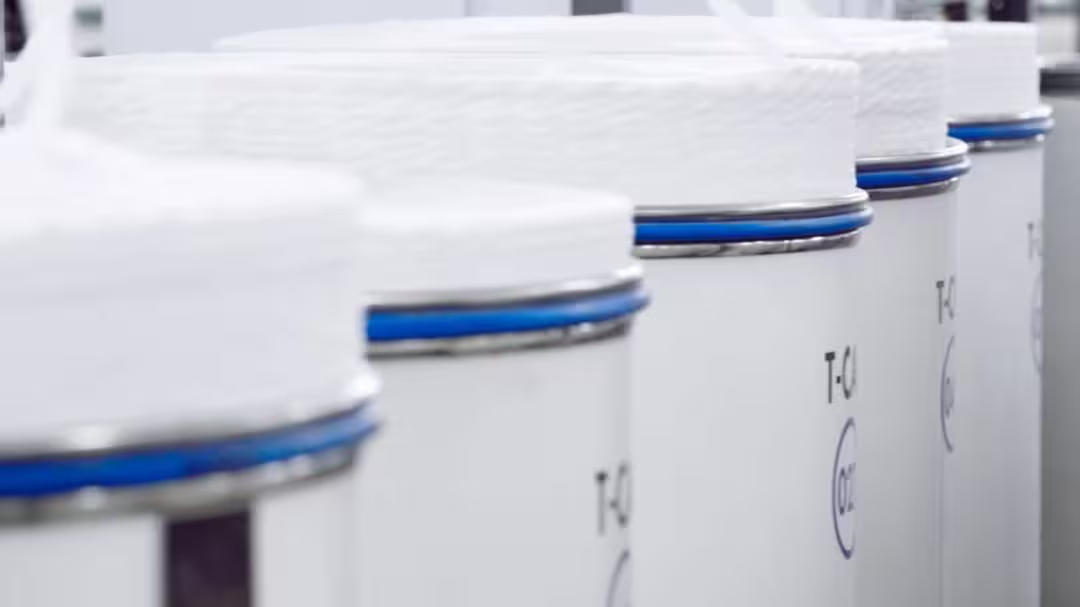
The Problem No One Talks About
Transporting sliver cans may not look like a high-tech challenge. It is physical work. It is routine. It has always been done this way.
But the spinning industry of 2026 is not the spinning industry of 2006.
Labor costs are rising. Skilled operators are harder to find. Shift stability is no longer guaranteed. At the same time, quality requirements are becoming stricter. Customers expect consistency. Brands demand traceability. Efficiency margins are tighter than ever.
In that environment, even a small inefficiency becomes visible.
A delay in can changeover.
A misplaced sliver can.
An operator shortage during night shifts.
Individually, these issues seem minor. Collectively, they shape productivity and quality performance over an entire year.
Manual can transport has quietly become one of the last weak points in otherwise automated spinning mills.
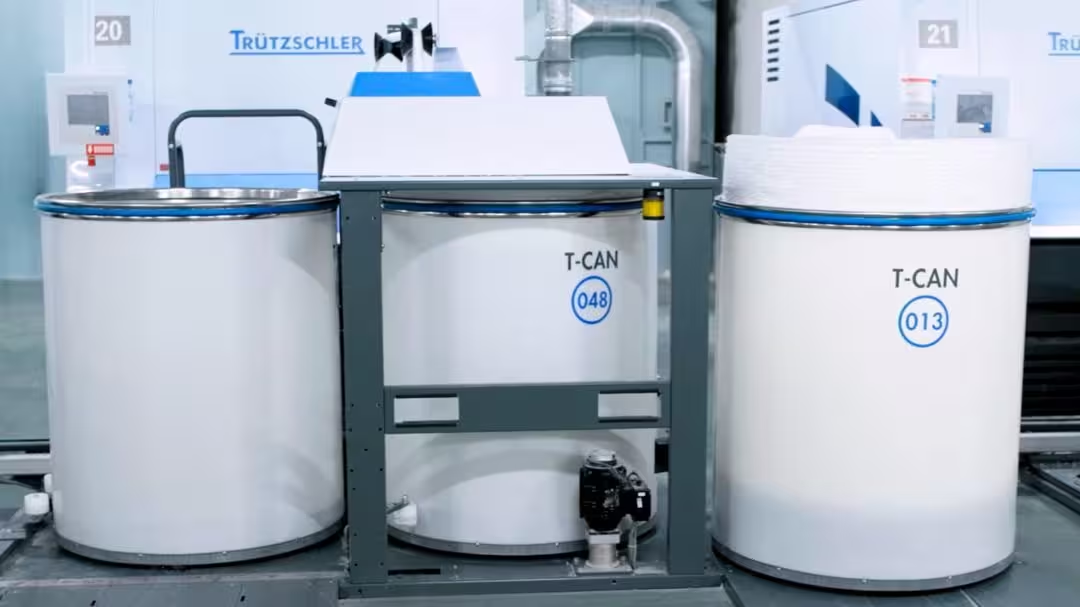
T-CAN: More Than Moving Cans!
When Trützschler introduced T-CAN, it was not simply launching another piece of equipment. It was addressing a structural gap in mill automation.
T-CAN connects cards, breaker draw frames, and finisher draw frames through an automated, intelligently managed transport system. Sliver cans are no longer dependent on manual relocation. Their movement becomes coordinated, tracked, and predictable.
What makes this interesting is not just automation itself — it is integration.
The system does not operate as a standalone robot moving randomly across the hall. It works in alignment with production flow. Each can is assigned. Each movement is recorded. Each placement is deliberate.
This level of control transforms internal logistics from a manual routine into a managed process.
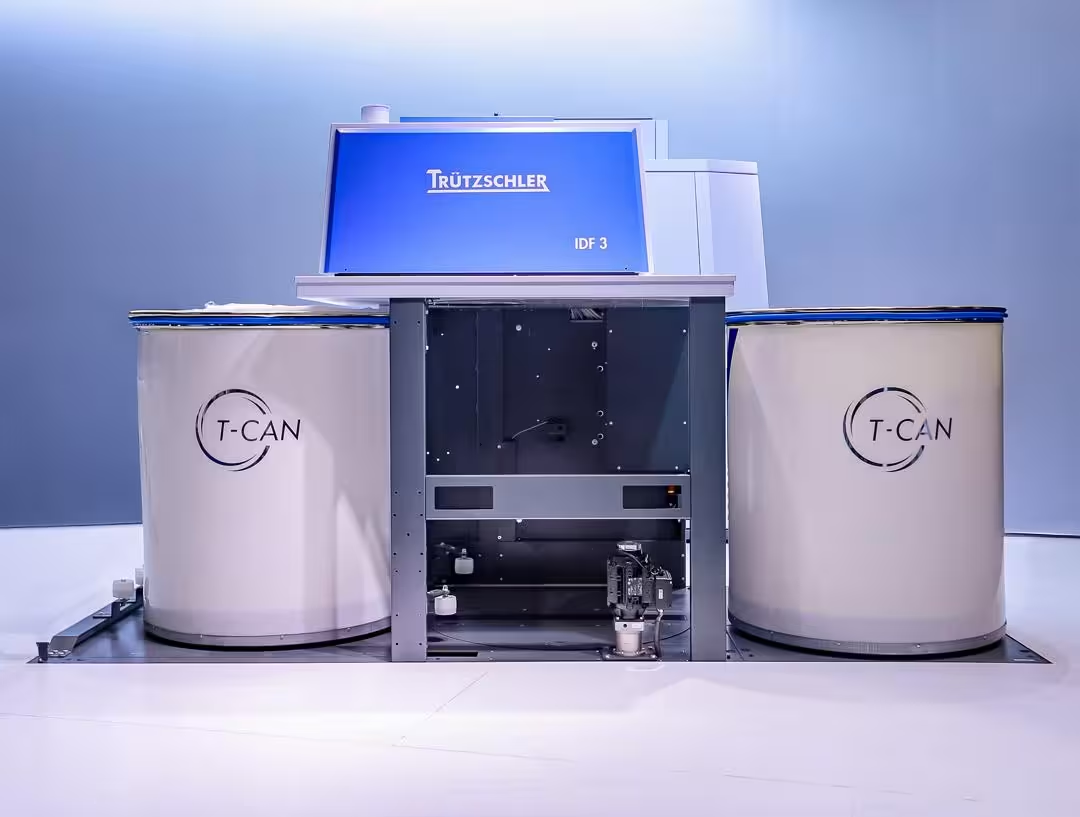
Why Mills Respond Emotionally?
The phrase “falling in love” may sound unusual in a technical context. But in reality, it reflects something very human inside industrial decision-making.
Spinning mill owners do not fall in love with machines because they are new. They do so when a solution removes uncertainty.
T-CAN offers something every mill manager values deeply: stability.
- It reduces dependency on constant manual supervision.
- It allows production to continue smoothly during breaks and night shifts.
- It minimizes small disruptions that quietly accumulate into downtime.
And perhaps most importantly, it supports consistent sliver allocation. When material flow becomes reliable, yarn quality becomes more predictable.
In an industry where fractions of a percent can define competitiveness, predictability is powerful.
A Step Toward the Smart Mill
The textile industry speaks frequently about digitalization and Industry 4.0. Data collection, process analytics, sensor integration — all of these are important. But a smart mill cannot function fully if its internal logistics remain manual and variable.
T-CAN fits into a larger transformation. It is not about replacing people. It is about allowing operators to focus on supervision, optimization, and quality control instead of repetitive physical transport.
One of the early large-scale adopters, JINGYI in China, expanded the system after a successful pilot across more than one hundred cards and hundreds of draw frames. Such decisions are rarely emotional. They are strategic.
The message is clear: automation in spinning is no longer limited to machine performance. It now includes how materials move between machines.
In a previous interview with Mr. Gerdhard Wienands, Regional Sales Manager at Trützschler Group, the topic of automation and intelligent mill solutions was discussed in depth. He emphasized that rising labor costs, increasing energy prices, and the growing need for raw material optimization are pushing spinning mills toward smarter operational models.
As he stated:
“Intelligent automation is no longer a luxury — it is becoming a necessity for mills that want to remain competitive.”
Wienands also highlighted that AGV-based systems such as T-CAN are no longer relevant only for high-wage countries. Even in markets like Türkiye, where labor was once considered a cost advantage, rising operator salaries are changing the investment logic.
In other words, automated can transport and intelligent machine integration are no longer optional upgrades — they are becoming part of a survival strategy for modern spinning operations aiming for efficiency, consistency, and long-term competitiveness.
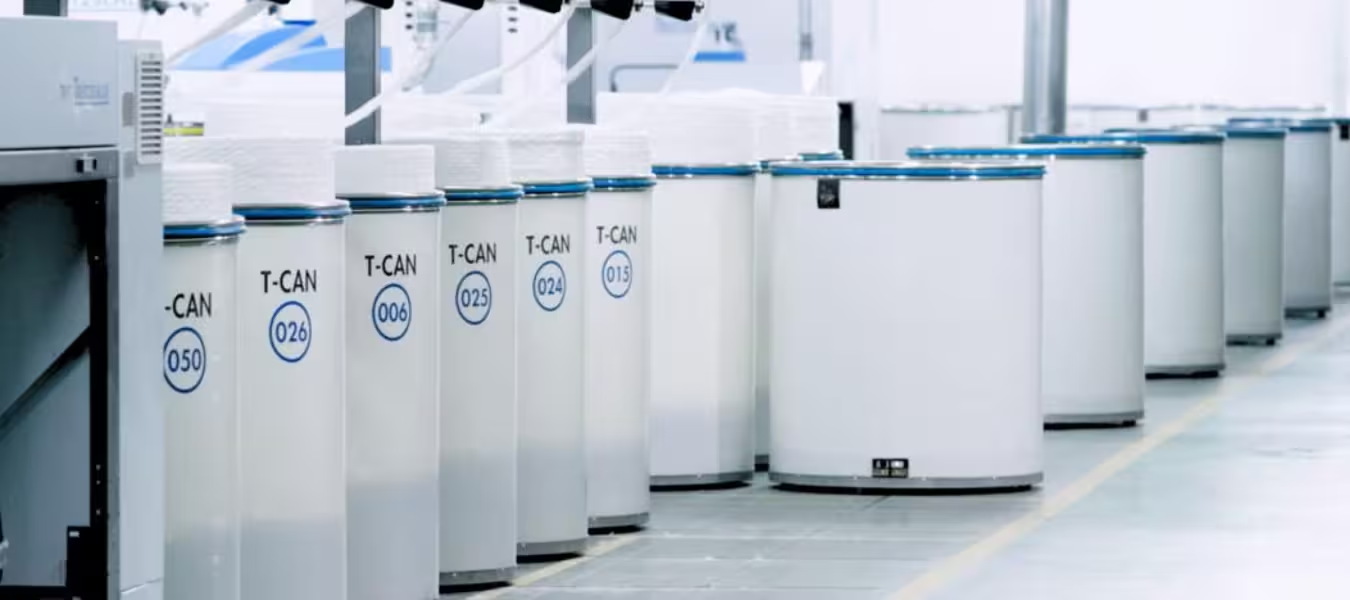
The Quiet Revolution
Not every revolution in textile manufacturing is dramatic. Some happen without noise.
There is no dramatic visual change in the yarn itself when T-CAN is installed. There is no immediate headline about speed increases. Instead, the change is subtle: fewer interruptions, smoother coordination, more reliable allocation, less stress on operators.
Over time, these quiet improvements accumulate.
And that is why spinning mills begin to appreciate — and yes, even “love” — such systems.
Because in a world of increasing cost pressure and labor uncertainty, solutions that simplify operations without compromising quality are not luxuries. They are strategic necessities.
The future of spinning will not only be defined by faster machines or smarter sensors. It will be defined by how seamlessly everything works together.
T-CAN is one step in that direction — a practical answer to a problem that has existed for decades but has only recently become impossible to ignore.
And sometimes, the most meaningful innovations are the ones that quietly remove friction from everyday operations.

What Do You Think?
If you are active in the spinning sector, we would genuinely like to hear your perspective.
Is automated can transport already part of your strategy?
Or do you still see manual handling as sufficient for your mill’s structure?
Your experience matters — not only to us, but to the entire spinning community. Real insights from mill managers, production heads, and technical experts add value far beyond any product presentation.
We invite you to share your thoughts in the comment section below. Selected professional opinions may be featured in our upcoming coverage, with full credit.
You may also contact us directly to share your experience or feedback.
At Kohan Textile Journal, we believe that the future of textile innovation is shaped not only by manufacturers — but by the voices of those who operate the mills every day.
We look forward to hearing from you.











