




As sustainability becomes a priority in the textile industry, rPET has emerged as one of the most impactful innovations of recent years. Made from recycled PET bottles and post-consumer plastic waste, rPET offers a smarter alternative to virgin polyester while reducing the industry’s reliance on fossil fuels. By giving discarded plastics a second life, it helps cut carbon emissions, minimize landfill waste, and support a more circular production model. It’s no surprise that major global brands increasingly rely on rPET across their collections. If you’re exploring how recycled polyester is transforming modern textiles, this guide is the perfect place to start. Read more.
What Is rPET? Understanding Recycled Polyester Fibers
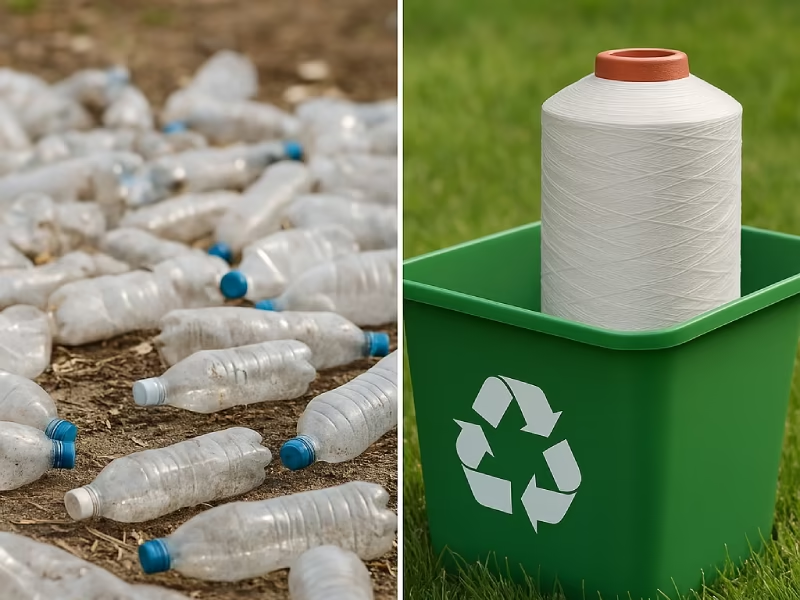
Recycled PET (rPET) is polyester fiber made from post-consumer plastics—mainly PET bottles—and increasingly from post-consumer textile waste. Instead of extracting crude oil to produce virgin polyester, rPET gives a second life to materials that would otherwise pollute oceans, landfills, and the environment.
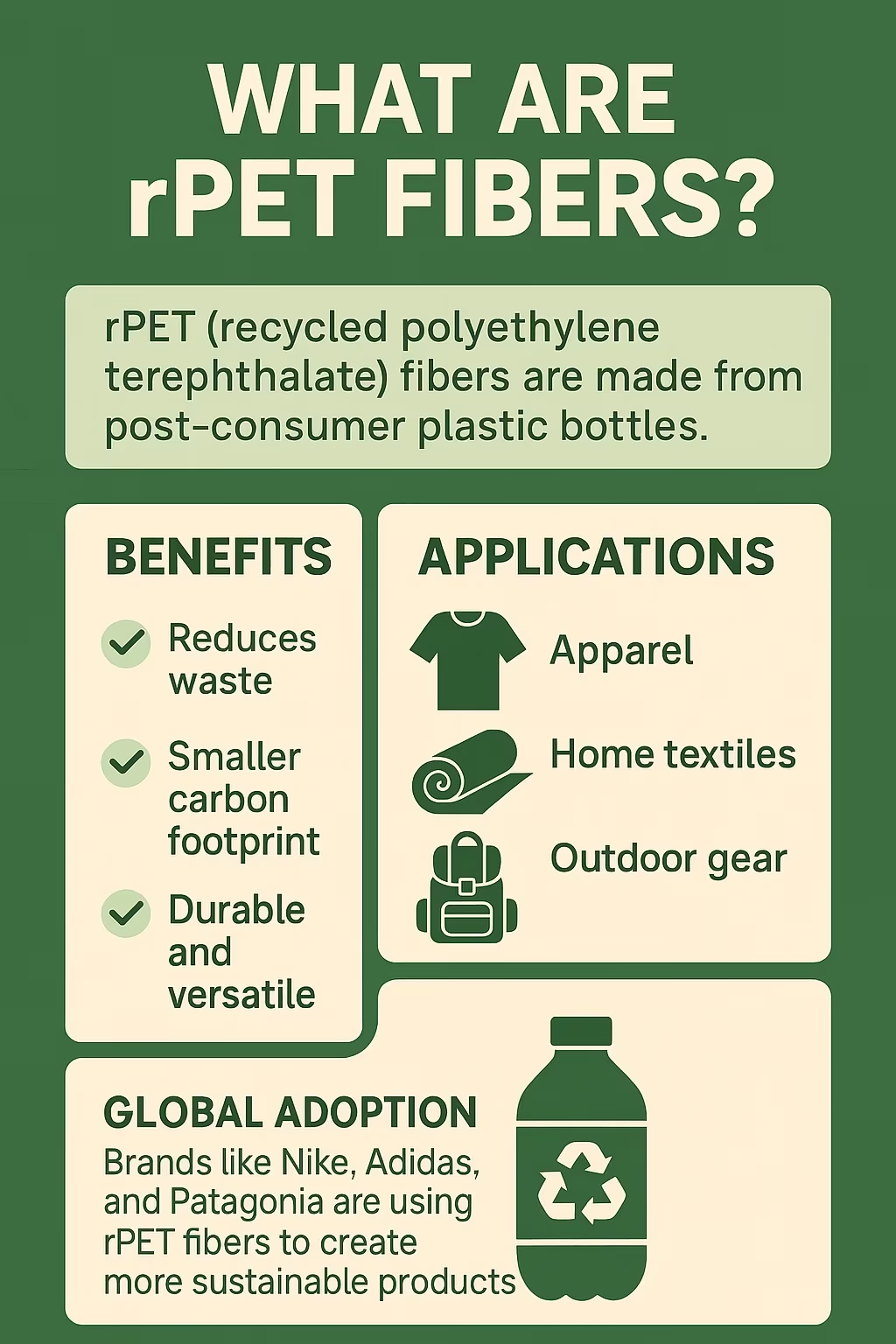
This simple innovation has tremendous impact. It reduces the industry’s dependence on fossil fuels, helps solve the global plastic waste crisis, and enables textile manufacturers to move toward a more circular production model. Today, companies like Nike, Adidas, H&M, Patagonia, Inditex, Zara, and many others use rPET extensively across their collections.
How rPET Is Made?
From Waste to Fiber
Mechanical Recycling
The most common method involves collecting, sorting, washing, shredding, and melting PET waste into chips, which are then extruded into new polyester filaments. This process is widely used and energy-efficient, but less suitable for blended fabrics such as polycotton.
Chemical Recycling
Chemical processes break polyester down to its molecular form, allowing higher-quality recycling and the ability to treat mixed materials. This technology enables “fiber-to-fiber” recycling of polycotton, elastane blends, and dyed garments—something mechanical recycling cannot do.
Several major innovations you provided highlight this progress:
- Circ & H&M launching the first chemically recycled polycotton garments
- Zara & Circ bringing recycled polycotton to mainstream consumers
- Carbios & SASA planning a 100,000-ton PET biorecycling plant in Turkey
- Indorama & Jiaren advancing closed-loop PET fiber systems
Chemical recycling represents a crucial step in scaling circularity.
Environmental Benefits of rPET
rPET significantly reduces the environmental footprint of textile production. Studies show major improvements in water use, energy consumption, and resource efficiency, particularly when compared to virgin polyester. It also diverts large quantities of plastic waste from landfills and oceans, transforming a global environmental challenge into a valuable resource.
Your referenced studies highlight that rPET typically uses less energy and produces lower CO₂ emissions, making it one of the most effective near-term solutions for decarbonizing polyester-based textiles.
The Challenges and Trade-Offs
Despite its advantages, the sustainability profile of rPET is not flawless. Full life-cycle assessments show that certain processes—especially chemical recycling—can still contribute significantly to global warming potential (GWP) and human toxicity, depending on the energy sources used.
Additionally, traditional mechanical recycling cannot handle blended materials, and the quality of recycled fibers may decline after multiple cycles. This is why developments in fiber-to-fiber chemical recycling are so critical to the future of circular textiles.
Case Studies Driving Circular Innovation
The links you shared contain several important case studies:
- Circ & H&M demonstrated the world’s first commercial chemically recycled polycotton garments—proof that fast fashion can move toward genuine circularity.
- Zara & Circ expanded this approach, bringing fiber-to-fiber recycling to global retail at scale.
- Indorama & Jiaren are investing in integrated recycling systems that recover polyester from both bottles and textiles, creating closed-loop manufacturing.
- Carbios & SASA are developing an industrial-scale biorecycling facility in Turkey using enzyme-based depolymerization, one of the most groundbreaking chemical recycling approaches globally.
These examples show how global brands and technology developers are accelerating the transition toward circular textiles.
Who Uses rPET?
rPET has become a staple material across sportswear, fashion, home textiles, and industrial applications. Leading brands such as Nike, Adidas, Patagonia, Puma, H&M, Inditex, Levi’s, and many others integrate recycled polyester into their collections as part of their sustainability commitments.
This widespread adoption has boosted investment in recycling plants, advanced technologies, and new fiber engineering partnerships worldwide.
The Future of rPET in the Textile Industry
The future of rPET is defined by three major developments:
- Fiber-to-fiber recycling for mixed materials such as polycotton is becoming industrially viable.
- Large-scale biorecycling infrastructure—such as the Carbios–SASA 100k-ton facility—is moving toward commercial production.
- Regulatory pressure, including the EU’s circular textile strategy, is pushing brands to use more recycled content and reduce waste.
Combined with rising consumer demand for low-impact materials, rPET is positioned to remain one of the most important recycled fibers in the global market.
Conclusion
Recycled PET is not perfect, but it is currently one of the most effective and scalable solutions for reducing textile waste, lowering carbon emissions, and supporting circular manufacturing. The innovations highlighted in your reference links—fiber-to-fiber chemical recycling, biorecycling, and closed-loop systems—show that rPET is becoming more sophisticated, versatile, and sustainable.
As the industry moves toward a circular economy, rPET will play a central role in meeting global environmental targets, supporting brand commitments, and reshaping the future of polyester-based textiles.











