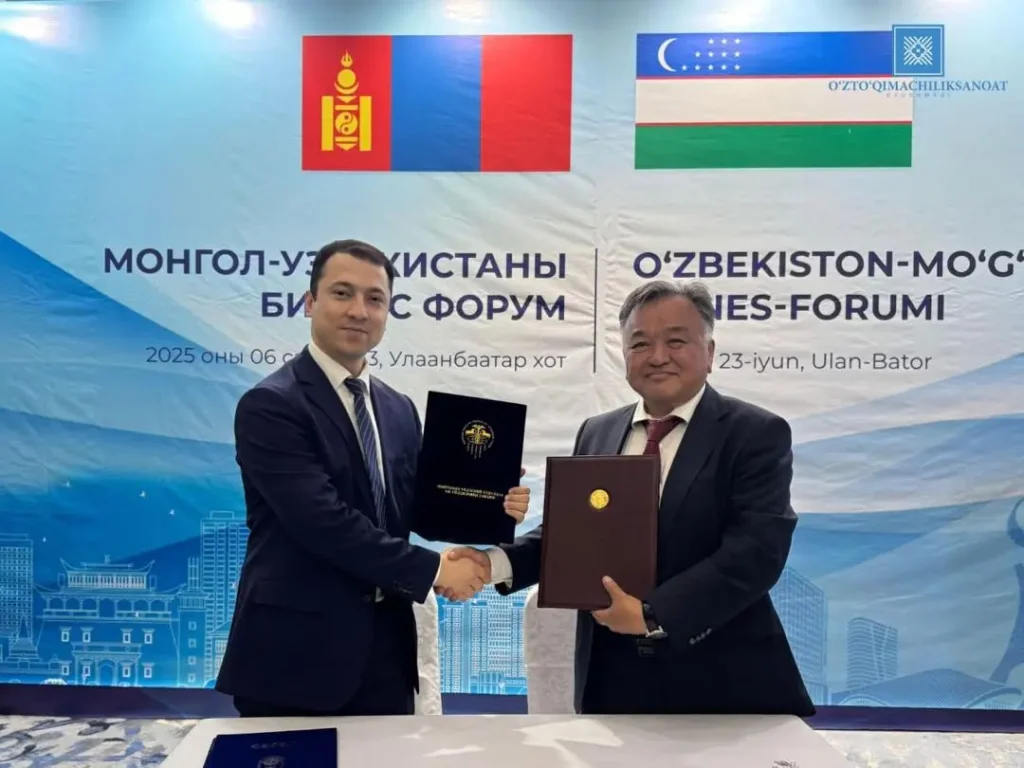
In a major step toward strengthening bilateral economic relations, the Uzbek-Mongolian Business Forum convened in Mongolia’s capital on June 23, gathering high-level delegations from both countries, including government officials, regional representatives, industry leaders, and more than 300 companies.
The forum served as a dynamic platform to enhance trade and investment cooperation, initiate joint industrial projects, and foster B2B and G2B partnerships between Uzbek and Mongolian enterprises.
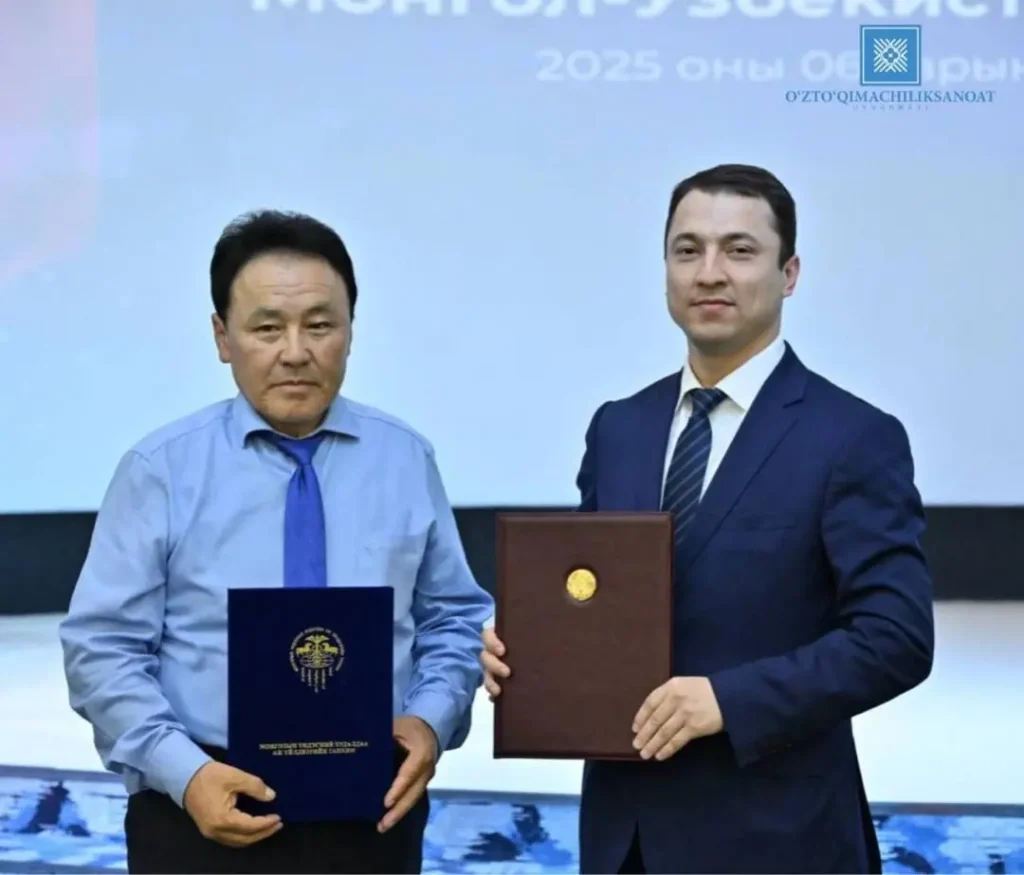
One of the most significant outcomes of the forum was the signing of a series of strategic agreements by the Uztextileprom Association, Uzbekistan’s leading textile and apparel organization. These agreements were signed with the Mongolian Wool and Textile Association, the Mongolian University of Science and Technology, and Mogol Noos, a prominent wool company.
Among the key initiatives announced:
- Establishment of a Trade House in Tashkent to facilitate the promotion and sale of Mongolian wool and cashmere products in Central Asia.
- Launch of a $10 million joint investment project in Uzbekistan for the production of blended fabrics and finished textile goods.
The forum also hosted a “Made in Uzbekistan” exhibition, highlighting the quality and diversity of Uzbek-manufactured products. The showcase attracted attention from Mongolian buyers and retailers seeking high-quality, competitively priced textile and garment offerings.
By facilitating direct engagement between businesses and state institutions, the forum has laid the groundwork for a new chapter of textile cooperation between Central Asia and East Asia, with a strong emphasis on raw material processing, education, and sustainable production models.
The collaboration promises mutual benefits: Uzbekistan gains access to Mongolia’s globally respected wool and cashmere industry, while Mongolia taps into Uzbekistan’s growing manufacturing capacity and export infrastructure.
Kohan Textile Journal will continue to monitor the developments stemming from this important event and the evolving textile trade dynamics in the region.