In the modern global textile apparatus, the commercial viability of high-volume garment factories, industrial sewing systems, and computerized flat knitting machinery is directly shaped by macroeconomic parameters, state-backed financial credits, and international realignments.
As production overhead, raw utility tariffs, and credit constraints intensify across legacy manufacturing powerhouses like Türkiye, vertical textile producers are increasingly adopting a “two-legged” operational strategy, redirecting capital expenditure and expanding assembly networks into highly competitive North African trade corridors. Managing these complex, cross-border agency relationships requires exceptional logistics oversight, decades of integrated machinery distribution know-how, and a robust understanding of international export frameworks.
At the International Textile Machinery Exhibition (ITM 2026) in Istanbul, Behnam Ghasemi, Editor-in-Chief of Kohan Textile Journal, sat down for an exclusive technical session with Mr. Önder Akay, Sales Manager at TETAŞ Trading Company (Tetaş Şirketler Grubu).
In this comprehensive Q&A editorial interview, Mr. Akay breaks down TETAŞ’s massive 44-year industrial agency network, the clear mechanical parameters shifting high-volume European apparel orders directly toward Egypt, the critical structural liquidity limitations facing Turkish mills, and the strategic expansion of their specialized technical service subsidiaries across Russia and Central Asia.
A 44-Year Legacy in Global Textile Machinery Distribution
Kohan Textile Journal: Welcome, Mr. Akay. To establish a solid foundation for our global readers, could you outline TETAŞ’s operational history, your corporate structure, and your active agency footprint in the textile industry today?
Mr. Önder Akay: It is a pleasure to speak with you, Behnam. TETAŞ Trading Company—officially operating under the Tetaş Şirketler Grubu banner—has been actively serving the global textile sector since 1861. Over our 44-year history, we have established a highly specialized import and export management infrastructure, backed by more than 35 years of dedicated international trade experience. Today, TETAŞ manages the exclusive regional representation and commercial agency networks for 43 premier international machinery manufacturers.
Our corporate architecture operates through distinct divisions to cover the entire apparel production cycle. Under our Tesan Group engineering branch, we operate as a vertical manufacturer and exporter, designing and fabricating automated garment spreading machinery, advanced fabric cutting room setups, and fully integrated ironing and finishing packaging systems.
On our import distribution side, we specialize in supplying high-performance hardware across four core mechanical sectors: circular knitting machinery, computerized flat tricot knitting systems, electronic embroidery setups, and advanced hosiery or sock-knitting machinery. This dual-manufacturing and distribution model allows us to supply elite, premium-tier textile factories across Türkiye and Europe that demand top-tier machinery standards.
Read More: Itema to showcase Weaving Excellence at ITM 2026
Elite Partnerships: Delivering Premium Mechanical Portfolios
Kohan Textile Journal: Managing 43 diverse international representations requires intense technical alignment. Who are the core international machine builders anchoring TETAŞ’s distribution portfolio at this edition of the exhibition?
Mr. Önder Akay: Our market strength is built entirely on long-term relationships with the world’s elite textile machine builders, maintaining active partnerships that span approximately 25 years. Within our dynamic hosiery and sock-knitting division, we are the long-term regional distributors for Lonati. In our highly competitive circular knitting segment, we manage the distribution pathways for Santoni and Unitex.
For the electronic embroidery and textile decoration sector, we represent Tajima, while our computerized flat tricot knitting division is anchored by the advanced multi-gauge technology of Shima Seiki. Having spent a quarter of a century refining the engineering support, spare parts logistics, and field alignment for these specific premium brands, we ensure that our manufacturing clients receive an uncompromised level of technical support directly on their factory floors.
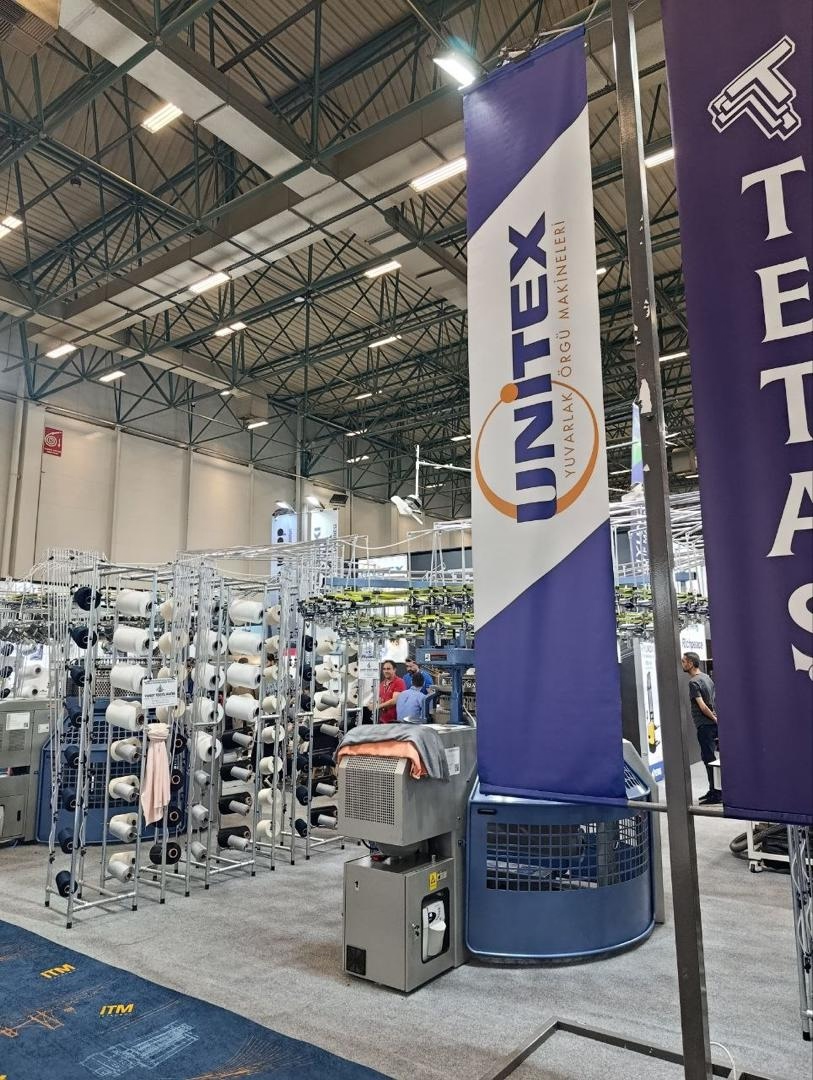
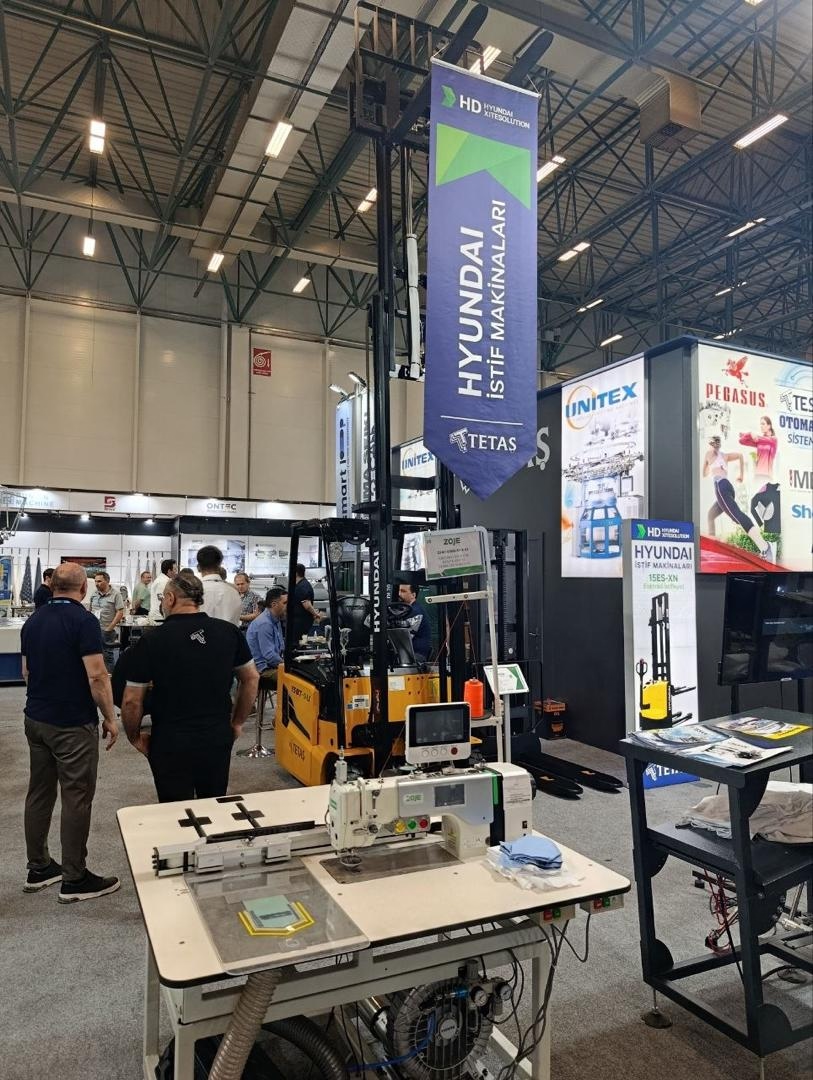
Analyzing the Egyptian Corridor: The Flight of European Apparel Production
Kohan Textile Journal: The global textile sector is experiencing a prolonged commercial slowdown. How do you analyze these macro market conditions, and what structural geographical adjustments are you witnessing across regional garment hubs?
Mr. Önder Akay: The textile sector is currently navigating a period of profound stagnation and quietness. We are observing a significant structural displacement of European apparel purchase orders and macro manufacturing investments away from traditional home bases and directly into Middle Eastern and North African assembly corridors—specifically targeting Egypt. Historically, this geopolitical migration footprint initially favored alternative low-cost production zones like Vietnam and Bangladesh, but Egypt has now taken a dominant position in the global supply chain.
Because TETAŞ operates as a multi-regional master agency, we haven’t just watched this shift; we have adapted our corporate structure to follow it. While we represent 43 international firms, we have structured our exclusive distribution contracts to position TETAŞ as the master representative for both Türkiye and the broader Middle East.
In the Egyptian market, we are actively supporting the vertical manufacturing lines for massive Turkish, regional, and global garment conglomerates. We coordinate the continuous machinery setups, technical servicing, and workflow upgrades for the high-volume garment lines of LC Waikiki, the Taha Group, Eren Holding, Colin’s, the Eroğlu Group, and the Yeşim Group.
Furthermore, we supply advanced industrial confection machinery to international fast-fashion production suppliers executing orders for Zara, H&M, Bestseller, Vero Moda, Pieces, DeFacto, and LCW directly within the Egyptian zone. Egypt’s highly competitive operational costs, paired with its robust, duty-free trade frameworks to the United States and Europe, ensure that this corridor will remain highly lucrative for years to come.
Overcoming Structural Credit Constraints and the Need for State-Backed Liquidity
Kohan Textile Journal: Sektordeki bu durgunluğun ve sakinliğin aşılması için yerel ölçekte hangi yapısal adımların atılması gerektiğini düşünüyorsunuz?
Mr. Önder Akay: We are currently enduring a real domestic stagnation, but we are highly optimistic that this quiet period can be structurally resolved through close coordination between state administrative bodies, macro management, and industry manufacturers. The core bottleneck limiting our domestic textile machinery sector is not a lack of customer demand, but a lack of structural liquidity.
To overcome this, we require the immediate opening of specialized, state-backed financial credit lines, enhanced international import-export financing mechanisms, and direct financial credit backing from institutions like KOSGEB and The Union of Chambers and Commodity Exchanges of Türkiye (TOBB). If these state-level industrial credit avenues are unlocked, it will restore the capital expenditure margins for domestic mills, allowing our textile producers to update their hardware configurations, operate with higher efficiency, and confidently navigate current market obstacles.
Cross-Border Confection Networks: Expanding into Russia and Central Asia
Kohan Textile Journal: To conclude our discussion, what is TETAŞ’s current strategy regarding direct international exports and your active cross-border branch networks?
Mr. Önder Akay: While we maintain a highly focused approach toward our core markets, TETAŞ executes highly consistent cross-border machinery sales and technical service distribution internationally. In terms of our current primary export volume, Russia and Egypt represent our leading target zones.
Beyond these markets, we operate an established vertical corporate subsidiary under our Tetaş banner directly in Uzbekistan, allowing us to serve Central Asian clients natively. Through this network and our extended trade links, we manage continuous industrial garment and confection machinery exports into Kyrgyzstan, Nakhchivan, Azerbaijan, Bulgaria, and Greece, ensuring that our advanced engineering solutions maintain a dominant position throughout regional hubs.