A new study from researchers at the Norwegian University of Science and Technology has revealed a startling reality about the textile industry: nearly half of the material used to produce a T-shirt is lost before the garment even reaches store shelves. The findings challenge the common perception that textile waste primarily occurs after consumers discard clothing and instead point to manufacturing as a major source of resource loss.
44% of Textile Fibers Lost During Production
The research examined the journey of a cotton T-shirt through two life cycles, combining material flow analysis with life cycle assessment methods. Researchers found that approximately 44% of textile fibers are lost during the production stages, long before the finished garment reaches consumers.
According to the study, current systems allow only a limited portion of textile fibers to be reused or recycled into new garments. Researchers estimate that, under existing conditions, a maximum of 17% of the original fibers in a T-shirt can be recovered and reused in a new product.
Industry Focus Has Been on the Wrong End of the Supply Chain
In recent years, governments and brands have concentrated heavily on collecting used clothing and improving post-consumer textile recycling. However, the researchers argue that this approach overlooks a critical problem occurring much earlier in the value chain.
While textile collection systems are expanding across Europe, significant environmental gains could be achieved by reducing waste generated during fiber processing, yarn production, fabric manufacturing, and garment assembly.
Read More: Textile Waste in Africa: A Deep Dive into Morocco and Tunisia’s Circular Future
Major Environmental Impact of Clothing Production
The study also highlights the broader environmental footprint of the fashion industry. Textile production is widely estimated to account for around 10% of global greenhouse gas emissions, making it one of the world’s most resource-intensive industries.
Researchers evaluated five key environmental indicators, including:
- Global warming potential
- Water consumption
- Land use
- Freshwater eutrophication
- Freshwater ecotoxicity
Their findings suggest that improving production efficiency could significantly reduce environmental impacts across all categories.
Better Manufacturing Could Unlock More Recycling
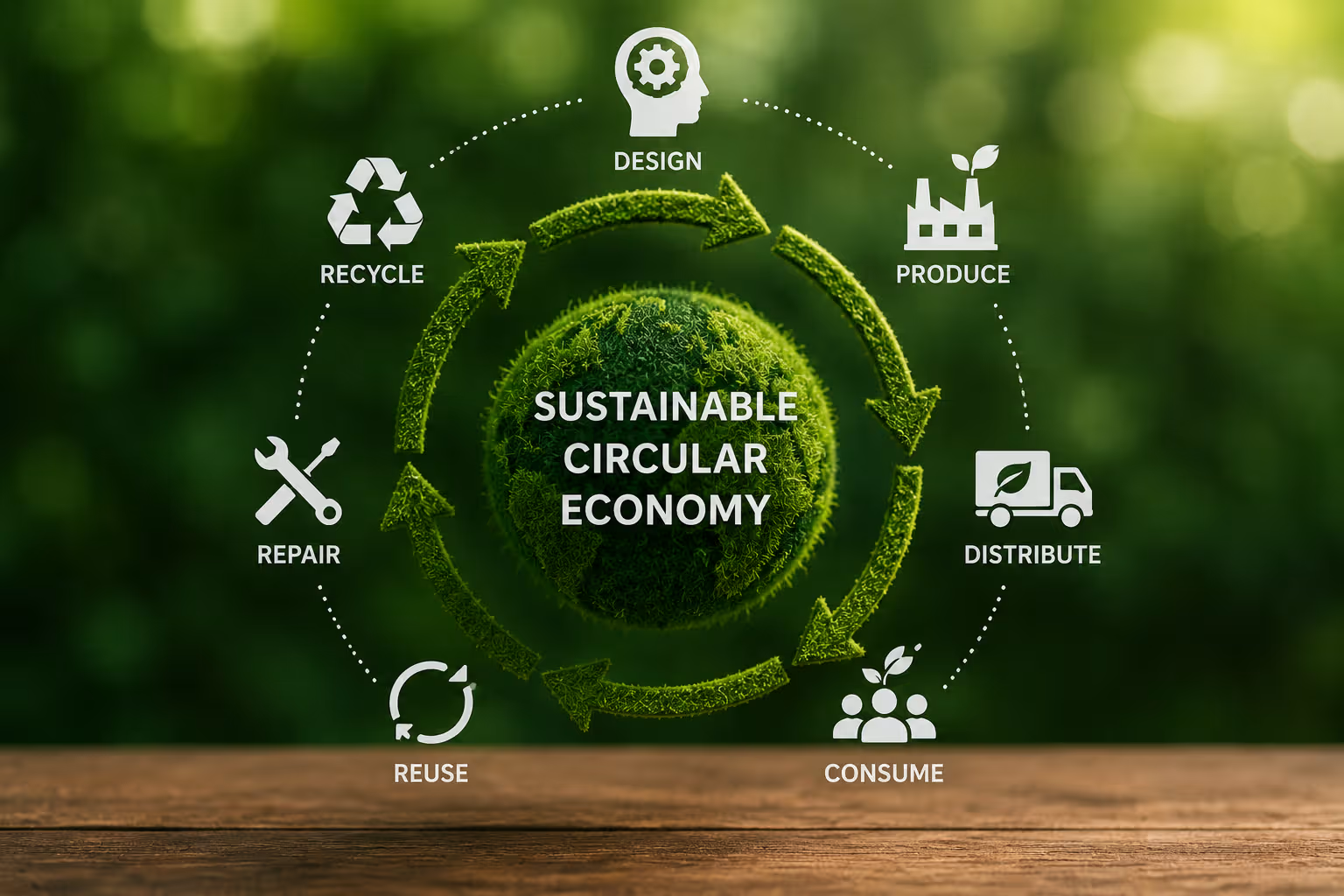
The researchers believe substantial improvements are possible. If textile production processes become more efficient and manufacturing waste is better captured and recycled, up to 44% of the material currently lost during production could potentially be recovered for future use.
Such improvements could reduce greenhouse gas emissions by approximately 10%, while cutting other environmental impacts by 20% to 25%.
A Call for Industry-Wide Collaboration
The study concludes that achieving a truly circular textile economy will require action far beyond consumer recycling programs. Governments, textile manufacturers, apparel brands, and recyclers must work together to improve resource efficiency throughout the entire textile value chain.
As the European Union introduces stricter regulations on textile waste and circularity, the findings suggest that the greatest opportunity for reducing waste may not lie in what happens after a garment is discarded, but in preventing material losses during production in the first place.
The research serves as a reminder that building a sustainable textile industry requires attention not only to recycling and reuse but also to the hidden waste generated long before consumers ever purchase a garment.