The global automotive textiles market is worth over $33 billion in 2025 and is set to exceed $44 billion by 2034, growing at a CAGR of 3.4%. These numbers describe a solid, continuously evolving market – one that is raising its standards for fabric quality, sustainability, and technical performance at every level.
From natural fibres to recycled polyester: twenty years of evolution
In the early 2000s, the Brazilian automotive industry and several Asian manufacturers were exploring the use of natural fibres – jute, sisal, coconut – for interior vehicle components. Mercedes-Benz was using coconut fibre instead of polyurethane in truck seats, while General Motors and Volkswagen were experimenting with jute–polypropylene blends. The concept was compelling from a sustainability standpoint, but the technical limits were real: low hydrophilicity, poor mechanical resistance, and processing difficulties prevented widespread industrial adoption.
Twenty years later, the market has changed dramatically. The breakthrough came not from natural fibres, but from recycled polyester. Audi already uses 89% recycled polyester from plastic bottles in the seats of its A3. Polestar is targeting a zero-carbon footprint by 2030, with vegan interiors and recycled yarn. Lotus has introduced a wool-blend fabric for the seats of its new EV – 50% lighter than traditional leather.
In Asia, where the automotive market is growing fastest, research into technical fibres has advanced significantly. Japan, China, and South Korea are today among the leading producers of technical automotive textiles, with sustained investment in new fibres, dyeing processes, and – increasingly – advanced finishing technologies.
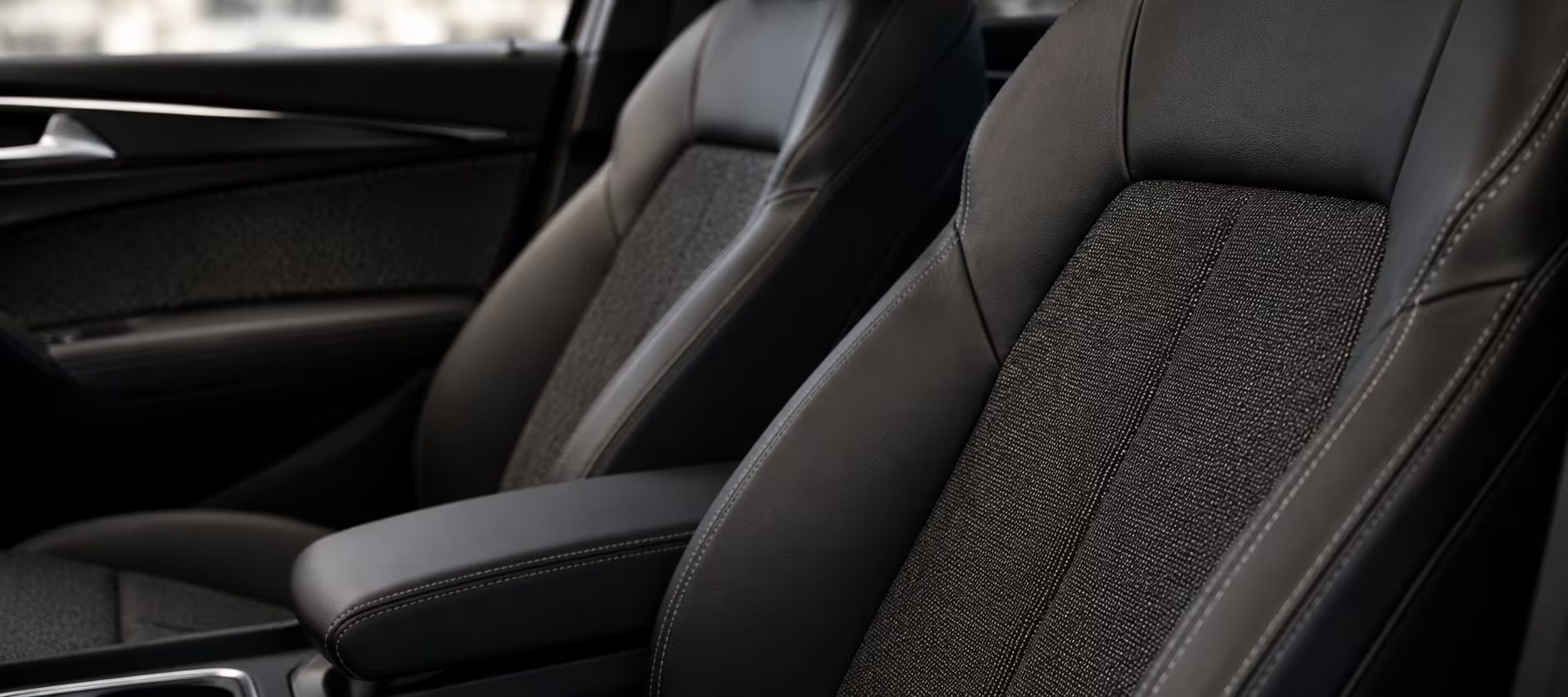
The EV transition: a new paradigm for automotive textiles
The shift to electric vehicles has opened an entirely new segment for automotive textiles. Without the noise of a combustion engine, EV interiors reveal sounds that were previously masked: vibrations, rustles, resonances. This has created growing demand for acoustic and thermal insulation fabrics – NVH solutions (Noise, Vibration, Harshness) – where finishing quality is critical.
At the same time, weight reduction has become even more important in EVs: every kilogram saved translates directly into range. Technical textiles offer weight savings of 20–30% compared to traditional materials, and finishing determines their hand, consistency and long-term performance.
Read more: Biancalani obtains a favorable first-instance judgment in China for a patent infringement case
What the automotive market is looking for today
Automotive textile producers, in Europe as in Asia, are looking for finishing solutions that deliver:
- Softness to the touch without compromising the mechanical performance of the fabric
- Reduced use of chemical softeners, in line with certifications required by automotive brands
- Dimensional stability: seats, panels, and linings must maintain their shape over time
- Formability: the fabric must conform to the curved shapes of seats and headrests without losing integrity
- Process sustainability: reduced water consumption, less chemistry, and environmental traceability
AIRO 24: mechanical finishing for automotive fabrics
The continuous open-width tumble drying of AIRO 24 is particularly suited to polyester and recycled polyester fabrics for automotive interiors. The mechanical action of the high-speed airflow works on the fabric in a controlled way, delivering:
- Mechanical softness with significantly reduced chemical softeners
- Volume and consistency, relevant for premium seat and interior coverings
- Release of residual tensions, essential for formability during cutting and shaping
- More uniform and dimensionally stable surface, with lower risk of distortion over time
These characteristics are particularly important for fabrics used in complex shapes such as contoured seats, headrests, and door panels, where the fabric must conform to the support without losing integrity. Companies such as SAGE Automotive Interiors already use AIRO 24 for finishing their fabrics – a concrete reference in one of the world’s leading suppliers of automotive interior textiles.
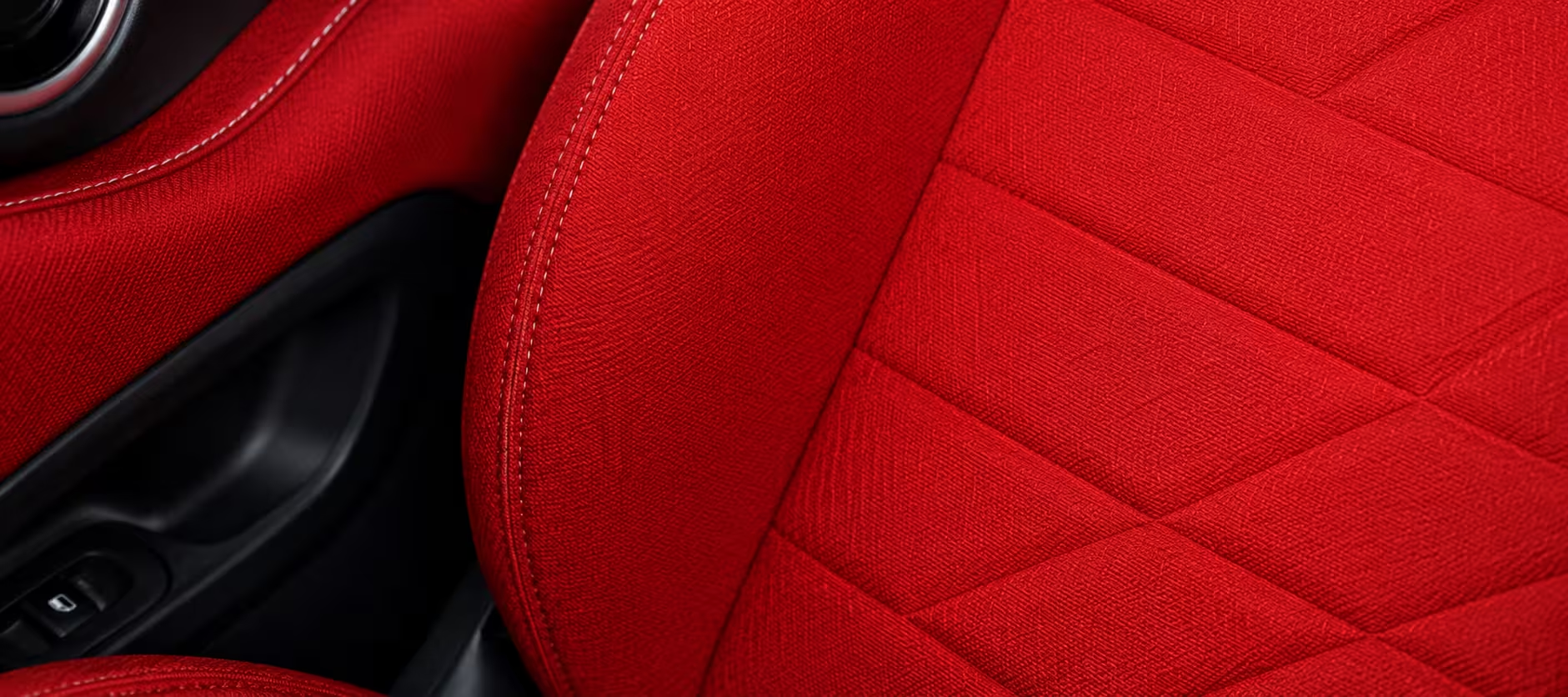
AQUARIA: automotive fabric preparation without compromise
For fabrics that require a washing and preparation stage before finishing, AQUARIA offers a continuous open-width washing system that works gently on the fabric structure, delivering:
- Uniform treatment across the full fabric width
- Reduced water consumption, with full process water reuse
- No aggressive chemical agents, aligned with automotive sector environmental standards
- Integration with existing production lines, without structural modifications
Read more: Biancalani Highlights Advanced Textile Finishing Technologies for Growing Lyocell Market
Asia Pacific: the market driving growth
Asia Pacific is set to account for around 48% of the automotive textiles market by 2035, with China, India and Japan as the main drivers. Biancalani is already present in these markets with active installations. Japan, in particular, is a reference market for AIRO 24 applied to high-performance technical fabrics.
If you produce fabrics for automotive applications and want to understand how finishing can make a difference on your specific materials, the Biancalani team is available for a technical assessment on real fabric samples.