




By: Behnam Ghasemi
Interview with Mr. Gerdhard Wienands, Regional Sales Manager at Trützschler Group during ColombiaTex 2026
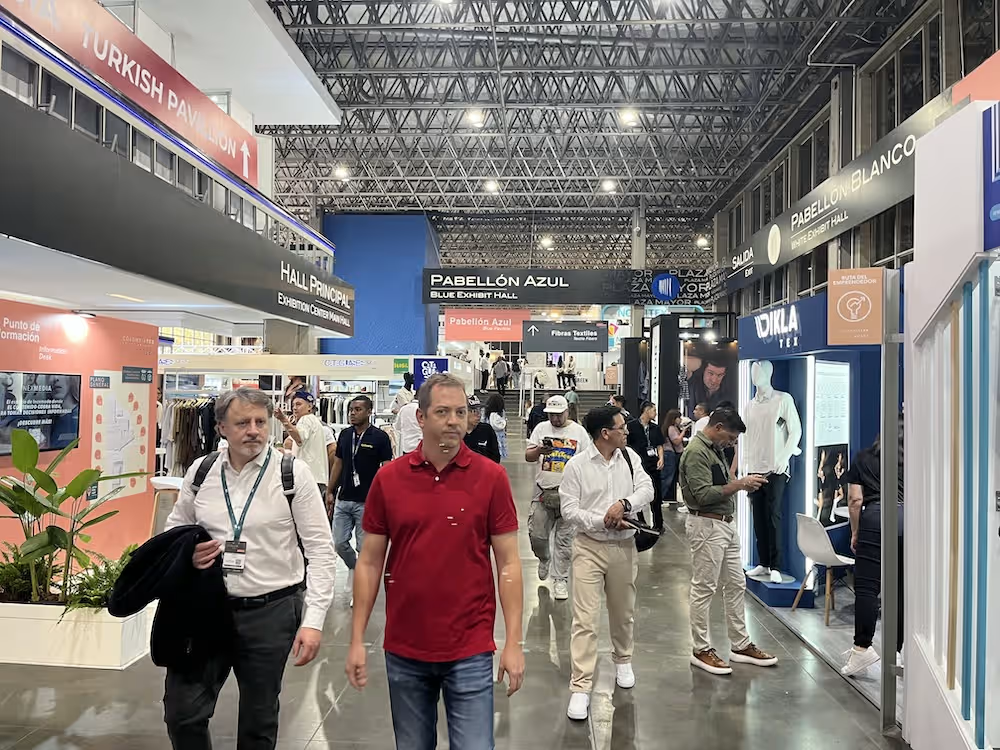
As the global textile machinery market continues to navigate through economic uncertainties, shifting investment patterns, and rising sustainability demands, exhibitions such as ColombiaTex are becoming increasingly important as strategic networking platforms for manufacturers, investors, and technology providers alike.
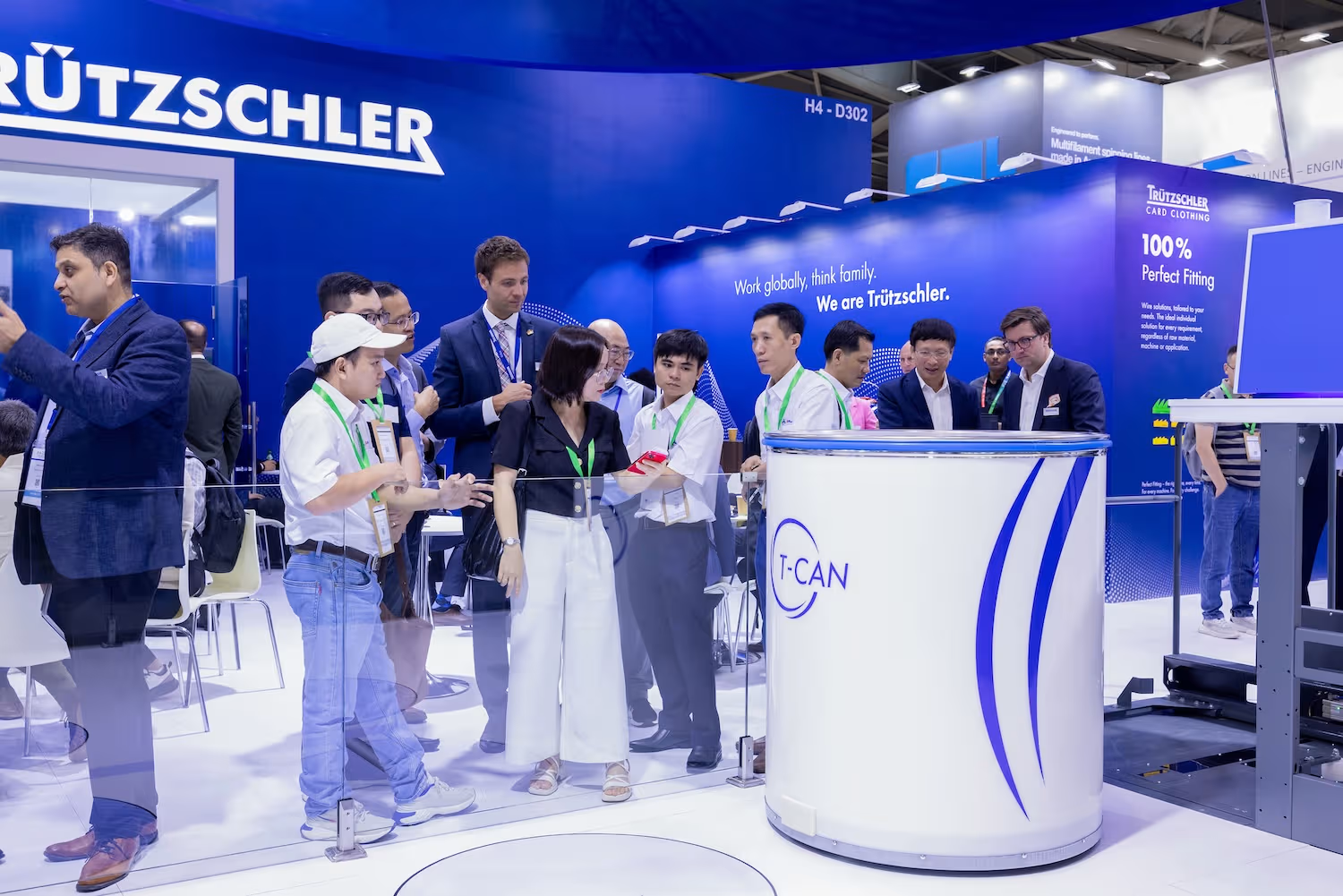
Speaking to Kohan Textile Journal during ColombiaTex 2026 in Medellín, Mr. Gerdhard Wienands, Regional Sales Manager at Trützschler Group, shared his insights on investment behavior in Latin America, the evolving textile landscape in Türkiye, automation trends, and the growing role of recycling technologies in modern yarn production.
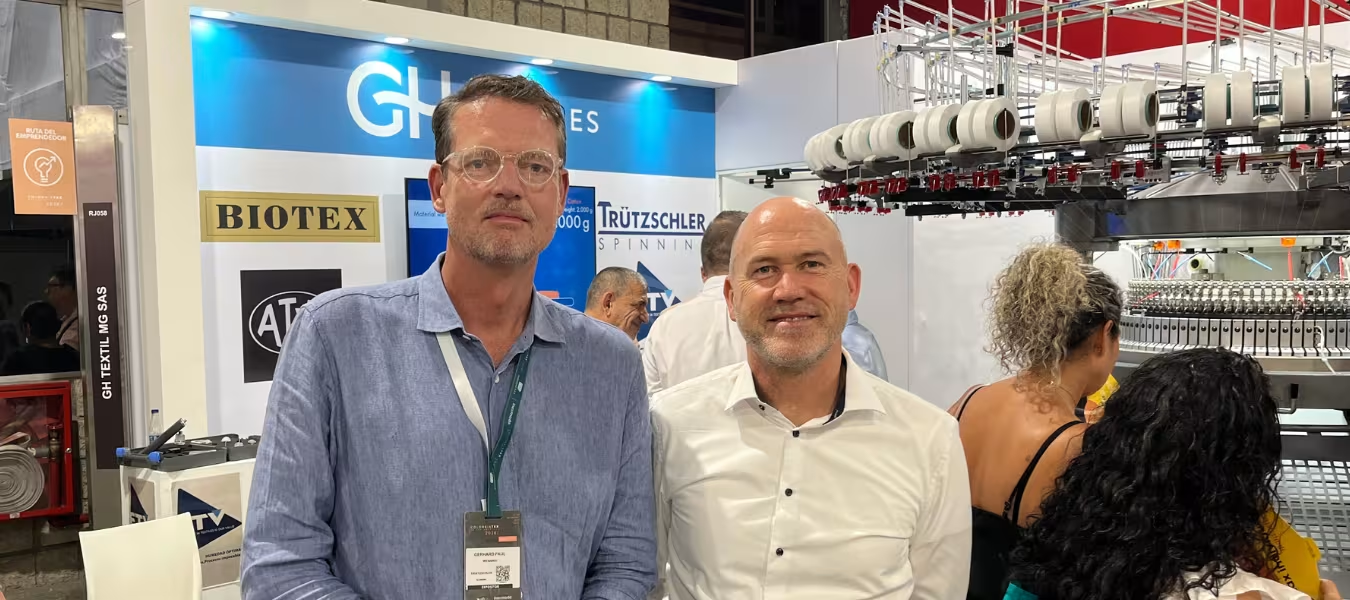
ColombiaTex as a Strategic Networking Platform
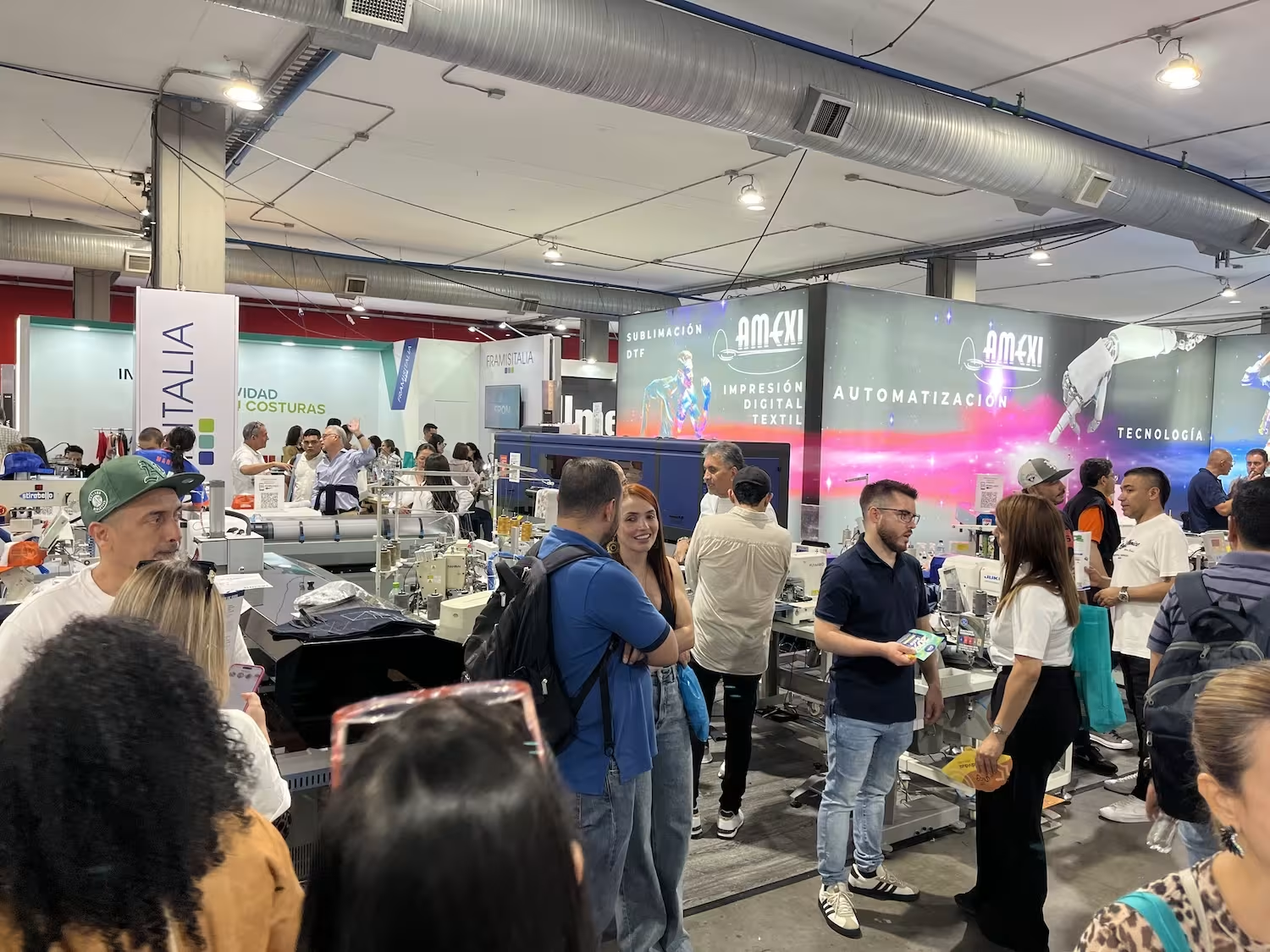
According to Wienands, ColombiaTex has evolved over the years into a more internationally diversified event.
While the spinning sector within Colombia itself has experienced contraction in recent years, the exhibition continues to attract a wide range of textile manufacturers and investors from across South America including Mexico, Argentina, Peru, and Ecuador.
In this context, the event functions less as a direct sales platform and more as a regional networking hub where machinery suppliers can engage with customers from multiple emerging markets simultaneously.
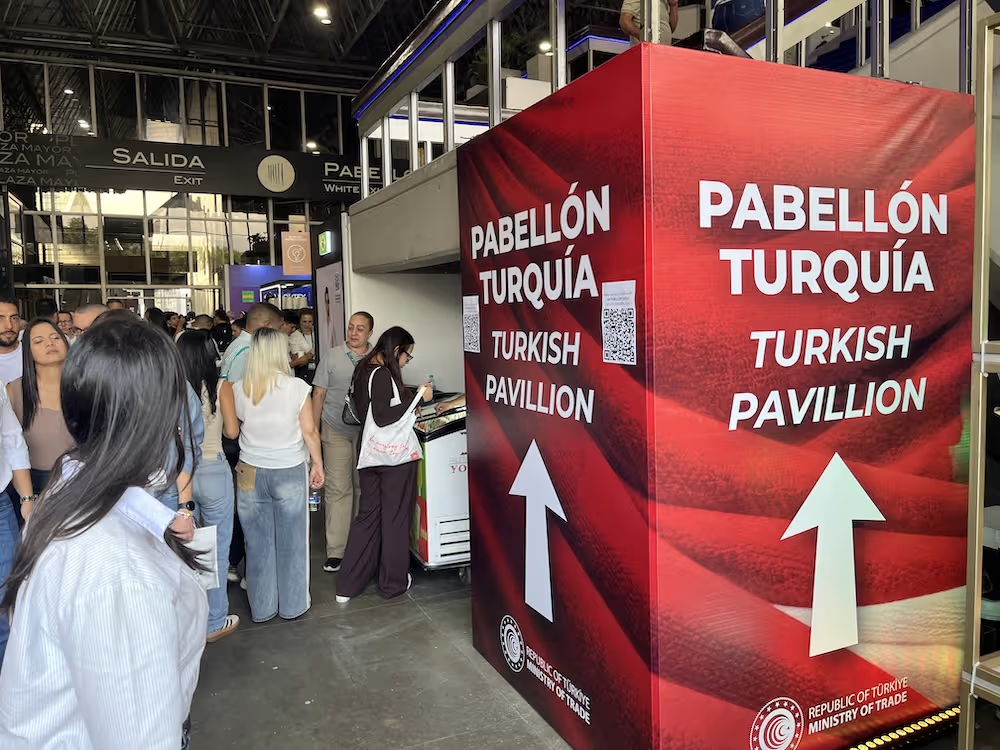
The growing presence of Turkish companies at the exhibition—highlighted by the establishment of a dedicated Turkish Pavilion—also reflects the increasing internationalization of textile investments across the region.
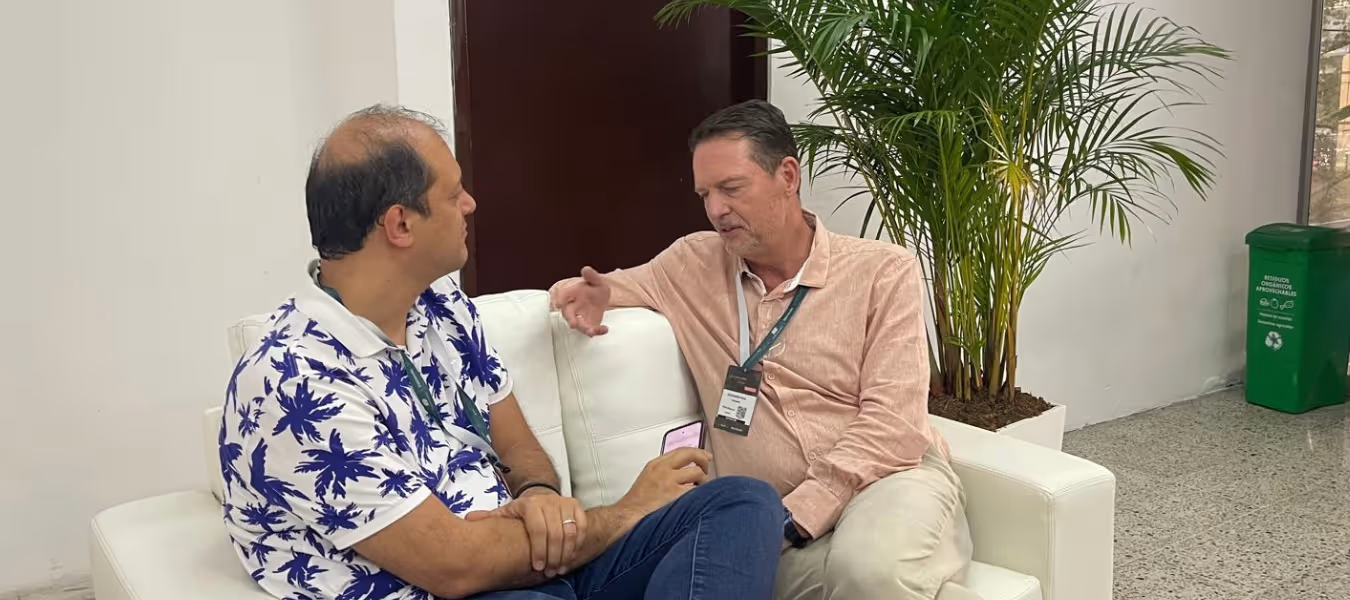
Political Uncertainty Delaying Investments in Latin America
Despite positive long-term indicators, Wienands noted that machinery purchasing decisions across Latin America are currently being influenced by political developments, particularly the upcoming election cycles in several countries.
As a result, many textile manufacturers are temporarily postponing capital investments until greater political clarity emerges regarding future economic policies and industrial support frameworks.
Nevertheless, Trützschler continues to observe encouraging signals in certain markets, suggesting that delayed investments may begin to materialize in the near future once political conditions stabilize.
Competition from Asia and the Role of R&D
The growing presence of Far Eastern manufacturers—particularly from China—has intensified competition within the global spinning machinery market.
However, Wienands emphasized that Trützschler’s long-standing strategy of continuous innovation remains its primary competitive advantage.
With a strong R&D base in Germany supported by international production and development partnerships, including facilities in China, the company continues to invest significantly in developing intelligent machine systems capable of addressing key operational challenges faced by yarn manufacturers worldwide.
These challenges include rising labor costs, increasing energy expenses, workforce instability, and the need for raw material optimization.
In response, Trützschler is focusing on integrated machine communication systems designed to enhance production efficiency, minimize material waste, and improve overall competitiveness for its customers.
Türkiye: From Post-COVID Boom to Market Saturation
Reflecting on the Turkish textile market, Wienands acknowledged that the post-COVID investment boom resulted in widespread machinery purchases and the emergence of numerous new spinning operations.
While this period generated strong growth across the sector, it also contributed to a level of market saturation.
Over the past two years, however, the global economic crisis has significantly affected investment activity in Türkiye, with many producers facing financial pressure.
Encouragingly, recent months have shown signs of recovery, particularly in projects related to recycling technologies and open-end spinning systems.
Egypt and Syria: Opportunities with Structural Challenges
The relocation of textile production from Türkiye to lower-cost labor markets such as Egypt has been widely discussed within the industry.
While some spinning investments have been considered, Wienands noted that the majority of relocation activity is occurring within labor-intensive garment manufacturing rather than capital-intensive spinning operations.
Moreover, bureaucratic complexities in Egypt have prompted certain investors to reconsider their expansion plans.
In Syria, meanwhile, interest in potential investments remains at an early stage.
Energy infrastructure and operational stability are currently viewed as prerequisites before significant textile investments can take place, although both Syrian and Turkish companies are reportedly exploring future opportunities in the region.
Automation and the Rise of AGV-Based Systems
Automation continues to gain traction across global spinning operations.
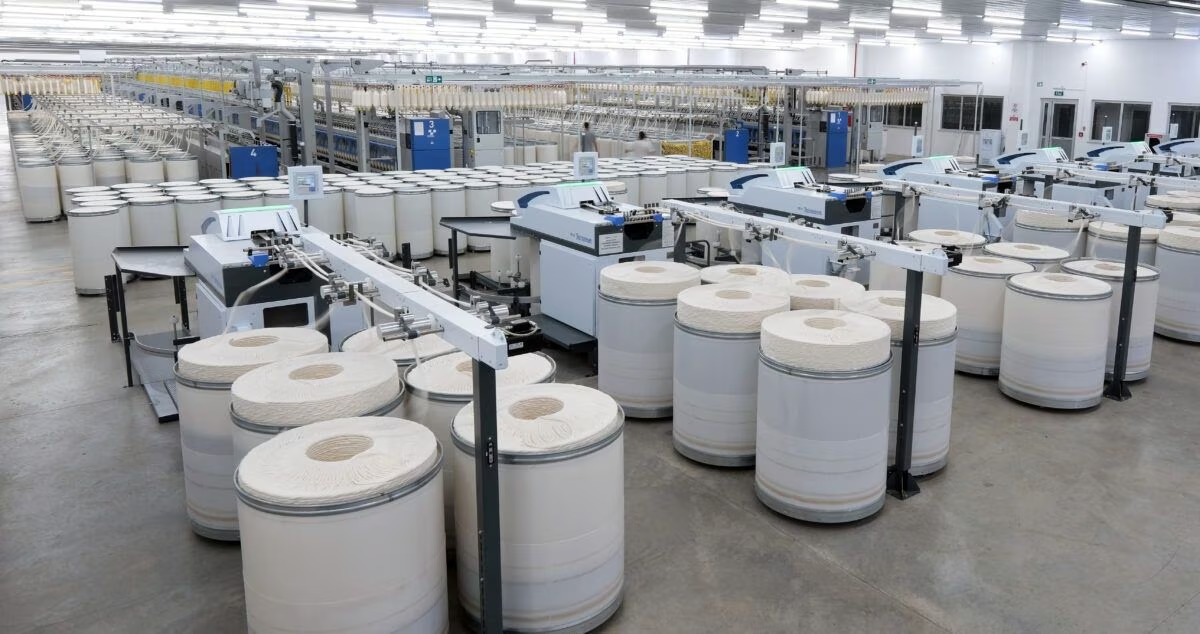
Trützschler recently introduced its T-CAN system—an automated can transportation solution driven by AGV (Automated Guided Vehicle) technology.
Originally perceived as more relevant for high-cost labor markets, AGV-based automation is now attracting interest even in countries with relatively moderate wage levels, including Türkiye.
With operator salaries rising from approximately USD 500 to over USD 1500 in recent years, automation investments are becoming increasingly attractive due to improved return on investment.
Several full-scale installations of AGV can systems have already been implemented worldwide, and testing phases are currently underway in Türkiye.
Recycling Technologies Driving Sustainability
Recycling remains one of the most rapidly developing areas within the textile industry.
Türkiye, particularly the city of Uşak, has long been recognized as a global leader in textile recycling, with extensive expertise in both pre-consumer and post-consumer processes.
Advancements in machinery now enable the use of shorter recycled fibers in yarn production, allowing manufacturers to blend recycled cotton with virgin material in order to reduce raw material costs.
Trützschler’s Integrated Draw Frame (IDF) system facilitates direct spinning of blended fibers by eliminating conventional draw frame passages—saving floor space, reducing labor requirements, and improving yarn quality.
Such technologies are particularly effective in open-end spinning systems, where customers can feed properly blended material directly into rotor spinning machines.
While post-consumer recycling presents significant future potential, its development will depend on the establishment of efficient garment collection infrastructures in key markets.

The Future of Textile Machinery Manufacturing
Although fundamental spinning processes have remained largely consistent over recent decades, ongoing developments in fiber handling, machine intelligence, and energy efficiency continue to redefine operational performance.
Modern blow room lines, for example, are designed to reduce fiber damage through fewer opening points, preserving fiber quality while minimizing energy consumption.
As global labor and energy costs continue to rise, machinery manufacturers are increasingly expected to deliver solutions that address these economic pressures.
According to Wienands, research and development remains a continuous process with no defined endpoint.
While revolutionary breakthroughs may not occur in the immediate future, incremental advancements in production capacity, quality, and machine intelligence will continue to shape the evolution of textile manufacturing technologies.












