Weavers Sales & Brand Manager Hakan Yılseli highlights Shanghai’s growing role as a meeting point for buyers from Asia, the Middle East, Europe, Australia and the Americas
For international home textile manufacturers, exhibiting in Shanghai is no longer simply about accessing the Chinese market. Major exhibitions are increasingly becoming global meeting points where suppliers can connect with buyers from multiple regions within a single event.
This was one of the key messages emerging from Intertextile Shanghai Home Textiles 2026, where Kohan Textile Journal spoke with Hakan Yılseli, Sales & Brand Manager at Weavers, a Türkiye-based upholstery fabric manufacturer.
According to Yılseli, the international profile of visitors makes Intertextile Shanghai an important commercial platform for companies looking beyond China and towards the wider Asian and global home textile markets.
“Shanghai Intertextile Show is a good bridge fair for us to reach all the Asian market,” Yılseli said, also highlighting opportunities involving buyers from Australia and Saudi Arabia.
For a company already exporting to more than 60 countries, the value of the exhibition lies not only in finding new customers, but also in bringing existing international business relationships together in one location.
Shanghai as a Global Meeting Point for Home Textiles
China remains one of the most influential manufacturing and sourcing markets in the global textile industry. However, the international significance of Intertextile Shanghai Home Textiles extends beyond domestic Chinese demand.
Yılseli said visitors to the exhibition come from a broad geographical range, including South America, North America, Europe, the Middle East and other international markets.
This creates an interesting dynamic for international exhibitors.
A Turkish manufacturer participating in Shanghai, for example, may meet a Saudi buyer, reconnect with an American customer and explore opportunities with an Asian distributor during the same exhibition.
For manufacturers operating globally, this concentration of buyers can make exhibitions such as Intertextile Shanghai particularly valuable.
Rather than viewing the event exclusively as an entry point into China, companies can use Shanghai as an international business hub for strengthening relationships across multiple markets.
Competing in China Requires More Than Competing on Price
Participating in a textile exhibition in China inevitably places international manufacturers alongside one of the world’s largest and most competitive textile manufacturing ecosystems.
Chinese producers benefit from enormous production capacity, extensive supply chains and highly competitive pricing in many textile categories.
Yılseli acknowledged that buyers attending the exhibition naturally want to examine Chinese products and compare prices.
However, his comments also point to a broader question facing textile manufacturers globally:
If competing purely on price becomes increasingly difficult, where can international manufacturers create differentiation?
For Weavers, the answer lies in flexibility, product development, service and value-added manufacturing.
The company specialises primarily in upholstery fabrics and produces a range that includes velvet, outdoor fabrics, chenille and different types of jacquard fabrics.
Rather than concentrating only on basic, high-volume products, the company has positioned part of its production around more specialised fabrics and finishes.
Value-Added Fabrics Become a Competitive Advantage
As global textile sourcing becomes increasingly competitive, differentiation is becoming particularly important for manufacturers located outside low-cost production centres.
Yılseli described Weavers’ strategy as focusing on products that are not necessarily easy or basic to manufacture.
The company’s integrated manufacturing capabilities play an important role in this strategy.
Based in Bursa, Türkiye, Weavers employs approximately 430 people and operates around 150 weaving looms, together with its own dyeing and finishing facilities.
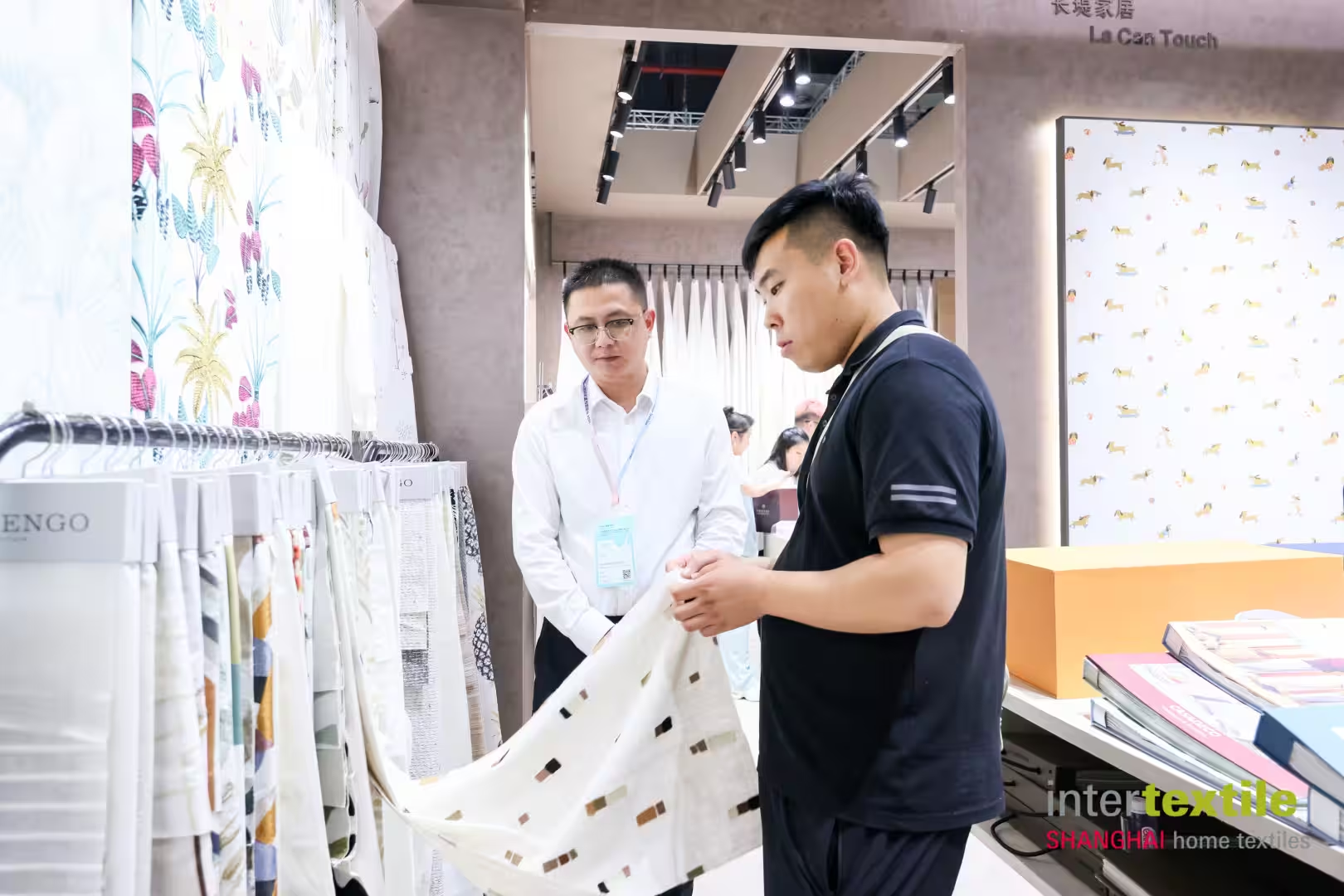
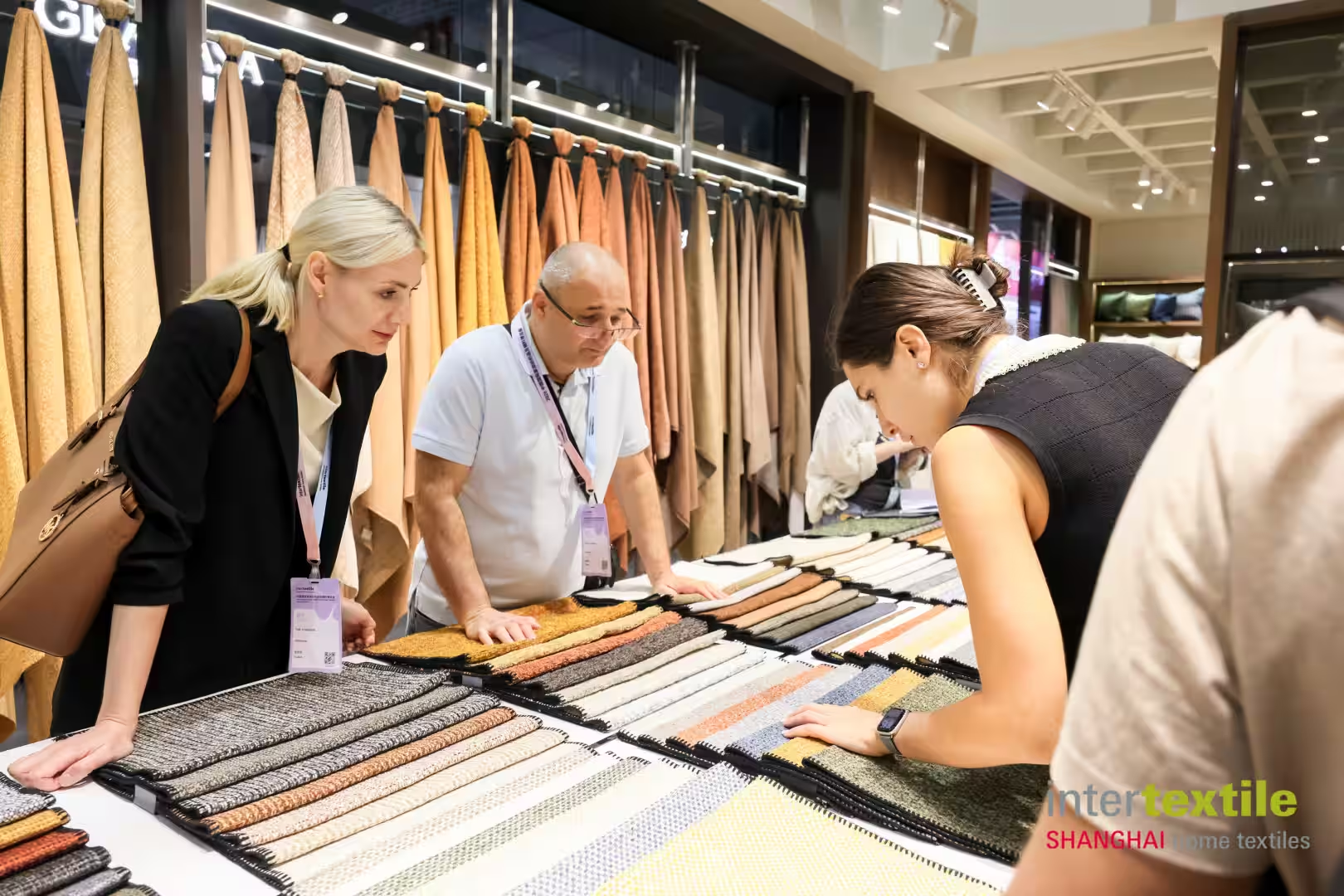
Having these processes internally allows the manufacturer to develop different treatments, colours and finishes while maintaining greater control over production.
This can be particularly valuable in upholstery and decorative fabrics, where buyers increasingly look for product differentiation rather than simply large volumes of standard designs.
The ability to modify finishes, colours and fabric characteristics can therefore become a commercial advantage when serving brands, wholesalers and interior textile customers looking for more specialised collections.
Production Flexibility Is Becoming More Important
Another important theme emerging from the interview was flexibility.
The global home textile business has changed considerably in recent years. Buyers increasingly expect suppliers to respond faster to changing collections, smaller orders and more diversified product requirements.
Large production capacity alone may therefore no longer be sufficient.
Manufacturers must increasingly combine scale with the ability to produce smaller quantities and respond quickly to individual customer requirements.
According to Yılseli, Weavers uses its integrated manufacturing structure to offer relatively low minimum order quantities even for certain value-added products.
This is significant because one of the traditional challenges for large textile factories is balancing industrial-scale manufacturing with smaller and more customised orders.
Being able to offer both can help manufacturers serve a broader customer base.
Türkiye’s Geographic Position Remains an Important Advantage
The interview also highlighted another competitive factor for Turkish textile manufacturers: delivery speed to major Western markets.
China’s manufacturing scale is difficult to match, but Türkiye has a significant geographic advantage when serving Europe.
For some product categories and customers, shorter delivery times can compensate for differences in manufacturing costs.
Yılseli also pointed to delivery capabilities to the United States as part of the company’s international service strategy.
This reflects a wider development within textile sourcing.
Price remains extremely important, but buyers increasingly evaluate suppliers based on a combination of factors including lead time, minimum order quantities, product flexibility, service, quality and reliability.
The lowest fabric price does not necessarily represent the best sourcing solution when inventory requirements, delivery schedules and product development needs are considered.
From Mass Production to Customer-Oriented Manufacturing
One of the most interesting aspects of Yılseli’s comments is the emphasis on customer-oriented production.
Weavers currently exports to more than 60 countries, with Europe and the United States representing its main international markets.
Operating across such a diverse customer base requires manufacturers to respond to different aesthetic preferences, technical specifications and commercial requirements.
The company’s own dyeing and finishing capabilities allow it to develop colours and treatments according to customer requirements rather than relying exclusively on fixed collections.
This type of manufacturing flexibility is becoming increasingly relevant in the global home textile market.
Brands and buyers are under pressure to introduce collections more frequently while simultaneously managing inventory risk. Suppliers capable of producing differentiated products in smaller quantities can therefore become increasingly attractive partners.
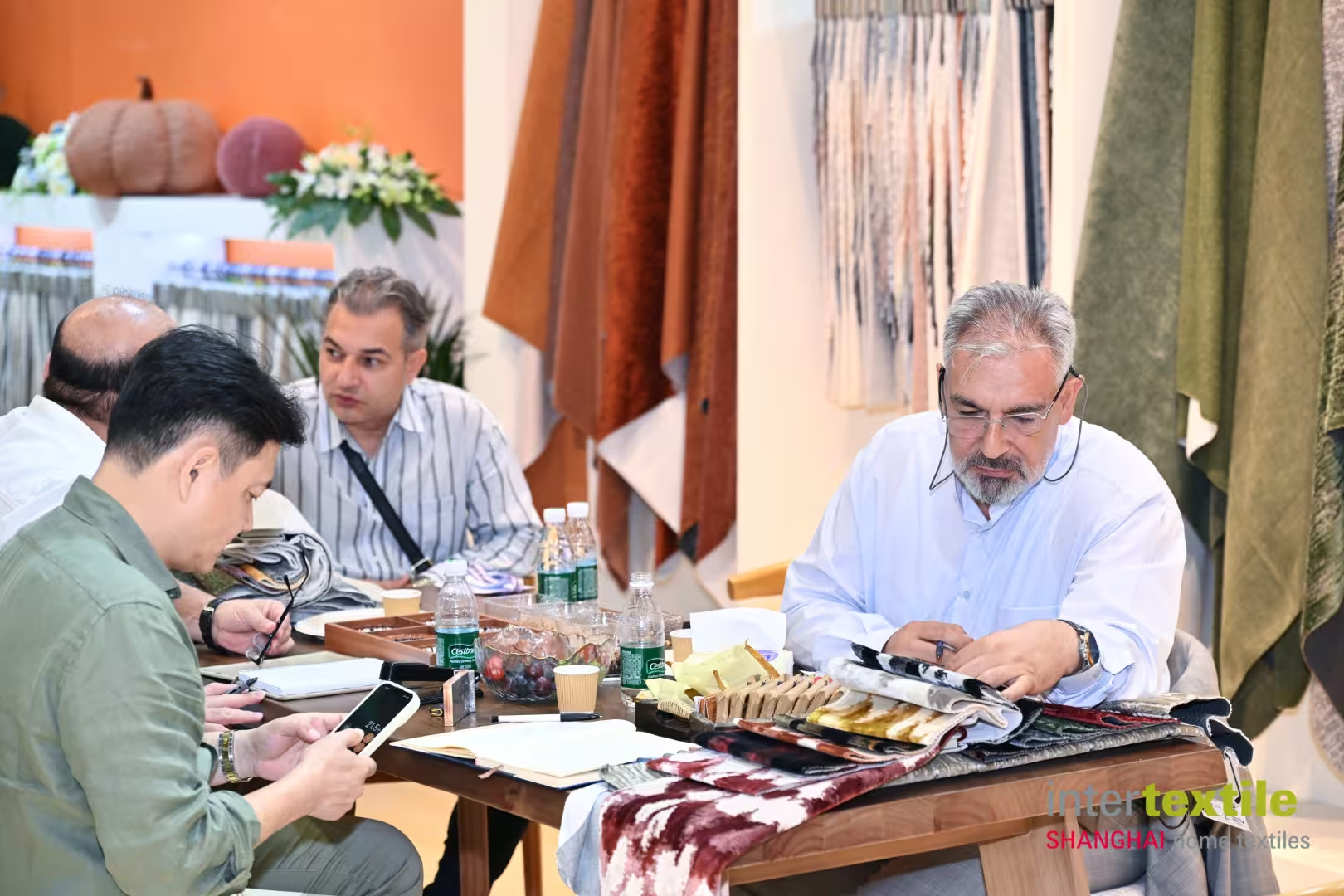
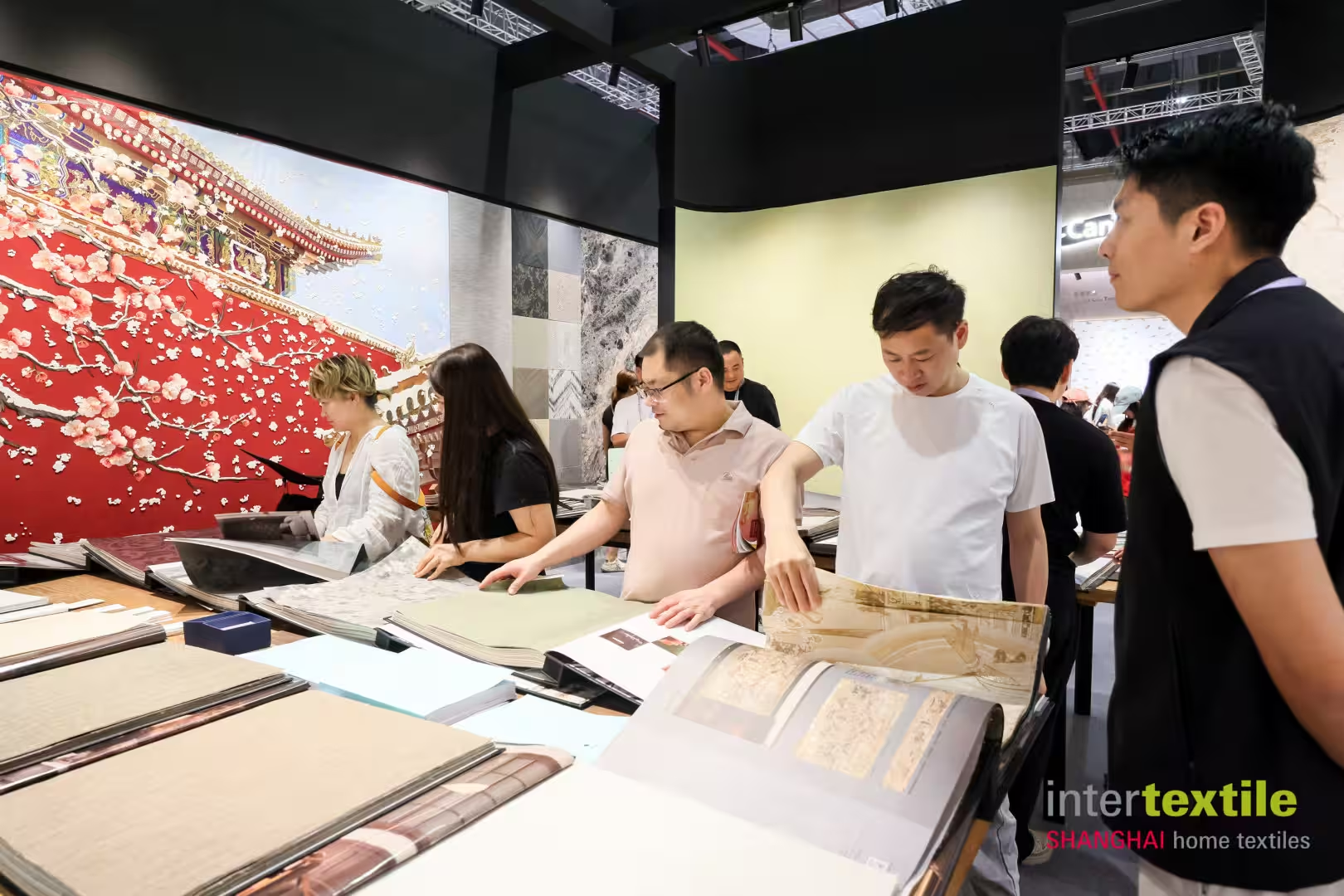
Why Intertextile Shanghai Matters for International Exhibitors
Yılseli’s perspective illustrates why Intertextile Shanghai Home Textiles remains relevant even for manufacturers whose primary markets are outside China.
International exhibitions increasingly function as global sourcing ecosystems rather than purely regional trade fairs.
For exporters, their value comes from several directions at once: meeting existing customers, identifying new buyers, observing competitors, understanding price developments and seeing new products and market trends.
Shanghai provides another advantage: international exhibitors can observe the Chinese textile industry directly while simultaneously presenting their own alternative value propositions.
For manufacturers from Türkiye and other textile-producing countries, this makes participation particularly interesting.
They do not necessarily need to compete with Chinese suppliers on exactly the same terms.
Instead, they can position themselves around areas where they have stronger advantages — whether that means specialised products, shorter lead times, flexible quantities, design capability, finishing expertise or customer service.
Intertextile Shanghai Reflects a Changing Global Sourcing Market
The broader message from Intertextile Shanghai Home Textiles 2026 is that global sourcing is becoming increasingly multidimensional.
Cost remains critical, but buyers are also considering speed, flexibility, differentiation and supply reliability when selecting manufacturing partners.
At the same time, textile exhibitions are evolving accordingly.
They are no longer simply places where manufacturers display their latest collections. They are becoming international meeting points where buyers compare different manufacturing models and sourcing strategies from around the world.
For companies such as Weavers, Shanghai therefore provides something broader than access to the Chinese market.
It offers an opportunity to demonstrate how Turkish textile manufacturing can compete through value-added products, flexible production, integrated finishing capabilities and customer-oriented service while meeting buyers from multiple continents in one location.
And perhaps that is one of the strongest reasons Intertextile Shanghai continues to matter internationally: the exhibition brings different textile manufacturing strengths, sourcing strategies and markets together under one roof.