
EURATEX has submitted its contribution to the European Commission’s public consultation on the future European Partnerships under Horizon Europe 2028–2034, calling for the continuation of a dedicated European research and innovation partnership for the textile and clothing industry.
As the European Commission prepares the next EU research and innovation framework, the future of sector-specific partnerships is under discussion. EURATEX stresses that textiles must remain a strategic priority, ensuring that European companies, particularly SMEs, can access the research, technologies and funding needed to strengthen their competitiveness.
The European textile and clothing industry generates €166 billion in annual turnover and employs 1.2 million people across approximately 194,000 companies. With 99.8% of businesses being SMEs, dedicated European cooperation is essential to translate research into practical industrial solutions.
Read More: EU Report Highlights 10 Best Practices Driving Textile Transition
Keeping Textiles of the Future at the Heart of European Innovation
EURATEX calls for the continuation and reinforcement of Textiles of the Future, the co-programmed European Partnership launched under Horizon Europe’s 2025–2027 Strategic Plan.
The partnership connects companies, research organisations and technology providers to address common industrial challenges. It is expected to mobilise at least €60 million in its initial phase, with projects running until 2030.
Discontinuing the partnership after 2027 would risk interrupting this momentum before its first projects have delivered their full results.
EURATEX therefore advocates a reinforced partnership under Horizon Europe 2028–2034, working alongside broader European initiatives covering advanced materials, artificial intelligence, robotics, manufacturing and the bioeconomy.
The objective is not to create additional structures, but to ensure that new technologies reach textile factories and become commercially viable solutions.
Three Priorities for the Textile Industry’s Future
EURATEX identifies three areas where coordinated European research and innovation can make a decisive difference:
- Competitiveness: accelerating industrial innovation, advanced manufacturing and automation to strengthen European production capacity and reduce dependence on external suppliers.
- Digitalisation: supporting the adoption of artificial intelligence, digital manufacturing processes, interoperable data systems and the Digital Product Passport, particularly among SMEs.
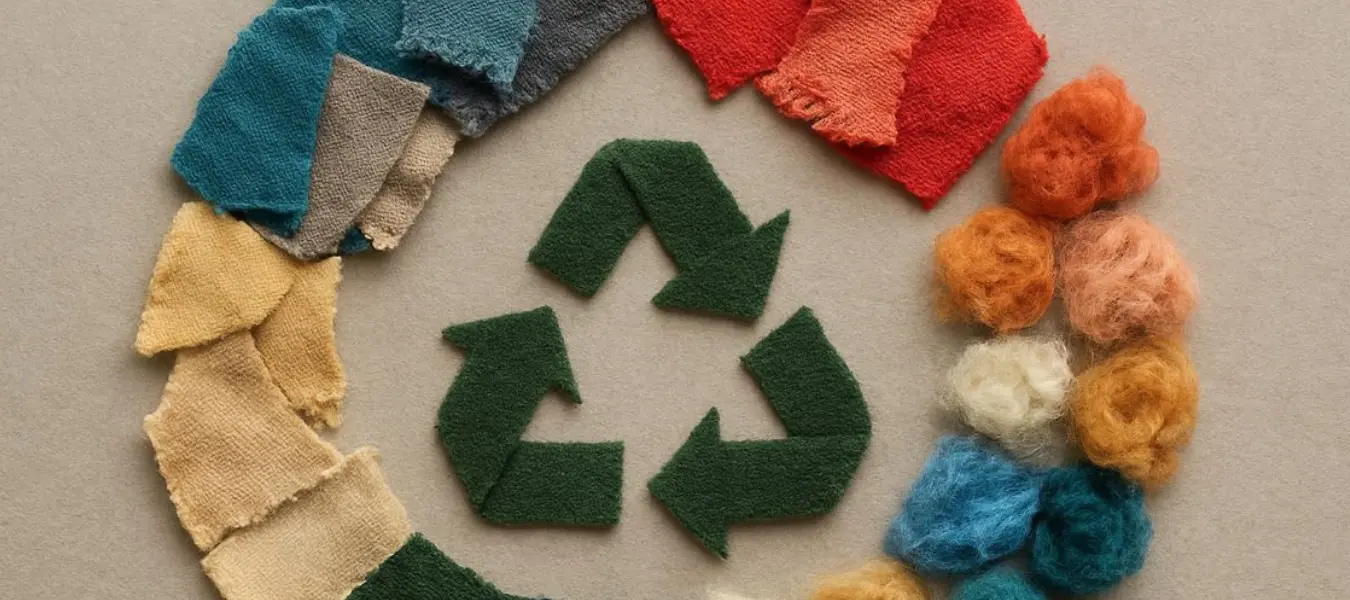
- Circularity: developing industrial-scale textile-to-textile recycling, automated sorting, sustainable materials and circular business models.
These challenges cannot be addressed by individual companies or Member States alone. They require coordinated investment, shared expertise and cooperation across the entire textile value chain.
Making European Innovation Funding Accessible to SMEs
A central message of EURATEX’s contribution is that European Partnerships must remain accessible to smaller companies.
Many textile businesses lack dedicated research departments or the resources to navigate complex EU funding procedures. EURATEX therefore calls for simplified administrative requirements, proportionate participation rules and cascade funding to facilitate SME involvement.
The Confederation also underlines the importance of connecting Horizon Europe research with industrial investment. The future European Competitiveness Fund should help promising innovations move from demonstration to large-scale industrial deployment.
Ensuring Textiles Remain a European Strategic Priority
The transition towards a more sustainable, digital and competitive textile industry requires long-term commitment.
EURATEX’s contribution emphasises that simplifying the European Partnerships landscape must not come at the expense of strategic industrial ecosystems.
Maintaining a dedicated textile partnership would help ensure that European research translates into European manufacturing, investment and jobs.