




Europe is not the world’s largest producer of commodity textile fibers and yarns, but it remains one of the most influential regions for specialty materials, technical yarns, regenerated cellulose, recycled polyester, high-performance polymers and traceable textile solutions.
Global fiber production reached a record 132 million tonnes in 2024, reflecting continued growth in demand from apparel, home textiles, automotive materials, nonwovens and industrial applications. At the same time, the European market is moving toward higher-value products that combine performance, sustainability and regulatory compliance.
According to Grand View Research, the European textile fiber market generated approximately US$13.6 billion in revenue in 2024 and could reach around US$17.3 billion by 2030, representing expected annual growth of 4.1%. Synthetic fibers accounted for the largest revenue share, while demand is increasingly influenced by functional apparel, technical textiles, regional sourcing and sustainability requirements.
Read more: Top Fabric Producing Countries in the World
European Fiber and Yarn Market Overview
Synthetic materials continue to play a dominant role in European textile production. The European Environment Agency reports that synthetic materials represented 58% of all fibers and yarns used by EU industry in 2022, equivalent to approximately 2.8 million tonnes.
However, the market is changing rapidly. Brands and manufacturers increasingly require recycled content, lower-carbon production, certified raw materials, product traceability and fibers designed for easier recycling. The EU Strategy for Sustainable and Circular Textiles is reinforcing this transition by encouraging durable, recyclable and responsibly manufactured products.
European producers increasingly compete through:
- Regenerated and bio-based cellulosic fibers
- Recycled nylon and polyester
- High-tenacity industrial yarns
- Flame-retardant and antimicrobial fibers
- Aramid and technical reinforcement materials
- Functional yarns for sportswear and automotive textiles
- Traceable and lower-impact production
- Custom-made materials for specialized applications
The following companies are presented as an editorial industry guide rather than a strict revenue ranking. Selection was based on European manufacturing presence, specialization, international reach, technology, sustainability initiatives and relevance to textile markets.
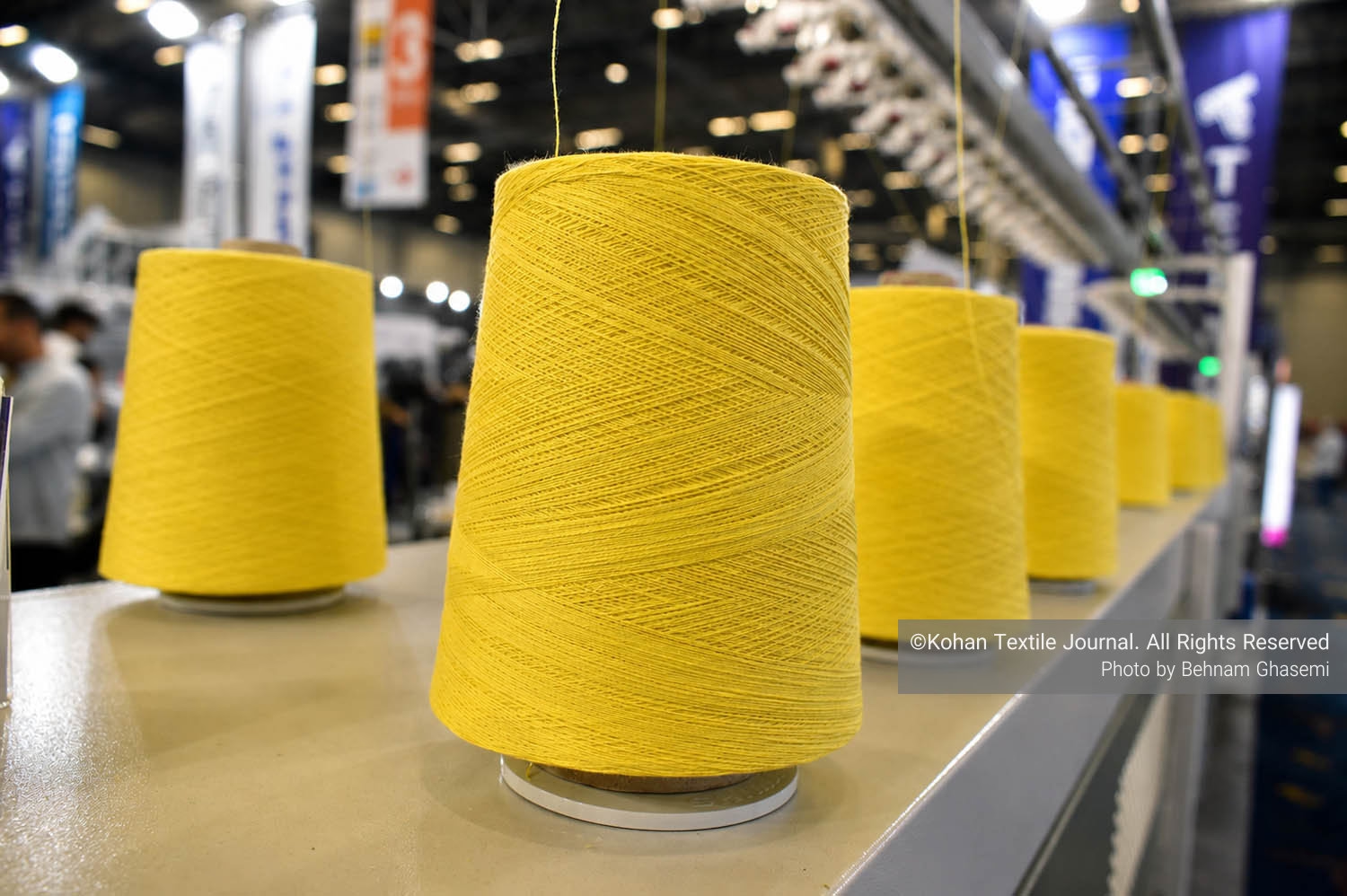
1. Lenzing Group
Country: Austria
Website: www.lenzing.com
Lenzing is one of Europe’s most internationally recognized producers of regenerated cellulosic fibers. The Austrian group develops wood-based fibers for apparel, home textiles, nonwovens, hygiene products, protective clothing and specialty applications. Its principal brands include TENCEL, LENZING ECOVERO, VEOCEL and LENZING industrial fibers. The portfolio includes lyocell, modal and viscose fibers engineered for different performance, processing and sustainability requirements.
Lenzing’s market strength lies in combining cellulose expertise with branded ingredient fibers, global manufacturing and close cooperation with textile mills and fashion brands. The company has also developed fiber-identification technologies intended to improve traceability across textile supply chains. For European buyers, Lenzing is especially relevant to responsible fashion, denim, activewear, intimate apparel, home textiles, wipes and nonwoven applications seeking alternatives to conventional synthetic fibers.
2. Aquafil
Country: Italy
Website: www.aquafil.com
Aquafil is an Italian producer specializing in Polyamide 6 polymers and nylon yarns for carpets, apparel, sportswear and technical applications. The group is particularly known for ECONYL regenerated nylon, produced from nylon waste such as fishing nets, industrial material and end-of-life textile flooring.
Aquafil supplies bulk continuous filament yarn for residential, commercial and automotive carpets as well as nylon textile filament for fashion, swimwear and performance apparel. Its vertically connected activities cover polymer production, yarn development, recycling technology and engineering services.
The ECONYL regeneration system chemically converts nylon waste back into raw material while maintaining performance comparable to conventional nylon. This has made Aquafil an important partner for brands developing circular products. The company’s combination of carpet-yarn expertise and regenerated nylon technology gives it a distinctive position within Europe’s synthetic-fiber industry.
3. RadiciGroup
Country: Italy
Website: www.radicigroup.com
RadiciGroup has extensive experience in nylon, polyester and specialty textile materials. Its advanced textile operations produce yarns, fibers and nonwovens used in apparel, sportswear, furnishings, flooring, automotive interiors, construction, filtration and medical applications.
Its textile portfolio has included PA6 and PA6.6 yarns, polyester continuous filament, high-tenacity yarns, recycled materials, bio-based products and functionalized textile solutions. Brands associated with its textile activities include Radilon, Radyarn, Starlight, Radifloor, Renycle and Repetable.
The company’s strengths include polymer knowledge, spinning expertise and the ability to develop materials for precise technical requirements. RadiciGroup has also participated in projects focused on recycling mixed-fiber garments and returning recovered nylon to new yarn production. Its solutions are particularly relevant to circular fashion, automotive textiles, technical applications and performance apparel.
4. Korteks

Country: Türkiye
Website: www.korteks.com.tr
Korteks is one of the largest integrated polyester filament-yarn manufacturers in the wider European textile region. Established in Bursa in 1989, the company produces standard, textured, functional, automotive, carpet and recycled polyester yarns.
Korteks reports approximately 200,000 tonnes of annual production capacity and exports to markets across Europe, North America, Africa and Latin America. Its yarns are used in apparel, curtains, bedding, carpets, towels, upholstery, automotive interiors and outdoor textiles.
The company operates its own polymerization, spinning, texturing, twisting, research and recycling infrastructure. Sustainable product ranges include TAÇ REBORN recycled yarn and dope-dyed solutions designed to reduce water consumption during coloration. Korteks is especially relevant to large fabric mills requiring integrated supply, wide yarn specifications, functional development and industrial-scale delivery from a regional producer.
5. Kelheim Fibres
Country: Germany
Website: www.kelheim-fibres.com
Kelheim Fibres is a German manufacturer specializing in customized viscose staple fibers. The company has produced viscose at its Kelheim facility since 1936 and focuses primarily on specialty materials rather than commodity fiber production.
Its fibers are developed for hygiene products, absorbent nonwovens, medical textiles, filtration, performance apparel, specialty papers and technical applications. Kelheim can modify fiber cross-sections, dimensions and functional properties to support specific product requirements.
This customization capability has made the company an important development partner for brands, nonwoven manufacturers and textile converters seeking bio-based materials with engineered performance.
Following a restructuring process that began in 2024, Kelheim stated in 2025 that it had sharpened its focus on core specialty-fiber segments and established a more sustainable operating model. Its continued European production also supports shorter and more transparent regional supply chains.
6. Teijin Aramid

Country: Netherlands
Website: www.teijinaramid.com
Teijin Aramid develops and manufactures high-performance aramid fibers, yarns and pulp for applications requiring exceptional strength, heat resistance and low weight. Its best-known products include Twaron, Technora and aramid-based converted materials.
The company’s European operations include polymer production in Delfzijl, yarn manufacturing in Emmen and research, recycling and application development in Arnhem. The Emmen facility is described by Teijin Aramid as the world’s largest aramid-production site.
Twaron yarn is used in ballistic protection, optical cables, tires, hoses, composites, renewable-energy systems, marine equipment and protective clothing. The material provides high tensile strength and resistance to heat and chemicals while remaining significantly lighter than steel. Teijin Aramid is particularly important to European technical-textile and composite supply chains where safety, durability and mechanical performance are critical.
7. Trevira by Indorama Ventures
Country: Germany
Website: www.trevira.de
Trevira is a long-established European name in specialty polyester staple fibers and filament yarns. The business now operates within Indorama Ventures and supplies materials for home textiles, contract interiors, automotive applications, apparel, hygiene products and technical textiles.
Its best-known product platform is Trevira CS, based on inherently and permanently flame-retardant polyester fibers and yarns. Because the flame-retardant properties are built into the polymer rather than applied as a surface finish, they remain effective throughout the textile’s service life.
Trevira also offers functional polyester materials for performance clothing, low-pill textiles, antimicrobial applications and industrial uses. Its European production infrastructure includes manufacturing and development capabilities in Germany. The company is especially influential in hospitality, public interiors, cruise ships, rail transportation and office textiles where fire safety and durability requirements are central.
8. Brilen

Country: Spain
Website: www.brilen.com
Brilen is a Spanish producer of high-tenacity polyester industrial yarns and a member of SAMCA Group. Its fully integrated Barbastro operation covers production from PET polymer through to finished yarn.
The company produces yarns in different tenacities, shrinkage levels, twists, colors and package formats. Applications include technical fabrics, hoses, conveyor materials, automotive textiles, roofing membranes, sailcloth, geotextiles, medical products and industrial reinforcement. Brilen reports production capacity of approximately 20,000 tonnes per year and offers customized developments for customers with specific mechanical or processing requirements.
Its sustainability activities include recycled-yarn certification, post-industrial recovery projects, energy-management systems and extensive use of photovoltaic power at the Barbastro industrial site. Brilen’s specialization makes it particularly relevant to European technical-textile companies requiring high-performance polyester with regional production and technical support.
9. Nurel

Country: Spain
Website: www.nurel.com
Nurel is an integrated producer of Nylon 6 and Nylon 6.6 filament yarns based in Zaragoza. The company operates its own polymer manufacturing and spinning facilities, enabling close control over raw material, filament properties and final performance.
Its production includes multifilament, microfilament, functional, recycled and specialized nylon yarns for intimate apparel, hosiery, sportswear, activewear, fashion and technical textiles. Branded platforms include Novarel cosmetic fibers and Xtra functional yarns developed for moisture management, thermal comfort and freshness.
Nurel reports approximately 7,500 tonnes of annual yarn capacity, with most of its nylon-fiber production exported to European and Asian markets. The company combines textile research with expertise in engineering polymers and biopolymers. It is especially relevant to mills and brands looking for differentiated European nylon yarns with functional and performance characteristics.
10. Cordenka
Country: Germany
Website: www.cordenka.com
Cordenka is a specialist producer of high-tenacity industrial rayon. Its cellulose-based multifilament yarn is primarily used to reinforce tires, automotive hoses, rubber products, composites, geotextiles and agricultural materials.
Unlike conventional short-staple viscose, CORDENKA Rayon is manufactured as a continuous filament yarn. It offers dimensional stability, low heat shrinkage, chemical resistance and strong adhesion performance in demanding rubber and composite applications. The company operates its principal yarn-production facility in Obernburg, Germany, with additional converting operations in Germany and Poland. Cordenka reports annual rayon capacity of approximately 32,000 tonnes.
Its bio-based feedstock and technical properties make industrial rayon an alternative to some fossil-based reinforcement fibers. Cordenka is therefore relevant to automotive, transportation and industrial companies seeking renewable-content reinforcement materials without sacrificing mechanical performance.
11. Wellman International
Country: Ireland
Website: www.wellman-intl.com
Wellman International is a European producer of recycled polyester staple fibers. Its materials are primarily manufactured from recycled PET and supplied to bedding, furniture, automotive, filtration, nonwoven, insulation and technical markets. The company offers solid and hollow fibers in multiple decitex levels, cut lengths and finishes. Its portfolio includes filling fibers, flame-resistant products, automotive materials, bonding fibers and functional solutions for moisture and thermal management.
Wellman’s position is significant because it combines large-scale European recycling with downstream fiber production. This gives customers access to recycled PET materials designed for specific processing and performance requirements. The company emphasizes that its fibers can help customers reduce dependence on virgin raw materials and lower Scope 3 emissions. It is particularly relevant to manufacturers of cushions, mattresses, acoustic products, molded automotive components and technical nonwovens.
12. Lankhorst Yarns
Country: Netherlands / Portugal
Website: www.lankhorstyarns.com
Lankhorst Yarns produces technical yarns, tapes, braids and industrial fibers for specialized markets. The company’s management and sales operations are based in the Netherlands, while production takes place near Porto in Maia, Portugal.
Its products serve geotextiles, carpet weaving, artificial grass, cables, horticulture, industrial reinforcement, flexible intermediate bulk containers and electrical fencing. The company works with polypropylene, polyester, polyamide and other technical materials, frequently adapting constructions to individual customer requirements.
Lankhorst also develops recyclable and bio-based alternatives. Its PURE® polypropylene composite tapes are designed for thermoforming and recycling, while its PLA horticultural twine can be industrially composted with crop residue. The company is a strong choice for customers requiring technical customization, flexible production and yarns engineered for non-apparel industrial markets.
Major Trends Shaping European Fiber and Yarn Production
Circular and Recycled Materials
European manufacturers are investing in regenerated nylon, recycled polyester, recovered polyamide and textile-to-textile recycling. Aquafil’s ECONYL, Wellman’s recycled polyester and Korteks’ TAÇ REBORN are examples of materials designed to reduce dependence on virgin fossil resources.
Specialty Fibers Over Commodity Volume
European companies increasingly compete in products where technical performance, certification and customization matter more than the lowest possible price. Aramid, industrial rayon, flame-retardant polyester and functional nylon yarns illustrate this strategy.
Traceability and Supply-Chain Transparency
Brands increasingly want to verify fiber origin, recycled content and production conditions. Fiber identification, digital documentation and certified supply chains are therefore becoming important purchasing criteria.
Technical Textiles and Mobility
Automotive interiors, tire reinforcement, filtration, protective clothing, geotextiles, medical products and renewable-energy systems provide important growth opportunities for European technical-fiber and yarn producers.
Regional Production and Supply Security
European manufacturing can offer shorter lead times, closer technical cooperation and easier compliance with EU regulations. These advantages are especially valuable for premium apparel, technical textiles and time-sensitive development projects.
Read more: Textile Machinery Manufacturers in Europe ; 2026 Industry Guide
How to Select a European Fiber or Yarn Supplier
Buyers should evaluate more than the basic fiber composition or yarn count. Important criteria include:
- Manufacturing location and available capacity
- Polymer or raw-material source
- Recycled or bio-based content
- Traceability and chain-of-custody systems
- Mechanical and functional performance
- Dyeing and processing compatibility
- Minimum order quantities
- Development and laboratory support
- Certifications and restricted-substance compliance
- Lead times and regional warehousing
- End-of-life and recycling potential
- Technical support for trials and commercialization
Samples should be tested through spinning, knitting, weaving, dyeing and finishing under real production conditions before a large commercial order is confirmed.
Conclusion
The leading European fiber and yarn producers are no longer competing primarily through commodity volume. Their strength lies in material science, regional manufacturing, customization, technical support and the development of lower-impact textile solutions.
Lenzing and Kelheim Fibres demonstrate Europe’s expertise in regenerated cellulose. Aquafil, Korteks, Brilen, Nurel, Trevira and Wellman provide advanced synthetic and recycled materials. Teijin Aramid and Cordenka serve demanding reinforcement markets, while RadiciGroup and Lankhorst develop broad technical solutions for apparel, interiors, mobility and industry.
As European textile regulation, circularity requirements and customer expectations continue to evolve, these companies will play an important role in connecting material innovation with commercially scalable textile production.











