






- Europe’s textile sector lacks a shared, harmonized fact base on textile waste, making it difficult for industry, policymakers and investors to align on the scale of the challenge and the solutions required.
- This report establishes a first unified baseline for textile waste in Europe and assesses what it would take to scale textile-to-textile (T2T) recycling by 2035.
- The analysis identifies a critical tipping point of around c. 2.7 Mt of textile-to-textile recycling per year needed for a viable circular textile ecosystem in Europe.
- While the technology exists, the economics do not yet work at scale. Reaching this milestone will require approximately €8-11 billion in capital investment and €5-6.5 billion in recurring annual operating costs by 2035, alongside mechanisms to close the cost gap across the value chain.
- Coordinated action across the entire textile value chain is essential to unlock scale and enable a circular textile economy in Europe, a transformation that ReHubs is helping to drive.
Europe Faces Urgent Textile Waste Challenge, BCG Report Warns
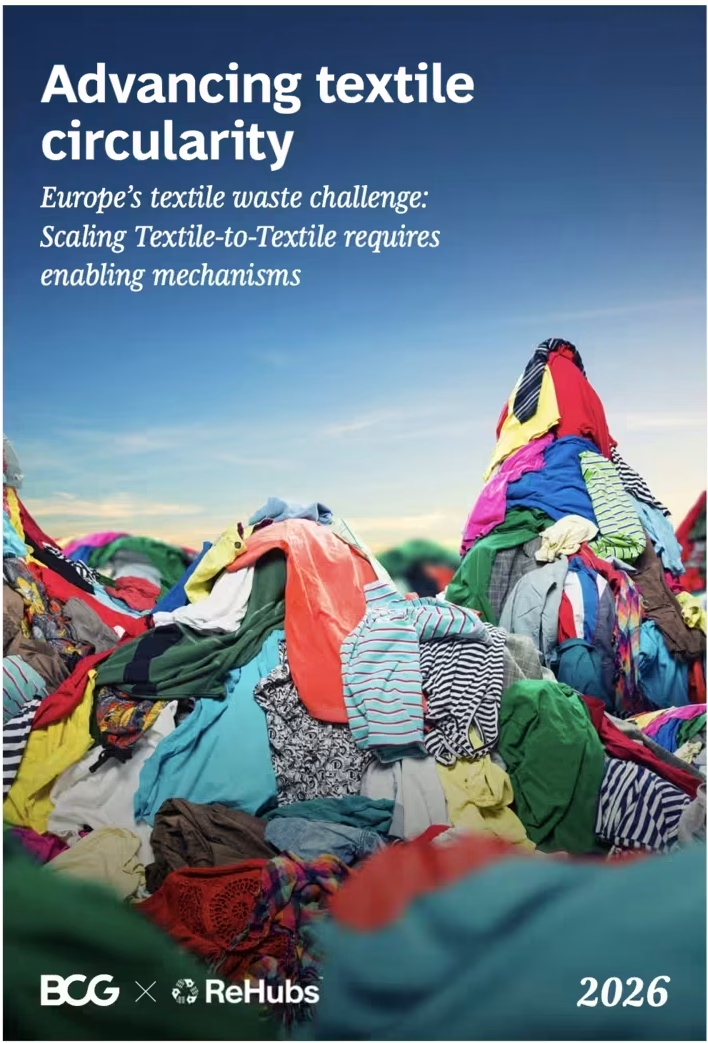
A new report from Boston Consulting Group (BCG) and ReHubs, titled “Advancing Textile Circularity – Europe’s textile waste challenge: Scaling Textile-to-Textile requires enabling mechanisms”, highlights the urgent need for systemic action to tackle Europe’s growing textile waste and scale a circular textile economy.
The report establishes the first harmonized fact base on textile waste in Europe. It finds that Europe generates around 15.2 million tonnes of textile waste every year, including 13.3 million tonnes of post-consumer waste. However, only a small share of this waste is collected and sorted for recycling, leaving most textile waste outside recycling systems.
As a result, textile-to-textile recycling currently represents less than 1% of post-consumer textile waste in Europe. At the same time, waste volumes continue to rise rapidly. Without decisive action, Europe’s textile waste could reach the equivalent of around 80 football stadiums filled with discarded textiles every year by 2035.
Read more: ReHubs to Unveil Strategy and Tactical Action Plan to Industrialise Textile Circularity by 2032
The report shows that scaling textile-to-textile recycling is technically possible but requires reaching a critical tipping point of c. 2.7 million tonnes of recycling annually by 2035 to unlock economies of scale and make the ecosystem viable.
Reaching this milestone will require €8-11 billion in capital investment and €5-6.5 billion in recurring annual operating costs, as well as coordinated supply- and demand-side measures across the value chain.
The analysis also underlines that textile-to-textile recycled fibers represent a new product category with structurally higher processing costs. Under current market conditions, they cannot compete directly with incumbent recycled materials or virgin fibers without targeted enabling mechanisms and coordinated policy support.
Scaling textile circularity will therefore require coordinated collaboration across the entire value chain, from improved collection and sorting infrastructure to demand signals from brands and clear policy frameworks that support investment and innovation.
Robert van de Kerkhof, CEO at ReHubs commented:
“Europe has the opportunity to build a truly circular textile ecosystem, but it will require systemic change across the entire value chain. Textile-to-textile recycling is technically possible today, but scaling it requires coordinated action from industry, policymakers, and investors. Through collaboration across the value chain, ReHubs is helping to drive the transformation needed to build a circular textile economy in Europe.”
Nicolas Manuelli, Managing Director & Partner at BCG commented:
“This report shows that scaling textile-to-textile recycling in Europe is achievable, but it requires the right economic conditions. Textile-to-textile recycled fibers are a new product category with higher processing costs, meaning they will not scale without enabling mechanisms. Supply-side and demand-side measures, combined with appropriate financing tools and supportive trade and industrial policies, will be essential to unlock investment and accelerate the transition to a circular textile system.”











 and ReHubs, titled “Advancing Textile Circularity – Europe’s textile waste challenge:)