For US apparel brands seeking shorter lead times and smaller production runs, Colombia offers a sourcing option built on proximity and garment-making expertise. In Medellín, Tulum Fashions has developed its business around helping brands move from an initial sketch to finished, packed garments across categories including swimwear, activewear, tailoring and uniforms.
In this interview with Kohan Textile Journal, Jose Olarte, CEO of Tulum Fashions, discusses the company’s development, changing buyer expectations and the pressures facing Colombian apparel exporters. He also explains why technical skills, formal employment and closer relationships with buyers are central to his vision for the business.

Colombia Apparel Sourcing and the US Nearshoring Market
Please tell us more about your company and the range of products you offer.
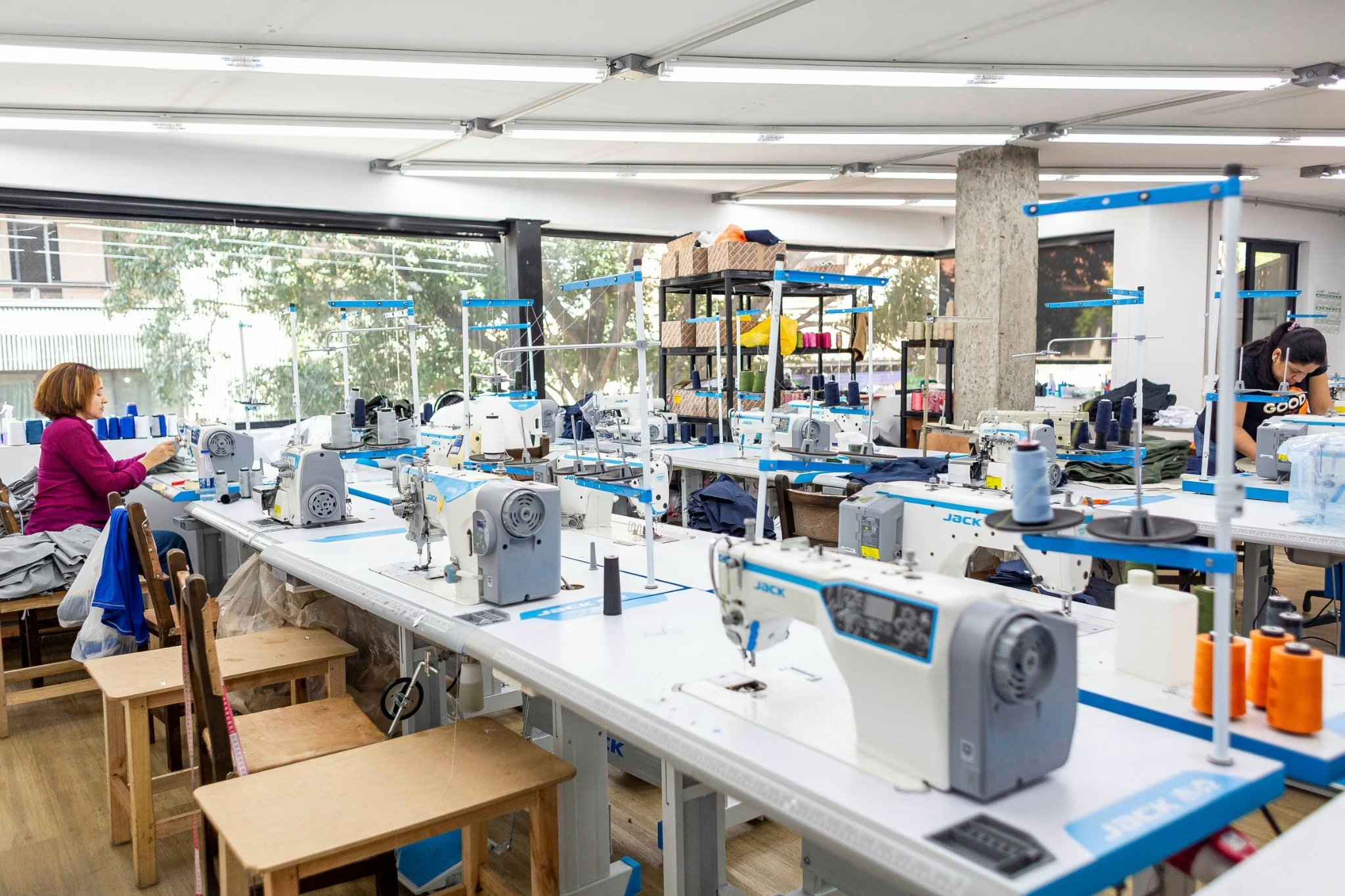
Tulum Fashions is a full-package apparel manufacturer in Medellín, Colombia. A brand comes to us with an idea, sometimes only a sketch, and we take it to the last carton: tech pack, pattern making, sampling, fabric and trim sourcing, cut and sew, quality control and packing. We make swimwear, resort wear, activewear, athleisure, casual wear, urban streetwear, tailoring, uniforms and medical scrubs, for women and for men.
I started more than twelve years ago with a suitcase and a swimwear line of my own, knocking on doors. Almost everyone said no. Those rejections taught me the lesson the company is built on: the opportunity was not in imposing what I had brought, but in adapting to what brands actually needed. So I stopped selling my designs and started exporting what Medellín does best, the skill of its hands. One swimwear line became nine categories, under different names and company structures along the way; the current company was incorporated in 2023.
Between our own plant and partner factories in Antioquia, we can produce 70,000 garments a month and scale to 120,000. This year we opened a showroom at the California Market Center in Los Angeles, so US brands can see the work and meet us before they commit.
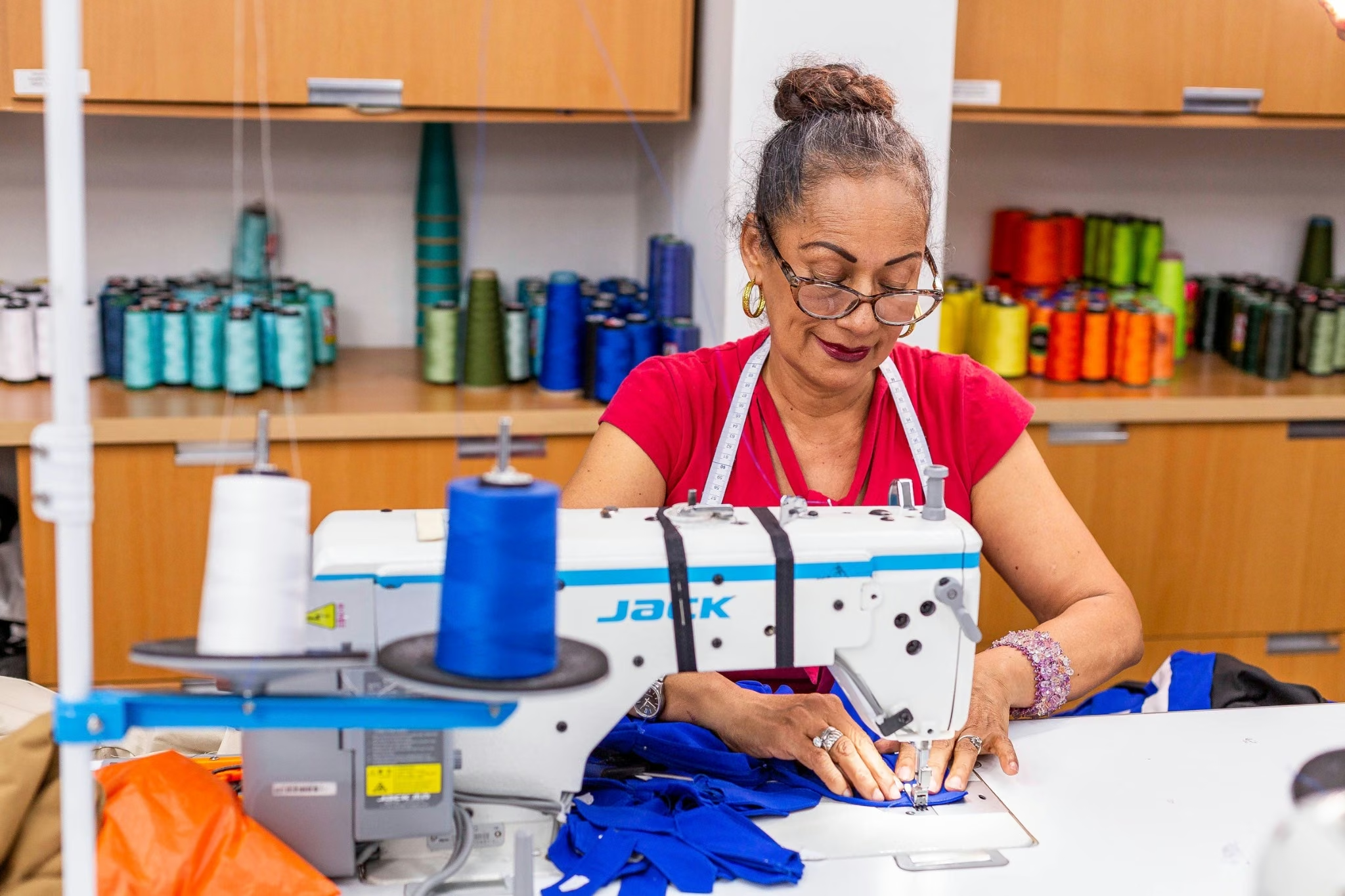
Our real impact is measured in people. We have more than 60 direct jobs in Medellín, all of them formal: a contract, a stable wage, health care, pension and occupational risk insurance, paid every month. Around them are close to 100 indirect jobs in a network of partner companies in Antioquia. We chose those partners on purpose: we only work with companies that pay social security and do things legally, so every order we take also supports the businesses that play by the rules. In a country where so much work is still informal, a formal payslip changes what a family can plan for.
Sewing is a skill passed down through generations here, from grandmothers to mothers to daughters. Many of the women on our lines never had the chance to finish school, and many are single mothers. We trained them in garment construction, and today the skill in their hands supports their families: rent, food, their children’s education. Nobody asked them for a diploma. We asked them to sew well, and they do. Fashion is our craft. Social transformation is our purpose.
How would you describe Colombia’s current position in the global apparel industry, particularly for brands sourcing from the United States?
Colombia is not a volume giant, and it shouldn’t pretend to be. The country’s fashion system exported US$920.6 million in 2025, up 1.8%. The United States took US$255.8 million of that, or 27.8%. Antioquia, where we are, accounts for 37% of the national total.
What Colombia has is depth. Medellín has been the apparel capital of the country since Coltejer opened in 1907, and that century produced mills, pattern makers and operators who know their work. Our position is speed, development and quality for brands that order hundreds or thousands of units, not millions. ProColombia took four Colombian manufacturers to Sourcing at MAGIC in Las Vegas in February 2026. We were one of them, in our fourth consecutive year exhibiting there.
Read More: Colombia’s Fashion Industry Becomes Essential to Brands Building Diversified Supply Chains
What advantages does Colombia offer compared with traditional sourcing destinations in Asia?
Time. We deliver a first sample in four weeks and production in six to eight weeks after sample approval and deposit. Express air from Medellín reaches a US door in three to five days.
Hours. Colombia stays on UTC-5 all year. That is the same clock as New York in winter and one hour behind in summer, so problems get solved the same day, on a call, not overnight by email.
Access. A US brand can fly down, sit with the pattern maker and fix the fit at the table. Or now it can come to our showroom in Los Angeles.
And development. Most of the brands that write to us don’t have a factory-ready tech pack. They need a partner who builds it with them. Large Asian factories are built for volume. We are built for the brand that is still finding its product.
How are current US tariff policies affecting sourcing decisions, and are you seeing more interest in Colombia?
Since July 24, 2026, Colombian apparel pays an additional 12.5% under the US Section 301 forced-labor action. Our free trade agreement still waives the base duty with a certificate of origin, but not the 12.5%. Even so, the gap with Asia is wide: typical total duty on apparel is around 36–52% from China and around 29% from Vietnam.
The honest part is that it has hurt. Colombia’s fashion exports to the US fell 7.4% in 2025, and ProColombia reported a further 11.2% drop from January to July 2026. Since 2025 the duty on Colombian apparel has changed several times, under three different legal authorities. Each time we re-quoted every client, absorbed what we could and kept our delivery dates. Nobody sees that part, but it is how a small factory stays alive.
At the same time, US apparel imports from China fell 37.7% in the first half of 2026. Brands are moving; the question is where. We do see the interest. The brands writing to us now don’t ask “why Colombia?” anymore. They ask how fast and how small they can start.
What are international buyers looking for today beyond competitive pricing?
Smaller, smarter runs. Brands no longer want to sit on 5,000 units of one style. Our minimum is 150 units per style in up to three colors, with small runs from 100 units.
Speed, measured in weeks, not seasons.
Development capability. For many brands the development itself is the product they are buying. Our development team, the pattern makers, sample makers and technical designers who turn a sketch into a garment that fits, is where the magic happens.
One partner for everything. Development, sourcing, production, quality, logistics and a showroom in Los Angeles all sit in one company. That is why brands come to see us as a strategic ally and not a supplier chasing an order. Every business has to be profitable, ours included. But we would rather build a relationship that lasts ten years than win a single order, and do the work with quality and with love.
Accountability. One plan and one person responsible. Every garment is measured to half a millimeter; if it’s out of tolerance, it doesn’t ship.
Responsible sourcing they can verify. We work with Oeko-Tex certified mills, and we tell buyers plainly that Tulum Fashions holds no certification of its own. Buyers notice when you don’t oversell.
Looking ahead five years, what does Colombia need to do to strengthen its position as a sourcing hub for the US market?
First, trade policy. Central America under CAFTA-DR is exempt from the Section 301 action and Colombia is not. That 12.5-point gap is the biggest single obstacle we face, and it should be the government’s first negotiation.
Second, fabric. In 2025 the sector imported US$3.82 billion and exported US$920.6 million. Stronger Colombian mills would let more garments qualify as fully Colombian, which also opens 0% duty into the European Union, the UK and Canada. We work hand in hand with mills we value deeply: Lafayette, a leader in textile technology, Protela, John Uribe and Fabricato. They still bet on developing fabric here in Colombia, they create thousands of jobs, and they deserve to be recognized for it.
Third, people. Train the next generation of pattern makers and operators, and keep those jobs formal. That is where the women of this industry get a real future.
Fourth, show up. Colombiamoda 2026 brought 1,600 international buyers to Medellín. That’s good, but we also need to take the factory to the buyer, with showrooms and a permanent presence in the US.
Fifth, prepare Colombian brands to go abroad. Colombia has brands that are ready to sell internationally, but many don’t yet know how the US calendar works: buyers set their budgets and place orders six months or more before a season reaches the stores. If you arrive with the season, you are already late. We want to be a partner across the whole chain for them, from production to representation in the United States.
I still remember the suitcase and the doors that closed. Since then we have been knocked down more than once, by tariffs and by markets changing overnight. We are still here because we keep adapting to what the buyer needs, because the people who sew with us depend on the next order, and because every brand that visits Medellín leaves convinced. Colombia doesn’t need to be the cheapest. It needs to be the partner US brands trust, and that is the name we want to carry for Colombia.
Read More: Polisar Group Sees Long-Term Growth Opportunities in Colombia Despite Challenges in Türkiye
Sources:
- Exports, US share, Antioquia, sector imports (2025): Analdex, “Panorama del comercio exterior del Sistema Moda”, June 18, 2026, based on DIAN data.
- Fashion exports to the US, Jan–Jul 2026, down 11.2%: ProColombia (Catalina Hernández) on Blu Radio, July 27, 2026.
- Section 301 at 12.5% from July 24, 2026: USTR notice, Federal Register 2026-15181.
- US apparel imports from China, H1 2026, down 37.69%: OTEXA data, reported by UNB on August 6, 2026.
- Colombiamoda 2026, 1,600 international buyers: La República, July 31, 2026.
- Sourcing at MAGIC, February 2026: ProColombia release in Textile World, February 22, 2026.
Editor’s Note
Olarte’s account presents a practical case for Colombia’s apparel industry: competing through responsive development, flexible production and dependable service. For smaller brands, these capabilities can influence sourcing decisions alongside the quoted garment price.
Turning that proposition into sustained growth will require investment in local fabrics, skilled workers and access to overseas buyers. Tulum Fashions’ emphasis on formal employment also brings attention to the people behind production—and to how manufacturing relationships can support more stable livelihoods. Company figures and performance claims in this interview are supplied by Tulum Fashions.