




By Behnam Ghasemi, Editor-in-Chief, Kohan Textile Journal
After spending several days at Egypt Stitch & Tex 2026 in Cairo, speaking with machinery manufacturers, local agents, textile producers, investors and visitors, my main conclusion is relatively clear: Egypt’s textile industry has momentum.
The global textile industry is not operating under easy conditions. Economic uncertainty, geopolitical tensions, financing difficulties and weaker demand in several markets continue to affect investment decisions. Yet the atmosphere I experienced in Cairo was noticeably active.
The exhibition was busy, access to the halls and exhibitors was straightforward, and the overall feedback I received from participating companies was generally positive. More importantly, the visitor profile was not simply about numbers. Egypt has a large textile and garment manufacturing base, and many exhibitors were meeting factory owners, managers, investors and professionals with genuine interest in machinery and technology.
For me, Egypt Stitch & Tex 2026 was therefore more than a machinery exhibition. It provided a useful window into where the Egyptian textile industry stands today — and where it may be heading next.
China and Türkiye Are Competing Hard for the Egyptian Textile Market
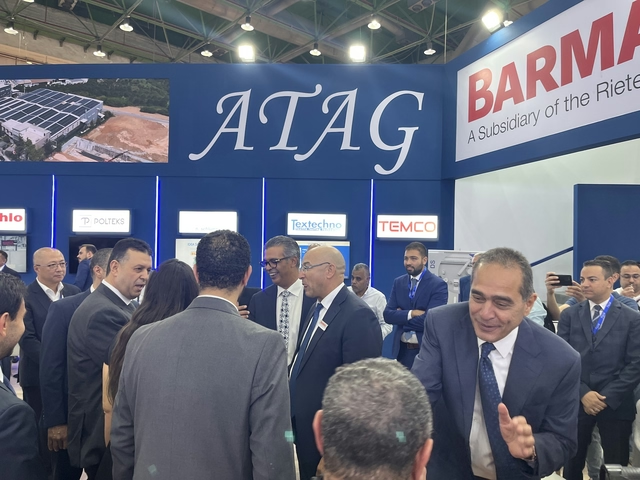
One of the most visible characteristics of the exhibition was the scale of Chinese and Turkish participation.
Based on my observation across the halls, companies and brands from these two countries represented well over half of the visible international presence, whether through direct participation or local representatives.
That should not be surprising.
Chinese and Turkish textile companies have developed significant influence in the Egyptian market, while investment and manufacturing links with Egypt continue to expand. Recent textile projects involving Chinese investors provide further evidence that Egypt is being considered not only as a domestic market but also as an export-oriented manufacturing location.
But Egypt is not simply becoming a market for lower-cost machinery.
My conversations at the exhibition showed a more complex purchasing environment. Depending on the factory, product, investment level and expected return, Egyptian manufacturers may consider European, Turkish or Chinese technologies.
This makes the role of the machinery supplier — and particularly the local agent — extremely important.
The purchasing decision increasingly comes down to finding the right balance between technology, quality, productivity, service and price.
In Egypt, the Local Agent Still Matters
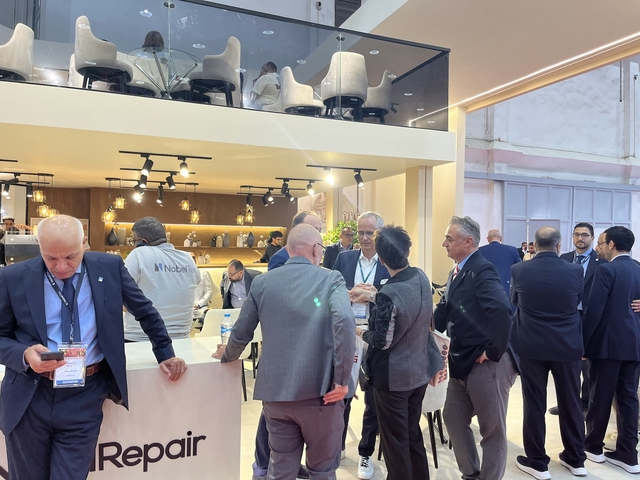
Another strong impression from Egypt Stitch & Tex was how agent-driven the Egyptian textile machinery market remains.
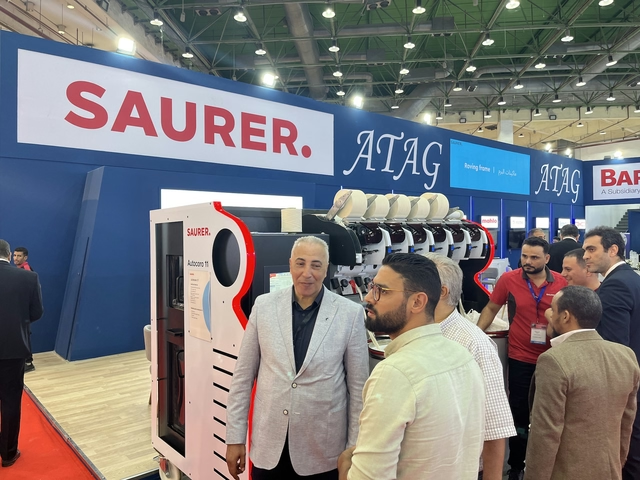
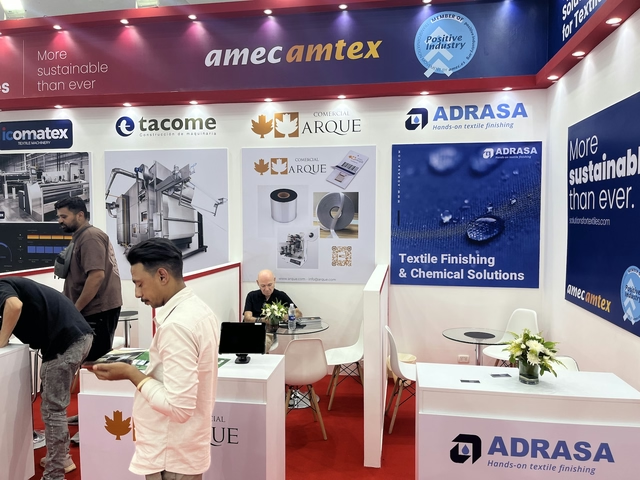
Many major European manufacturers were present, but often as guests or technology partners inside the booths of their Egyptian representatives rather than through large independent stands.
In my view, this model makes considerable sense in Egypt.
Experienced local agencies such as ATAG and Nobeltex have spent years building relationships with factories and understanding how investment decisions are made. They know the customers, projects and technical requirements, but they also understand the commercial culture of the market.
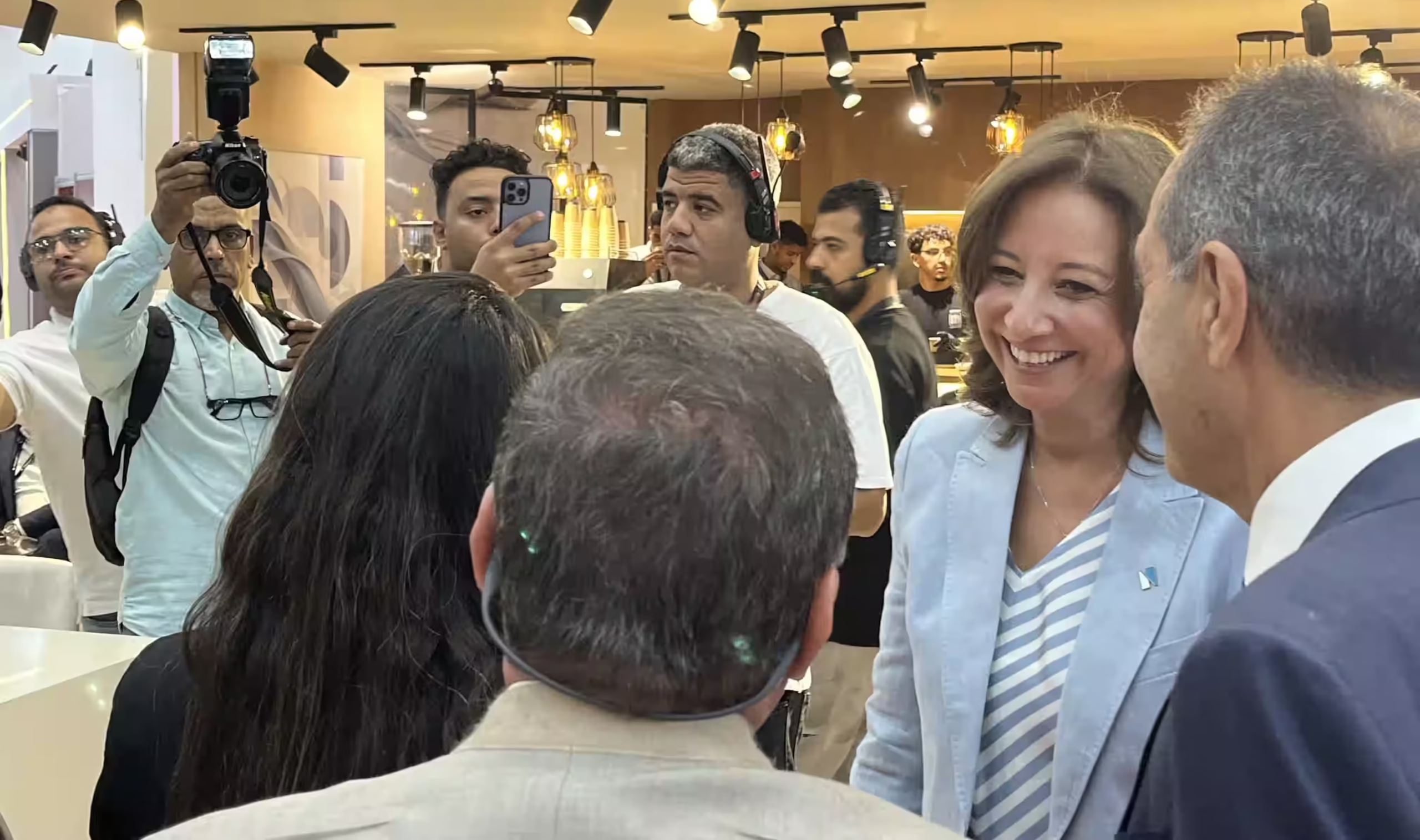
For an international machinery manufacturer, having the best technology does not automatically mean winning the project.
The ability of an agent to explain why a particular technology fits a factory, justify the investment and balance performance against price can be decisive.
This is one reason why, for some international machinery companies, participating through a strong local representative may deliver more value than simply establishing an independent exhibition booth.
Egypt’s Competitive Labour Cost Is an Advantage — and a Challenge
Labour remains one of Egypt’s major attractions for textile and garment manufacturing, particularly for labour-intensive operations.
However, this was also one of the most interesting contradictions I heard during my discussions with investors.
Several Turkish and Chinese businesspeople told me that while labour costs are competitive, workforce management and workplace culture can present challenges for foreign manufacturers.
Their message was not that Egypt lacks labour. Rather, companies entering the market should not necessarily expect to find a fully trained workforce ready to meet their production standards from the first day.
Training matters.
Investors need patience and should be prepared to spend time developing employees, transferring know-how and establishing the production culture they expect inside their factories.
For companies willing to make that investment, Egypt’s combination of competitive labour costs and relatively affordable energy can remain an important manufacturing advantage. But low labour cost alone should never be treated as an investment strategy.
Human-capital development must be part of the factory investment itself.
Global Uncertainty Is Affecting Egypt — But Egypt Still Has Strategic Advantages
It would be unrealistic to suggest that Egypt is isolated from the problems affecting the global textile industry.
Companies I spoke with mentioned financing constraints inside the Egyptian market, while the wider global slowdown and geopolitical environment are also influencing investment decisions.
Nevertheless, some industry professionals argued that regional instability has paradoxically increased Egypt’s strategic importance.
Its geographical position, manufacturing base and access to major export markets make the country increasingly interesting for companies seeking alternative production locations.
Egypt’s relationship with Europe is particularly important. The EU-Egypt Association Agreement has been in force since 2004 and established a free-trade area that removes tariffs on industrial products. The EU remained Egypt’s largest trading partner in 2025 and the destination for 27.7% of Egyptian exports.
For the United States, the situation is different: Egypt does not have a conventional free-trade agreement with the US, but qualifying products manufactured within Egypt’s Qualifying Industrial Zones can enter the American market duty-free when the relevant QIZ requirements are met.
For textile and garment manufacturers, these connections strengthen Egypt’s position as more than a market of over 100 million consumers. It can also function as a manufacturing platform serving international markets.
Syrian Visitors Were One of the Most Interesting Signals
One of the most interesting observations at Egypt Stitch & Tex 2026 was the noticeable presence of Syrian textile professionals.
Following the Syrian conflict, many Syrian textile entrepreneurs and manufacturers relocated parts of their businesses to Egypt and became part of the country’s textile ecosystem.
At the exhibition, however, the conversation was no longer only about Syrians operating in Egypt.
Several exhibitors were pleased with the number of Syrian visitors they met and expressed interest in future business opportunities inside Syria itself.
I would be cautious about describing Syria today as the “next textile hub.” The challenges are still substantial.
But the exhibition provided an interesting signal: Syria appears to be returning to the radar of textile machinery and technology suppliers.
If reconstruction, investment and industrial activity continue to develop, Syria could gradually re-emerge as an important textile manufacturing market in the region. For companies already operating in Egypt, developments in Syria may therefore be worth watching closely.
Knitting Machinery Attracted Strong Attention
Activity was relatively well distributed across the exhibition, with Halls 1 and 2, the Main Hall and Hall 4 among the busiest areas during my visit.
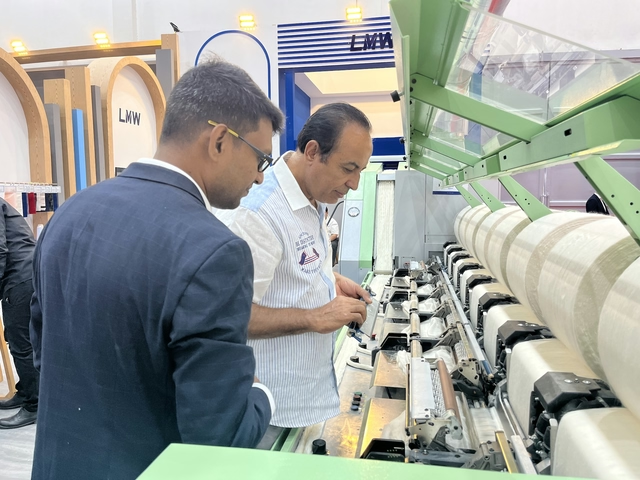
One area that particularly caught my attention was knitting machinery.
The level of visitor interest around knitting technologies reflected the importance of knitted fabrics and garment manufacturing within Egypt’s textile value chain.
At the same time, the exhibition maintained representation across most major textile machinery segments, and many established European technology suppliers were accessible through their local agents.
This gave visitors the opportunity to compare technologies from different manufacturing countries within the same exhibition.
Read More: Egypt’s Textile Export Council Joins Euro-Med Textile Value Chain Conference in Tunisia
My Outlook: Egypt’s Textile Investment Cycle Is Not Finished
After leaving Cairo, my strongest impression is that Egypt still has significant room to attract new textile manufacturing investment.
I expect this process to continue over at least the next five years, provided the country maintains sufficient political and economic stability and continues to benefit from favorable access to its major export markets.
There are challenges. Financing is one. Workforce training is another. Foreign investors also need time to understand Egyptian business culture rather than assuming that a model successful in Türkiye, China or Europe can simply be copied into Egypt.
But Egypt currently has something equally important: momentum.
It has a substantial textile and garment manufacturing base, competitive production costs, relatively affordable energy, access to large export markets and growing interest from international investors and technology suppliers.
Egypt Stitch & Tex 2026 reflected that momentum.
For textile machinery manufacturers and technology providers asking whether Egypt deserves greater attention, I believe the more useful question is no longer simply whether to enter the Egyptian market.
It is how to enter it correctly — with the right technology, the right local partner and the patience to build for the long term.











