




Interview with Dareen Hamwi – Ecem Etiket / Export Sales Manager
Ecem Etiket, a leading label producer, was established by Mr. Abdullah Cebeciler in Istanbul, Turkey in 1991. 29 years of experience have shaped the company’s successful path.
Ecem Etiket’s Growth Through Quality and Customer Satisfaction
Q: Please let us know more details about Ecem Etiket company, history and success story.
Ecem Etiket has created a distinguished signature in label manufacturing in terms of quality and innovative designs.
Our success story started when we chose to put customer satisfaction above all. For that, we began working with our experienced, devoted team in order to create quality products. Our team played a great role in creating marketing and sales strategies to build a base of loyal customers in local and global markets. With our valuable customers, we continue working until today.
In 2011, our company chose to establish Ecem Fabric and since then it has started producing, selling, and exporting woven fabrics. Today Ecem exports its produced fabrics to Asia, Europe, America, Canada and the Middle East.
At Ecem factory we have constantly upgraded our machinery and expanded our services by utilising up-to-date technology, especially to produce all sorts of labels and clip accessories.
Because we do care, all our products are compliant with ISO 9001:2015, OEKOTEX 100, GOTS and OCS quality standards. The textiles are tested and certified according to international flammability standards.
Woven Fabrics, Labels and Garment Accessories Production
Q: Which kind of Products you are creating in Ecem Etiket? tell us about the latest products and innovations
Ecem’s Fabric mainly produces woven fabrics such as Denim, Tencel, Gabardine-twill (with or without lycra), Velvet, Linen, Satin, Canvas and Poplin.
Our fabrics are high-quality fabrics used in clothes production. We serve our local and global customers. We export our fabrics mainly to Russia, Germany, Morocco, Algeria, Qatar and Lebanon, and many other countries.

Ecem Etiket Label Production
Ecem Etiket’s label production includes the following:
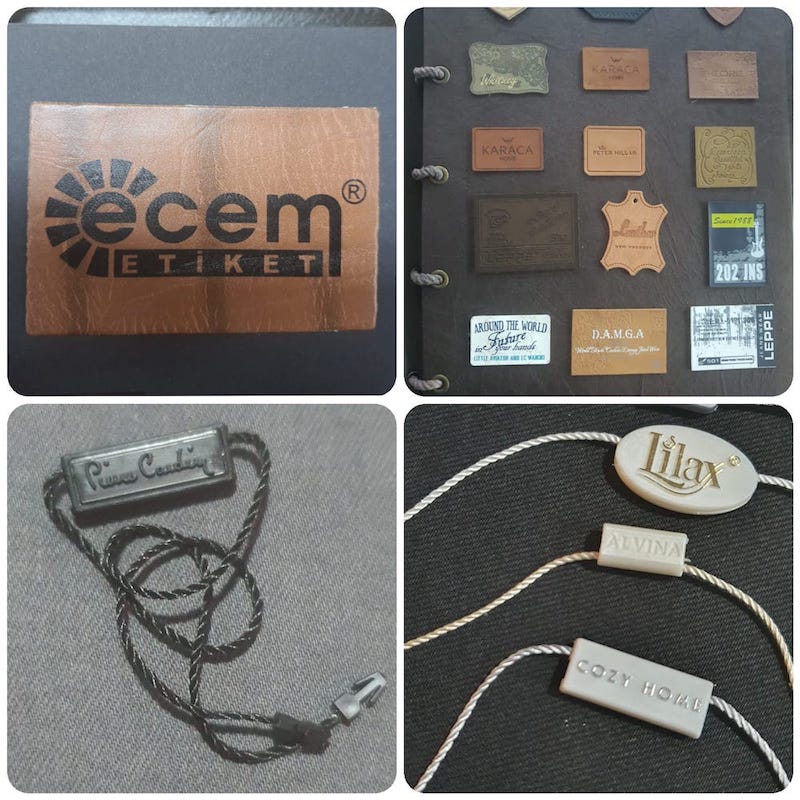
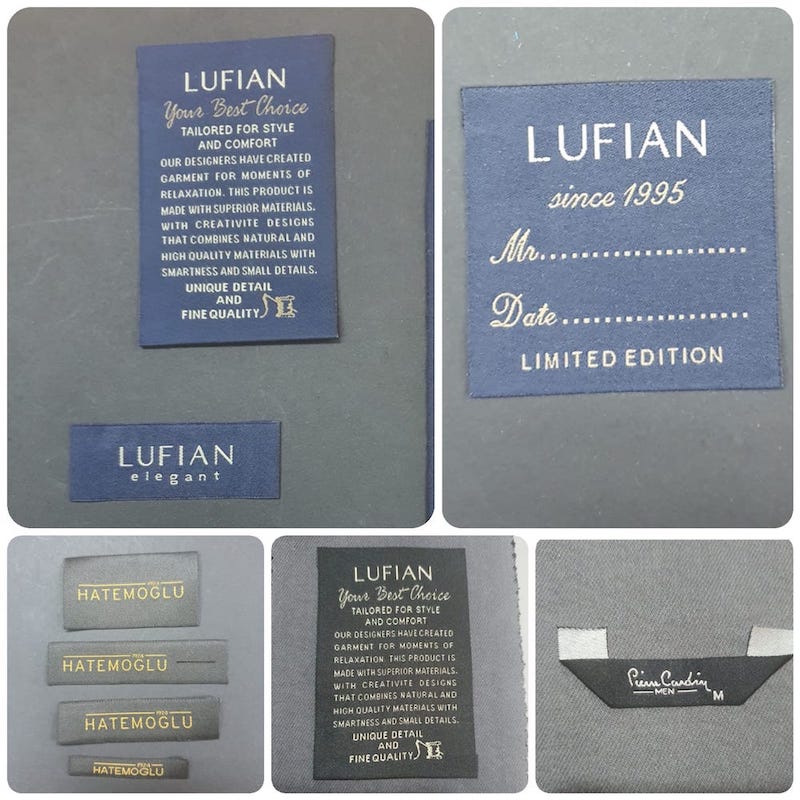
- Woven labels: These labels are the best tool to attract your target customers, to show the quality of your brand by choosing a high-quality prestigious label to assure durability, minding the wide range of patterns and color options while we assure utilising the latest high-speed machines to meet the taste and the needs of our valuable customers.
We choose the best production methods for each order, taking into consideration the type of label required, its usage, and any customer requests.
- Leather labels: Our leather selection, a major part of our integrated production lines, includes leather patches for denim or jeans produced in a wide variety of materials and models.
- Printed labels: Ecem Etiket’s printing operation is among the most competitive in the sector, setting the best production printing type for every job to achieve the fastest production at the lowest price possible without sacrificing quality.
- Plastic labels: Customer feedback and constant product testing over the years have revealed an outstanding level of success in our plastics department. Our plastic section is one of the main competitive advantages we have compared to our competitors.
- Fabric labels.
Our customers have the chance to benefit from the best quality labels at the cheapest prices. In addition to this, they get the chance to work with our designers in order to create the most catchy and appealing designs.
Recently in the label manufacturing world, labels and clips production itself has been a captivating innovation since it adds value to the brand, and companies are using this accessory in various styles, designs and colours to show that the company has invested to create product identity.
Monthly Label Production Capacity
Our company’s monthly label production figures are as follows:
- Woven Label: 10 Million pieces.
- Cardboard Label: 12 Million pieces.
- Clip: 75 Million pieces.
- Locked Rope: 15 Million pieces.
- Leather-Jacquard: 1.5 Million pieces.
- Belt Hanger: 500 Thousand pieces.
At Ecem Etiket we maintain quality principles, reliability and stability, and offer high-quality products and services. Our aim is to provide continuous improvement and assure customer satisfaction.
- Our quality management system complies with all legal requirements as well as fulfilling our customers’ needs and demands.
- From design and manufacture to packaging and delivery to our customers, the whole process is under close and continuous supervision.
- We seek to continuously improve all technical and procedural processes that affect the success of our company and the quality of our products.
- We emphasise the training of employees and foster a team spirit which we consider an added value for us in terms of productivity and customer assistance.
- We aim to maintain the respect and affection of our customer base by carrying out our operations with sensitivity to environmental issues and consciousness of society’s diverse and changing needs and attitudes.
At Ecem Etiket, we assess our strategies to recognize our new strengths and eliminate potential weaknesses. This strategy has been a crucial factor in our continuous development.
Read more: Learn more about the growth of OEKO-TEX certifications and textile quality standards.
How Labels Strengthen Textile and Apparel Brand Identity
Q: Why a good quality label is necessary for textile and apparel brands?
A label is a product or the brand’s identity card. As our slogan says, “A good brand needs a good label.”
A high-quality label helps the brand owner to spread its brand name and brand origin. Over and above, the label creates the first impression in which the colors and every little detail show your brand identity, company name, logo and company colors.
A label gives a serious impression of the company and its presence in the market. People get to recognise your brand. If the label is well designed, it will add value to the brand.
Labels show how much a company is willing to invest in its product or brand.
Based on the experience we have and since we have produced the labels of some quality brands such as:
- Pierre Cardin
- Cacharel
- Lufian
- Tudors
- Aker
- Galatasaray
- Hatemoğlu
- Home Sweet Home
- Crispino
- Kervan
- Sateen
- Reiss
When working with such names you get the chance to see how these brands invest in label quality, and the main reason is to capture the attention of the buyers by creating prestigious high-status labels that stick in the memory of the client.
Türkiye’s Competitive Position in Textile Accessories
Q: How do you evaluate textile accessories sector in Turkey?
Turkey is one of the top-ranked global textile, textile accessories, clothing, yarns and garments producers and exporters.
With rapid growth over the last decade, the textile industry has become one important pillar of the economy, and the textile accessories sector has been growing too. Low-cost labour and the Turkish lira value against the dollar played a major role in growing business production and exports.
The geographic location and Turkey being in the heart of Europe and the Middle East, in addition to material supply availability, are the competitive advantages of the clothing industry in Turkey. For this, the textile accessories sector has been growing.
Clients from around the world visit Turkey and benefit from the prices that it offers. These customers purchase good quality items and accessories at a low price. As for exports, the geographic location of Turkey attracted clients and encouraged them since this may save time and lower the cost.
Prospects seek low-cost sourcing countries that offer quality textile and garment exports and assure on-time delivery. This challenging equation is well solved when choosing Turkey as a sourcing market.

Export Opportunities Across the Middle East and Africa
Q: As a textile producer in Turkey, how do you evaluate the textile and fashion industry in the Middle East and Africa and its potential for Future. Do you have export to this region?
As I mentioned, Middle Eastern and African markets are two of the main importers from Turkey and Ecem Etiket.
The instability of the Middle Eastern countries and the absence of industrial competitive advantages there forced retail buyers to find an alternative source for their needed goods.
As for Africa, the absence of diversified factories and variety in the textile sector, the instability of some areas, and at the same time the quality-price added-value advantage are the main reasons why customers prefer to pick Turkey as a main alternative market.
Read more: Explore another Turkish textile manufacturer’s perspective on exports and the Middle East and Africa markets.
Sustainability, Supply Chains and Eco-Friendly Textile Production
Q: COVID 19 shows us we should rely more on sustainability and green products, how we can improve sustainability in fashion design and fashion industry? Do you have any plan in Ecem Etiket company?
COVID-19 tremendously affected the industrial sector. We pray God for this nightmare to stop in order not to lose anyone, especially our beloved ones.
Mentioning COVID-19, we need to highlight that during the lockdown period, people were urged to benefit from using digital platforms, which were really helpful and efficient.
Based on the textile sector’s nature and the industry requirements for trading goods across countries, we need to mention that the COVID-19 impact on Turkey was less than the impact on China, for example, and that was an advantage for fabric production and trading in Turkey.

The COVID-19 outbreak led to a production stop in China, so retailers or importers found parallel markets from other sourcing countries to diversify their supply chain risk.
Worth mentioning, lockdowns around the world have thrown a spotlight on those parallel markets and their efficiency as a matter of quality and delivery time.
Long before the pandemic, and driven by our responsibility towards the environment and seeking environment-friendly lifestyles, concerns increased regarding sustainability, waste disposal, consumption and production patterns, and the environmental impact of textile processing.
Motivated by this, in our fabric processing steps and production activities we use organic material for Dyeing/Coloration, Printing, Pre-treatment (scouring, sizing, de-sizing, bleaching), Washing, Finishing, Trading and Warehousing.
As for our label production, we have a production line in which we use eco-friendly, recyclable materials, especially for labels used for baby clothes, in addition to special orders made by our customers.











