




The global digital textile printing industry is moving into a new phase of accelerated expansion, driven by sustainability regulations, fast-fashion supply chains, automation, and growing demand for on-demand manufacturing. Industry forecasts suggest the market could more than double over the next decade as brands and manufacturers shift away from conventional printing technologies toward more flexible, data-driven production systems.
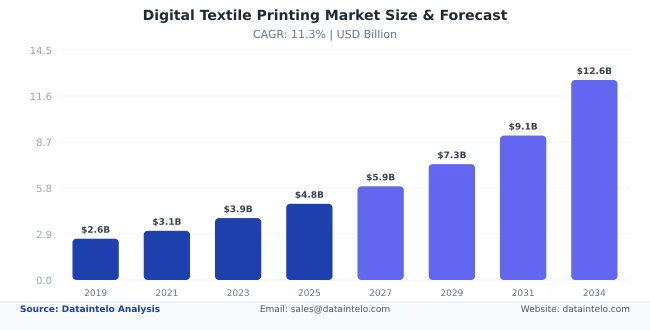
According to recent market outlook reports, the global digital textile printing market was valued between $4.8 billion and $6.0 billion in 2025, with forecasts projecting growth to between $11 billion and $22 billion by 2034–2035, depending on methodology and segmentation models. Most analysts expect annual growth rates between 10% and 13%, significantly outperforming many traditional textile manufacturing segments.
Sustainability Pressures Accelerate Adoption
One of the strongest drivers behind digital textile printing growth is the textile industry’s increasing focus on sustainability and environmental compliance.
Compared to traditional rotary or screen printing methods, digital textile printing dramatically reduces water consumption, chemical waste, and inventory overproduction. As global fashion brands face mounting pressure from regulators and consumers to improve sustainability performance, digital technologies are becoming increasingly attractive.
Europe, in particular, is emerging as a major driver of this transition. The European textile industry, valued at approximately EUR 170 billion and employing around 1.3 million people across nearly 197,000 companies, is increasingly influenced by stricter sustainability regulations and traceability requirements.
At the same time, manufacturers are investing heavily in:
- Waterless printing technologies
- Biodegradable and pigment-based inks
- AI-driven color management systems
- Automated production workflows
- Digital sampling and virtual prototyping
These technologies are helping textile producers reduce waste while improving production speed and consistency.

Read more : DTF and DTG Digital Textile Printing Set for Rapid Global Growth
Fast Fashion and E-Commerce Reshape Production Models
The rapid growth of e-commerce and fast fashion continues to reshape textile manufacturing economics. Brands increasingly require shorter lead times, smaller batch production, and faster response to consumer trends.
Digital textile printing enables manufacturers to move from mass production toward on-demand and nearshore manufacturing models. High-speed single-pass systems running at 90–100 meters per minute are now capable of compressing design-to-shelf cycles from weeks to just days.
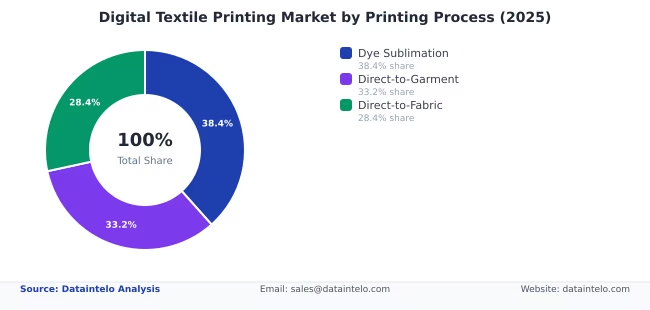
The apparel segment remains the largest application area, accounting for more than 50% of global digital textile printing demand in 2025. Growth is especially strong in:
- Personalized fashion
- Sportswear
- Athleisure
- Soft signage
- Home textiles
Soft signage has emerged as one of the fastest-growing categories due to rising demand for lightweight, reusable textile-based advertising and exhibition materials.
Asia-Pacific Dominates Global Production
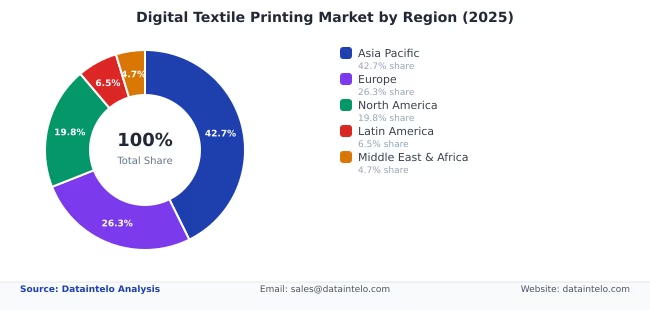
Asia-Pacific continues to lead the digital textile printing market, accounting for approximately 37% to 43% of global revenue share in 2025.
China remains the world’s largest textile manufacturing base and is rapidly expanding adoption of digital printing technologies under industrial modernization programs such as “Made in China 2025.” Textile clusters in Zhejiang and Guangdong are accelerating investments in automation and eco-efficient printing systems as environmental regulations tighten.
India, Türkiye, Vietnam, and Southeast Asia are also becoming increasingly important growth markets as manufacturers seek to strengthen competitiveness through:
- Automation
- AI-assisted production
- Smart factory systems
- Sustainable textile processing
ASEAN’s digital textile printing market alone is forecast to grow from approximately $180 million in 2025 to over $376 million by 2035.
Technology Suppliers Intensify Competition
Competition among equipment manufacturers is intensifying as the market shifts from early adoption toward industrial-scale optimization.
Leading technology suppliers include:
- Kornit Digital
- Seiko Epson
- Durst Group
- Mimaki Engineering
- Konica Minolta
These companies are heavily investing in:
- Single-pass industrial systems
- Automated workflow integration
- Sustainable inks
- Cloud-based production management
- AI-powered process optimization
Kornit Digital, for example, recently expanded large-scale direct-to-garment production capacity in Europe, supporting facilities capable of producing more than 24,000 garments daily.
Read more : Aarti International Partners with ZIMMER AUSTRIA to Boost Digital Textile Printing Capabilities in India
Digitalisation Extends Beyond Printing
The digital transformation of textile manufacturing is extending beyond printing itself into broader smart manufacturing ecosystems.
Emerging technologies now include:
- AI-assisted textile design
- Digital twins for textile production
- Automated sorting systems for recycling
- IoT-enabled production monitoring
- Robotics for material handling and inspection
Research institutions and manufacturers are increasingly exploring digital twins and AI-driven textile classification systems to improve recycling efficiency and production automation.
The Industry Faces a Structural Transition
The digital textile printing market is no longer defined simply by design flexibility or niche customization. Instead, it is becoming a strategic industrial technology linked directly to:
- Sustainability targets
- Supply chain resilience
- Inventory reduction
- Nearshoring strategies
- Faster product development cycles
Industry analysts increasingly view digital textile printing as one of the core technologies shaping the future of textile manufacturing worldwide. As global supply chains continue evolving toward smarter, greener, and more responsive production models, digital printing is expected to play a central role across fashion, technical textiles, home furnishings, and industrial applications.











