




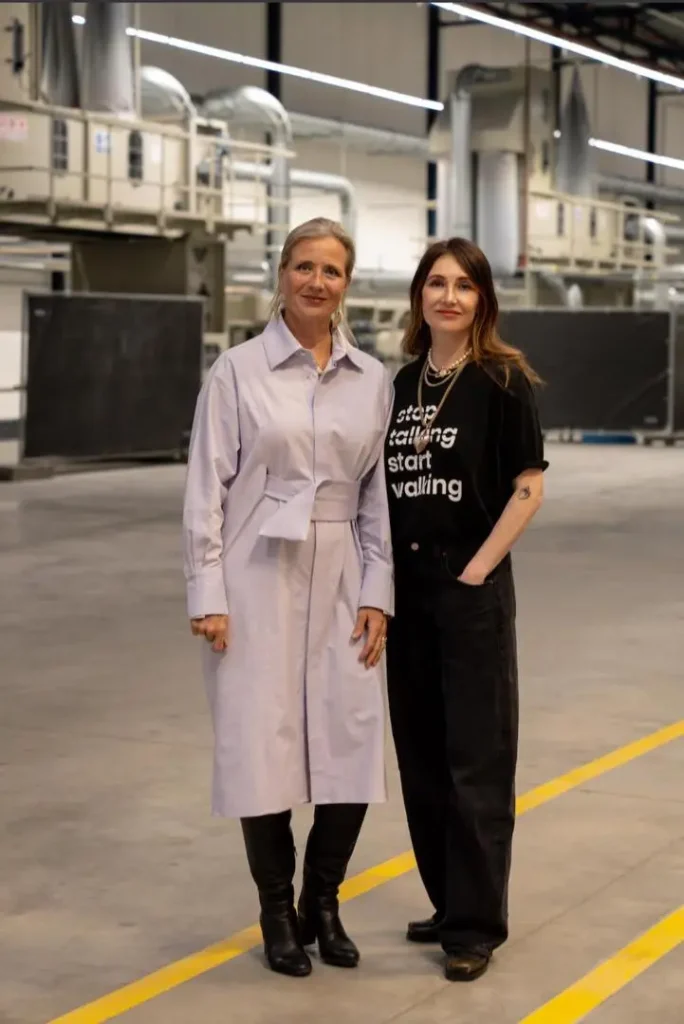
Brightfiber Textiles has officially opened the world’s first local circular textile factory together with the famous Dutch actress and activist Carice van Houten. The new factory transforms locally collected used clothing into high-quality textile fibers. Using innovative machine technology, the process produces directly spinnable raw materials for yarn, fabric, and new garments. With this initiative, Brightfiber Textiles is forcing a break-through to create a truly circular and waste free fashion industry.
Without textile recycling, we won’t make it
At the start of the opening event, Mensink emphasized the urgent need for textile recycling:
“When talking about circular and sustainable fashion much of the current focus is on reducing consumption, reusing clothing, and using new sustainable materials. These are important steps—but they’re not enough to realise the transition towards a sustainable fashion industry and keep our planet alive for next generations.“
The fashion industry is like an oil tanker—it can’t turn on a dime. With ultra-fast fashion brands like TEMU and SHEIN, and the rapid global population growth, clothing production is expected to rise dramatically over the next decade. This leads to more textile waste and more CO2 emissions from incineration. On top of that, producing new raw materials accounts for over 50% of the carbon footprint of a garment’s lifecycle. Recycling old clothes into new ones is crucial to solve this.
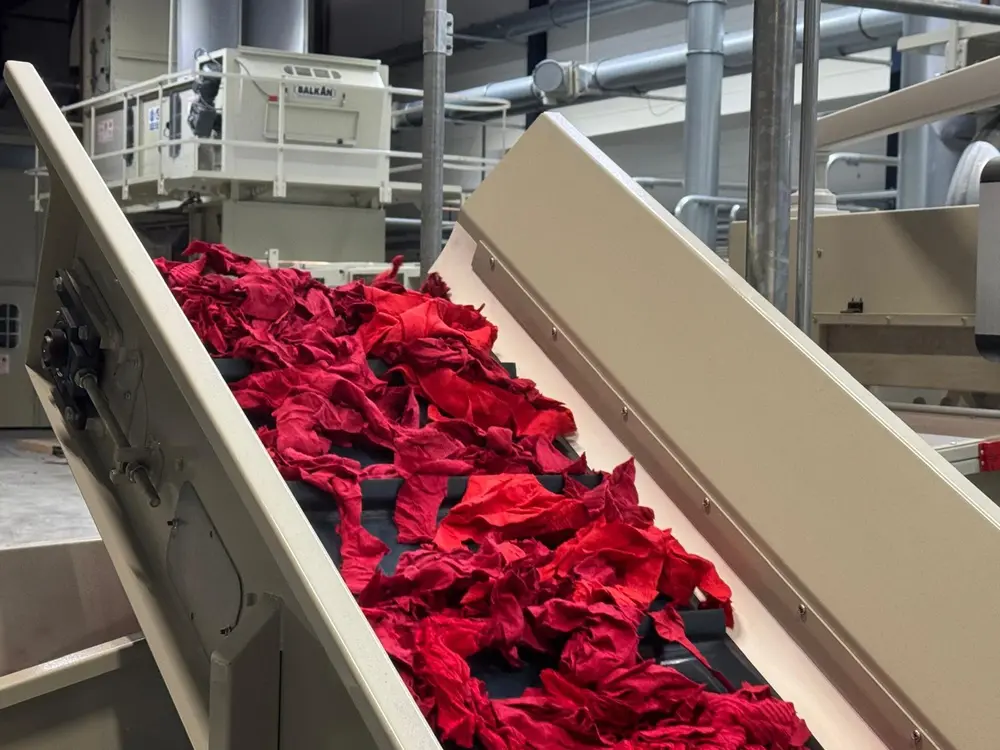
Blueprint for Regional Scaling: 3 machines-in-One Recycling Line
On top of the cutting-edge mechanical recycling system, Brightfiber Textiles is also taking a significant step forward with the acquisition of Wieland Textiles, a longtime partner in innovation. This acquisition brings two groundbreaking machines also under Brightfiber Textiles’ management: the world’s first NIR technology-based sorter, capable of classifying textiles by color and material, and an advanced system that removes buttons, zippers, and labels using metal detection and camera technology.
By integrating these 3 machines, Brightfiber Textiles has created the world’s first complete fully automated fiber-to-fiber production line. Located entirely within the Amsterdam Metropolitan Region. This coordinated system efficiently processes regional textile waste into high-quality raw materials for the fashion industry.
This achievement marks the development of the first scalable solution for transforming non-rewearable clothing into premium fibers. Brightfiber Textiles aims to replicate this
innovative model in regions and countries worldwide.
A fully closed-loop system
Over the past few years, Brightfiber Textiles has developed its own premium collection of yarns and fabrics in collaboration with experienced spinning and knitting partners across Europe. Each product contains a minimum of 40% recycled clothing sourced from local waste streams, blended exclusively with other sustainable materials. Produced in Europe and Turkey, the entire process operates within a fully closed-loop system. Both the fibers and colors of the original garments are recycled, which is significantly reducing the need for water, dyes, and chemicals. Under the brand name
BRIGHT.FIBER INSIDE®, the company supplies truly circular and sustainable fabrics and end products—such as t-shirts, polos, and sweaters— to fashion and workwear brands. Every product includes a detailed life cycle analysis (LCA), allowing consumers to see exactly how much CO₂ and water they’ve saved compared to conventional cotton or wool garments.
Brands taking a first step
The opening of the factory also marked the launch of collaborations with several brands
including Patagonia, Martan, ANWB and ID&T. Patagonia had been inspired by the ’90s
concept turned book Cradle to Cradle that set the foundation for a circular economy—design products via renewable energy, efficient water usage and socially equitable practices, then recycle and reuse those products again and again. Because one of the best things we can do for the planet is keep stuff in use longer and reduce our overall consumption.
That means buying less, repairing more and trading in gear when you no longer need it. As a next step in the circularity journey Patagonia EMEA is starting the preparations for a trade-in and take-back program in 2026. To do so, it is partnering with Brightfiber Textiles to explore the recycling options for certain product categories. Items that are no longer suitable for reuse will be responsibly recycled by Brightfiber Textiles, supporting a shared commitment to circular fashion and reducing textile waste.
The circular high-end fashion label Martan is expanding its current woven collection with circular knitwear, developed in collaboration with Brightfiber. For ANWB, Brightfiber organises the take-back program for returned clothing. The company will also create a circular capsule collection for the ANWB stores. ID&T is also joining forces with Brightfiber to develop circular merchandise for their large-scale events — a powerful platform to introduce circular fashion to a broad crowd.











