




The global textile industry is entering a new era of digital transformation, as artificial intelligence (AI) technologies rapidly reshape manufacturing processes, supply chains, and product development. According to a recent market analysis, the AI in textile sector is projected to grow significantly, reaching a value of $21.4 billion by 2033, up from $2.4 billion in 2023.
This remarkable expansion, driven by a compound annual growth rate (CAGR) of 24.6%, reflects the increasing demand for efficiency, automation, and sustainability across textile production systems.
AI Driving Efficiency and Smart Manufacturing
AI is fundamentally transforming how textile manufacturers operate. From spinning and weaving to dyeing and finishing, companies are leveraging intelligent systems to enhance productivity and reduce operational costs.
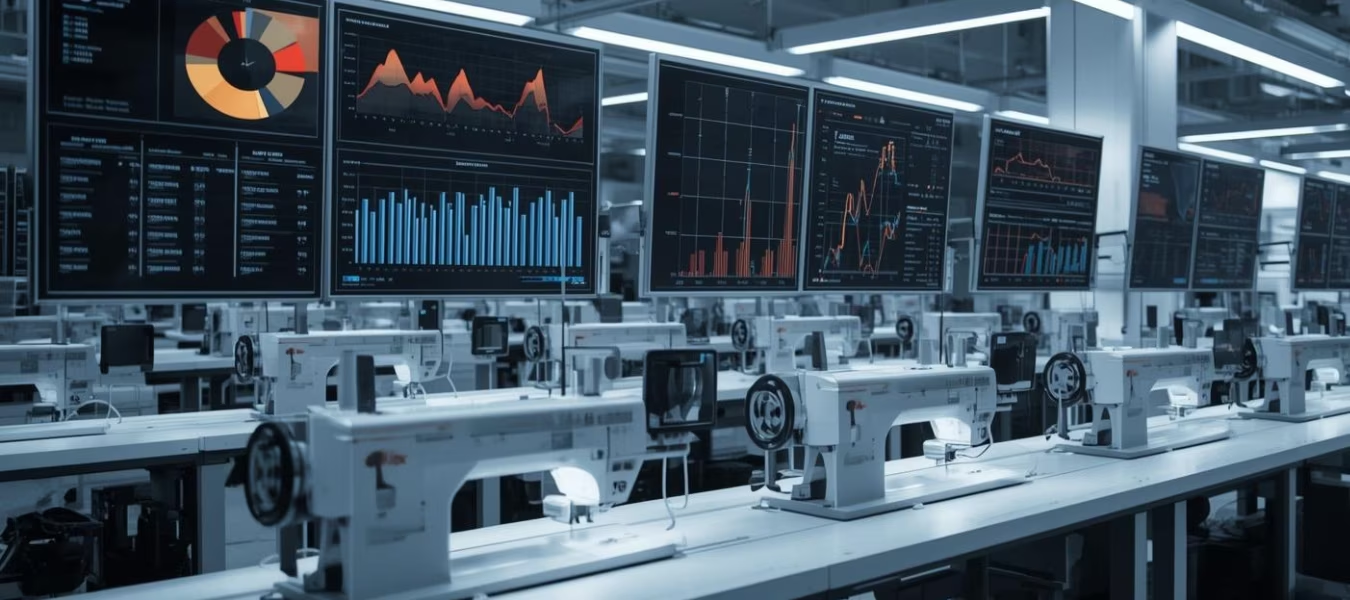
One of the key applications of AI lies in real-time monitoring and process optimization. By analyzing data from machines and sensors, AI systems can detect defects early, optimize workflows, and improve overall product quality. This not only minimizes waste but also ensures consistent output, which is critical in highly competitive global markets.
Read more: AI in Textile Industry Transforming Fashion Savings Sustainability
Predictive maintenance is another major area where AI is making a significant impact. By anticipating machine failures before they occur, manufacturers can reduce downtime, extend equipment lifespan, and improve operational efficiency. This capability has already captured a substantial share of the market, reflecting its importance in modern textile production.
Enhancing Quality Control and Demand Forecasting
Quality control has long been a challenge in textile manufacturing, where even minor defects can result in significant financial losses. AI-powered computer vision systems are now enabling automated inspection processes, identifying inconsistencies in fabrics with high precision and speed.
Beyond production, AI is also transforming supply chain management and demand forecasting. By analyzing historical data and market trends, AI models can predict consumer preferences and optimize inventory levels. This reduces overproduction, improves responsiveness, and supports more agile business models.
As fashion cycles accelerate—particularly with the continued rise of fast fashion—such predictive capabilities are becoming increasingly valuable for brands and manufacturers alike.

Sustainability and Waste Reduction at the Core
The growing emphasis on sustainable manufacturing is another key driver behind AI adoption in the textile industry. With increasing regulatory pressure and consumer awareness, companies are seeking solutions to reduce their environmental footprint.
AI contributes to sustainability by optimizing resource usage, including water, energy, and raw materials. In dyeing and finishing processes, for example, AI can help achieve precise chemical dosing and reduce excess consumption. This not only lowers costs but also supports environmental compliance and circular production models.
The integration of AI with sustainability initiatives is expected to play a crucial role in shaping the future of textile manufacturing.
Challenges: Cost, Skills, and Integration
Despite its strong growth potential, the adoption of AI in textiles is not without challenges. One of the primary barriers is the high initial investment required for infrastructure, software, and workforce training. For small and medium-sized manufacturers, these costs can be prohibitive.
Additionally, the industry faces a shortage of skilled professionals capable of managing and implementing AI systems. This skills gap may slow down adoption, particularly in developing markets.
Another significant challenge lies in integrating AI solutions with existing legacy machinery. Many textile factories still rely on outdated equipment, making the transition to smart manufacturing both complex and time-consuming.
Opportunities in Emerging Markets and Smart Factories
While challenges remain, the opportunities presented by AI are substantial. Emerging textile markets, particularly in Asia and Africa, are increasingly investing in digital transformation, creating strong demand for advanced technologies.
The integration of AI with Internet of Things (IoT) systems and smart factory solutions is another area of rapid development. Connected devices generate real-time data, enabling more accurate analysis and decision-making. This combination of AI and IoT is expected to unlock new levels of efficiency and innovation across the textile value chain.
Outlook: A Data-Driven Future for Textiles
The rapid expansion of AI in the textile industry signals a fundamental shift toward data-driven manufacturing. Companies that embrace these technologies are likely to gain a competitive edge through improved efficiency, reduced costs, and enhanced product quality.
However, the success of this transformation will depend on overcoming key barriers, including investment challenges, workforce readiness, and infrastructure limitations.
As the industry continues to evolve, AI is expected to become a central pillar of textile manufacturing—enabling smarter, more sustainable, and highly responsive production systems.











