Afghanistan’s textile and cotton sector is showing renewed signs of growth as the country intensifies regional trade cooperation with Bangladesh, Uzbekistan, Russia, Türkiye, and other neighboring markets.
In recent months, Afghan officials and textile sector representatives have increased efforts to position the country as an emerging supplier of high-quality cotton while simultaneously seeking foreign investment for textile manufacturing and industrial development.
The developments reflect a broader strategy aimed at transforming Afghanistan from a raw cotton exporter into a more active regional textile and manufacturing player.
Afghan Cotton Gains International Attention
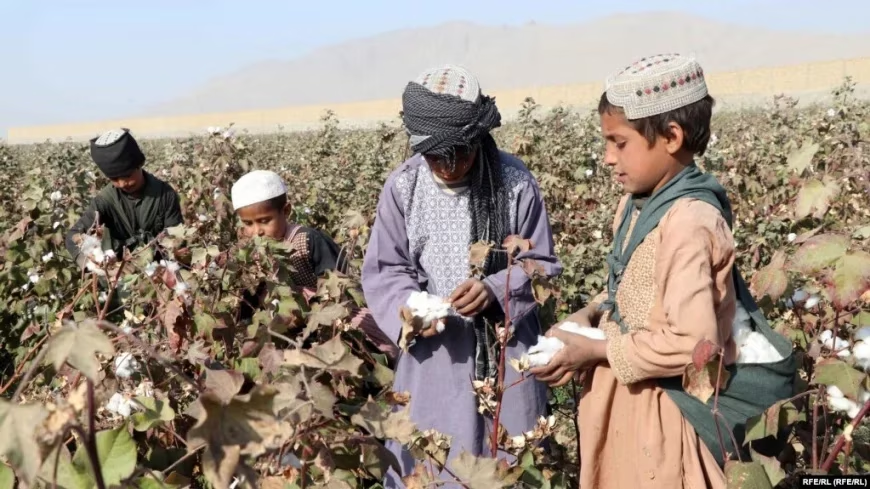
One of the strongest indicators of this growing momentum is the increasing international interest in Afghan cotton.
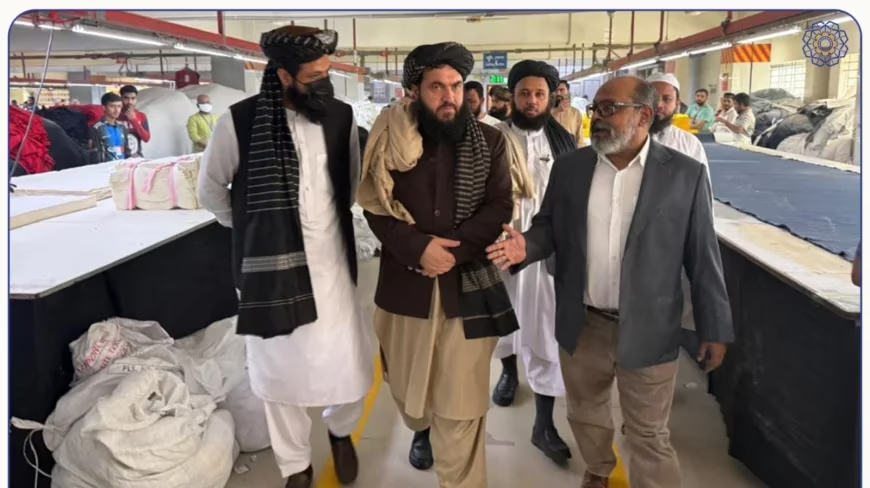
During recent meetings in Bangladesh, Afghan trade officials held discussions with textile manufacturers, exporters, and industry associations regarding the expansion of cotton exports and long-term industrial cooperation between the two countries.
Bangladesh—one of the world’s largest garment manufacturing hubs and among the biggest global cotton importers—has reportedly expressed strong interest in sourcing cotton directly from Afghanistan.
Industry discussions focused on establishing long-term trade mechanisms, direct commercial partnerships, and broader cooperation between Afghan cotton suppliers and Bangladeshi textile producers.
The growing demand comes as Afghanistan seeks alternative export routes and new international markets amid changing regional trade dynamics.
Read more : Synthetic Fiber Plant for Textile Industry Inaugurated in Mazar-i-Sharif
Regional Textile Cooperation Expands
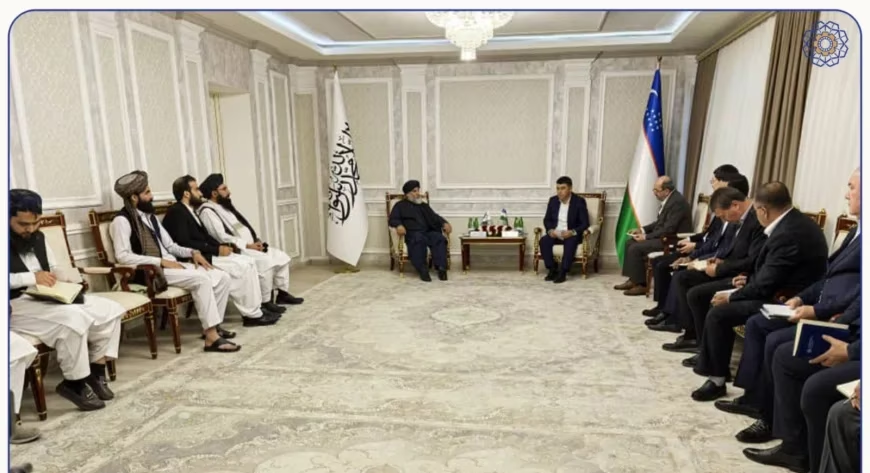
At the same time, Afghanistan is also strengthening industrial cooperation with Uzbekistan.
Afghan officials, together with Uzbek counterparts, recently visited textile factories and cotton-processing facilities in Uzbekistan’s Bukhara and Namangan regions to study modern textile manufacturing systems, cotton processing technologies, and industrial innovations.
The visits highlighted growing interest in:
- textile factory investments
- cotton processing modernization
- industrial knowledge exchange
- regional supply chain cooperation
Afghan officials also invited Uzbek investors to explore opportunities in Afghanistan’s textile, mineral processing, and industrial sectors.
The initiative reflects Afghanistan’s broader effort to attract regional manufacturing investment while improving domestic industrial infrastructure.
Russia Emerges as a New Export Destination
Another important development is Afghanistan’s first cotton shipments to Russia.
According to recent reports, Afghan cotton exports have already reached textile warehouses in Russia’s Ivanovo region, one of the country’s key textile centers. The shipments mark a significant step toward diversifying Afghanistan’s export markets beyond traditional regional destinations.
Industry sources indicate that Russian textile companies are evaluating not only raw cotton imports but also the possibility of sourcing Afghan yarn products in the future if quality standards remain competitive.
This expansion into Russia demonstrates Afghanistan’s growing ambition to establish itself as a wider regional supplier for the textile industry.
Long-Fiber Cotton Creates Competitive Advantage
Afghanistan’s cotton sector benefits from one major advantage: fiber quality.
Cotton produced in northern Afghanistan is known for its relatively long fiber length, making it suitable for higher-quality yarn and fabric production.
Long-staple cotton generally offers:
- improved yarn strength
- better fabric quality
- smoother textile surfaces
- enhanced spinning performance
These characteristics increase the attractiveness of Afghan cotton for textile manufacturers seeking quality raw materials at competitive pricing.
As global textile supply chains continue shifting, Afghanistan’s natural cotton resources could become increasingly important for nearby manufacturing markets.
Read more : Cotton or Poppy? A Defining Choice for Afghanistan’s Agricultural Future
Can Afghanistan Build a Modern Textile Industry?
Despite the positive developments, Afghanistan’s textile industry still faces major structural challenges.
The country remains heavily dependent on exporting raw materials rather than finished textile products. Large-scale investments are still needed in:
- spinning
- weaving
- dyeing
- finishing
- garment manufacturing
- industrial infrastructure
In addition, issues related to logistics, energy access, banking systems, and international trade integration continue affecting industrial growth.
However, recent regional cooperation efforts suggest that Afghanistan is actively trying to position itself within broader Asian textile supply chains rather than remaining solely an agricultural exporter.
If investment in textile processing and industrial modernization continues, Afghanistan could gradually develop stronger domestic value-added production capabilities.
A Strategic Moment for Afghanistan’s Textile Sector
The recent diplomatic and industrial activities indicate that Afghanistan’s textile sector may be entering an important transitional phase.
The combination of:
- growing regional demand for cotton
- expanding trade partnerships
- international textile cooperation
- interest from neighboring manufacturing countries
- and increasing focus on industrial investment
could create new opportunities for Afghanistan’s textile economy over the coming years.
While major challenges remain, the country’s cotton industry is increasingly attracting attention from regional textile manufacturers looking for alternative sourcing destinations and closer regional supply networks.
Editor’s View
“In our view, Afghanistan’s textile sector is gradually moving beyond its traditional role as only a raw cotton supplier. The growing cooperation with Bangladesh, Uzbekistan, Russia, Türkiye, and regional textile markets shows that the country is seeking a stronger position within the wider Asian textile supply chain.
The long-term success of this transformation will depend heavily on industrial investment, infrastructure modernization, and the ability to move from raw material exports toward higher-value textile production.”