For decades, Afghanistan’s agricultural landscape has been shaped by a difficult and often controversial reality: the dominance of poppy cultivation. While poppy has provided short-term income for many farmers, it has also tied rural livelihoods to illegal markets, instability, and long-term economic vulnerability. Today, however, a different crop is re-emerging at the center of the debate—cotton.
Recent production data shows that Afghanistan has harvested more than 158,000 metric tons of cotton, signaling renewed interest in a crop that once played a strategic role in the country’s economy. Beyond the numbers, cotton represents something far greater than agricultural output; it represents a potential structural shift in how Afghanistan connects to regional and global markets.
Cotton: A Legal Crop with Industrial Power
Cotton is not just another agricultural commodity. It is a cornerstone of the global textile and apparel industry, feeding entire value chains—from fiber to yarn, fabric, garments, and home textiles. Unlike poppy, cotton is a legal, tradable, and scalable crop with clear industrial applications and international demand.
Neighboring countries such as Iran, Uzbekistan, and Central Asian economies already have strong textile manufacturing capacities and are actively seeking reliable raw material sources. Afghanistan’s geographic proximity, competitive production costs, and suitable climate position it well to become a regional cotton supplier—if the right infrastructure and policies are put in place.
In addition, cotton cultivation opens the door to value-added industries. Ginning, spinning, weaving, and fabric production could generate employment far beyond farming, creating a multiplier effect across the economy.
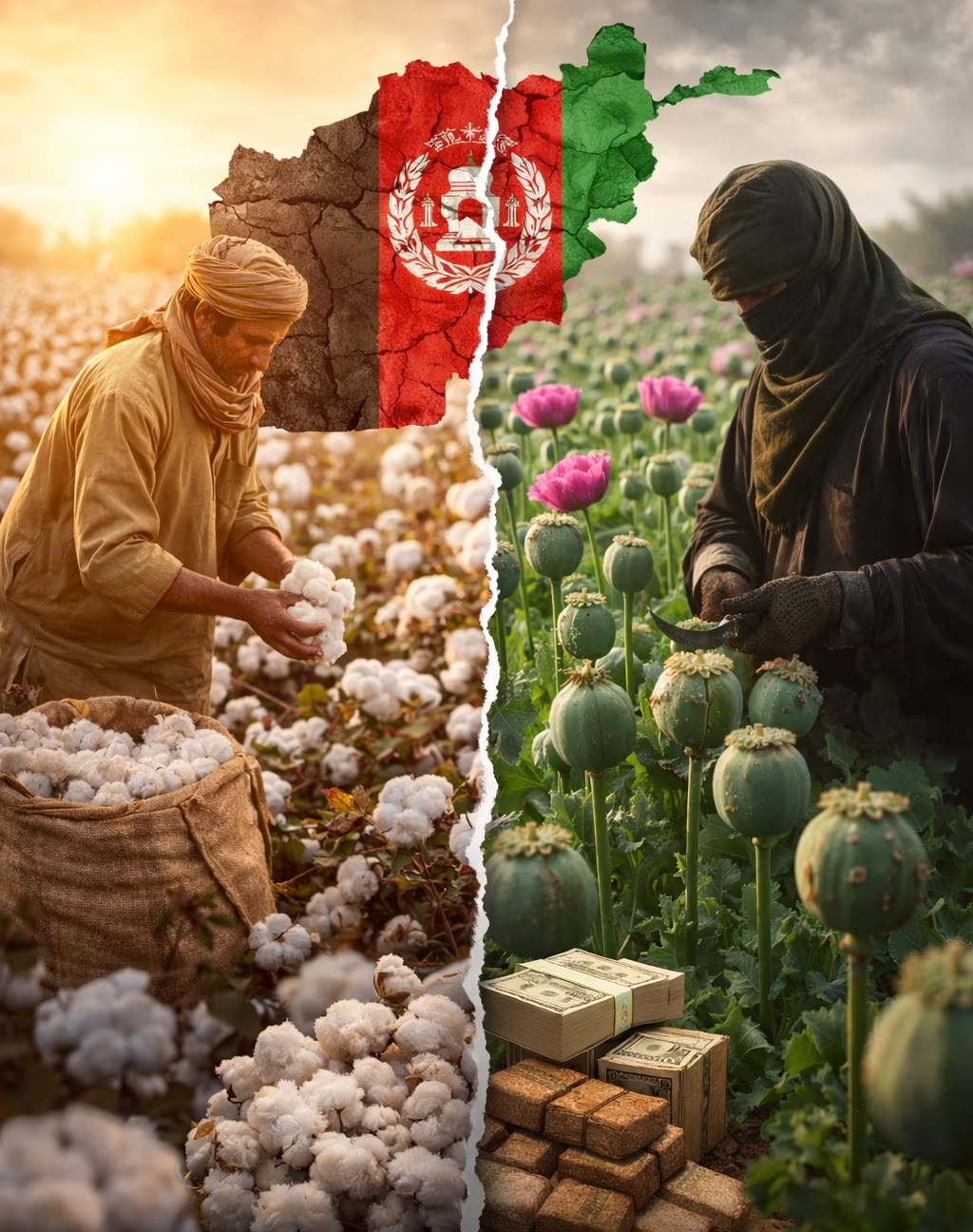
Poppy: Short-Term Income, Long-Term Costs
Poppy cultivation, by contrast, remains a high-risk option. While it may offer quick returns for farmers facing limited alternatives, it comes with severe consequences: market volatility, legal risks, international pressure, and long-term damage to national credibility.
Economically, poppy locks farmers into a narrow and unstable income stream. Socially and politically, it undermines efforts to integrate Afghanistan into legitimate global trade networks. From an industrial perspective, poppy creates no sustainable value chain—only dependency.
The contrast is clear: one crop feeds factories, exports, and jobs; the other fuels uncertainty.
The Missing Link: Policy, Infrastructure, and Trust
Despite cotton’s potential, replacing poppy is not automatic. Farmers will not shift crops based on ideology alone. The transition requires clear economic incentives, reliable access to water, quality seeds, stable markets, and—most importantly—trust that cotton can deliver consistent income.
Experts emphasize the need for:
- Investment in cotton processing and storage facilities
- Improved logistics and export management
- Support for farmer cooperatives
- Integration with regional textile supply chains
Without these elements, cotton risks remaining an underutilized opportunity rather than a true alternative.
Also Read: Pakistan to Start Importing Cotton from Afghanistan
A Strategic Opportunity for the Textile Industry
For the global textile industry, Afghanistan’s cotton story deserves attention. As brands and manufacturers diversify sourcing away from overconcentrated supply chains, new origins with competitive advantages are increasingly attractive. Cotton from Afghanistan, if standardized and properly managed, could become part of a new regional sourcing equation.
More importantly, this shift aligns economic logic with social impact—supporting legal livelihoods, reducing reliance on illicit crops, and laying the foundation for industrial development.
The Bigger Question
At its core, the debate is not simply cotton versus poppy. It is a question of economic vision.
Will Afghanistan remain tied to short-term survival crops, or will it invest in long-term industrial integration? Will agriculture remain isolated, or become the first link in a broader manufacturing ecosystem?
The answer will shape not only the future of Afghan farmers, but also the country’s position in regional trade and the global textile industry.
What do you think?
Can cotton realistically replace poppy in Afghanistan, or are deeper structural changes needed first?
👉 Share your views in the comments—we want to hear your perspective.