Where History Meets Industry
In the heart of Iran’s desert landscape lies Yazd, a city that has quietly shaped one of the oldest and most enduring textile traditions in the world. While geography suggests limitation, Yazd has turned constraint into capability. Over centuries, the city has evolved from a center of handcrafted excellence into one of Iran’s most important textile production hubs, without losing its cultural identity.
From Silk Road Legacy to Industrial Transformation
Yazd’s textile story begins long before modern industry. Positioned along the historic Silk Road, the city became a key point of exchange between East and West. Its silk fabrics, decorative textiles, and handcrafted materials were traded across regions, building a reputation that extended far beyond Iran.
During the Sassanian period, textile production in Yazd moved from small-scale craftsmanship toward a more structured industry. Cotton cultivation, silk processing, and weaving began to form an integrated system. This early industrial logic laid the foundation for Yazd’s future growth.
Centuries later, particularly during the Islamic Golden Age, the city reached a peak in textile production. Yazd was no longer just producing fabric—it was shaping identity through design, color, and technique. Its textiles carried both economic value and cultural meaning.
Preserving Craftsmanship in a Modern World
The Enduring Value of Termeh
One of Yazd’s most iconic contributions to textile heritage is Termeh. This luxurious fabric, known for its intricate patterns and fine materials, represents the highest level of traditional craftsmanship. Unlike mass-produced textiles, Termeh reflects patience, skill, and artistic precision.
Even today, Termeh continues to symbolize authenticity in an increasingly industrial world. It connects modern consumers with a legacy that cannot be replicated by machines.
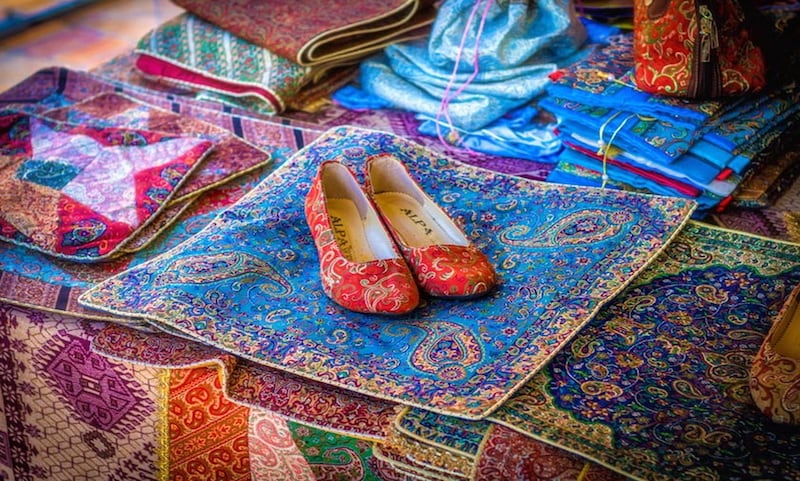
Traditional Weaving as Cultural Memory
Beyond Termeh, Yazd has maintained a range of traditional weaving practices, including
brocade and velvet production. These techniques were historically practiced in small workshops, where textile production was deeply embedded in everyday life.
Read more: How Middle East War Could Reshape Global Supply Chains and Iran’s Textile Trade
What makes Yazd unique is not just the survival of these crafts, but their coexistence with modern industry. The city has managed to preserve its cultural memory while adapting to new economic realities.
The Rise of a Modern Textile Hub
The transition to industrial textile production in Yazd began in the early 20th century. The introduction of mechanized weaving, spinning units, and finishing technologies transformed the region’s economic structure.
Over time, Yazd developed into one of Iran’s leading textile provinces. Today, the industry covers a wide spectrum, from yarn production to home textiles and machine-made carpets. The scale of production has increased significantly, yet the influence of traditional knowledge remains visible.
This dual identity—industrial and artisanal—gives Yazd a competitive advantage that few regions can match.
Economic Significance and Industrial Strength
The textile sector plays a central role in Yazd’s economy. It is not only a major source of employment but also a driver of industrial growth. Thousands of workers are engaged across various stages of production, from raw materials to finished products.
The region benefits from a skilled workforce, developed infrastructure, and a strong production culture. These factors have allowed Yazd to maintain its position despite economic challenges and global competition.
However, like many traditional industries, it faces pressures from cheaper imports, technological gaps, and limitations in export access. These challenges require strategic investment and modernization.
Challenges and the Path Forward
Yazd’s textile industry stands at a critical point. While its historical strength provides a solid foundation, future competitiveness depends on adaptation.
The adoption of advanced machinery, digital textile printing, and sustainable production methods will be essential. Water scarcity, a key issue in the region, also demands innovation in dyeing and finishing processes.
At the same time, expanding export markets—particularly in the Middle East, Africa, and neighboring regions—can unlock new opportunities. Events such as ISATEX Yazd are playing an important role in connecting local manufacturers with international partners and showcasing the region’s capabilities.
Conclusion: A Future Built on Balance
Yazd is not just a textile production center; it is a reflection of how tradition and industry can coexist. Its strength lies in balance—the ability to honor heritage while embracing change.
As global demand shifts toward authenticity, sustainability, and quality, Yazd has the potential to redefine its role in the international textile landscape. The city’s past is not a limitation; it is its greatest asset for building the future.